Activism and mutual aid are helping many Americans counter loneliness by creating meaningful social bonds and shared purpose. Participants from diverse backgrounds — including older volunteers, mutual‑aid organizers and young canvassers — describe movement work as a source of community and renewed identity. Experts caution that high‑risk actions can harm mental health and stress that movements must prioritize collective care and role allocation. Still, for many, organizing provides durable relationships and a sense of purpose that outlasts immediate campaigns.
How Activism Is Helping Americans Fight Loneliness — From Mutual Aid to Movement-Building
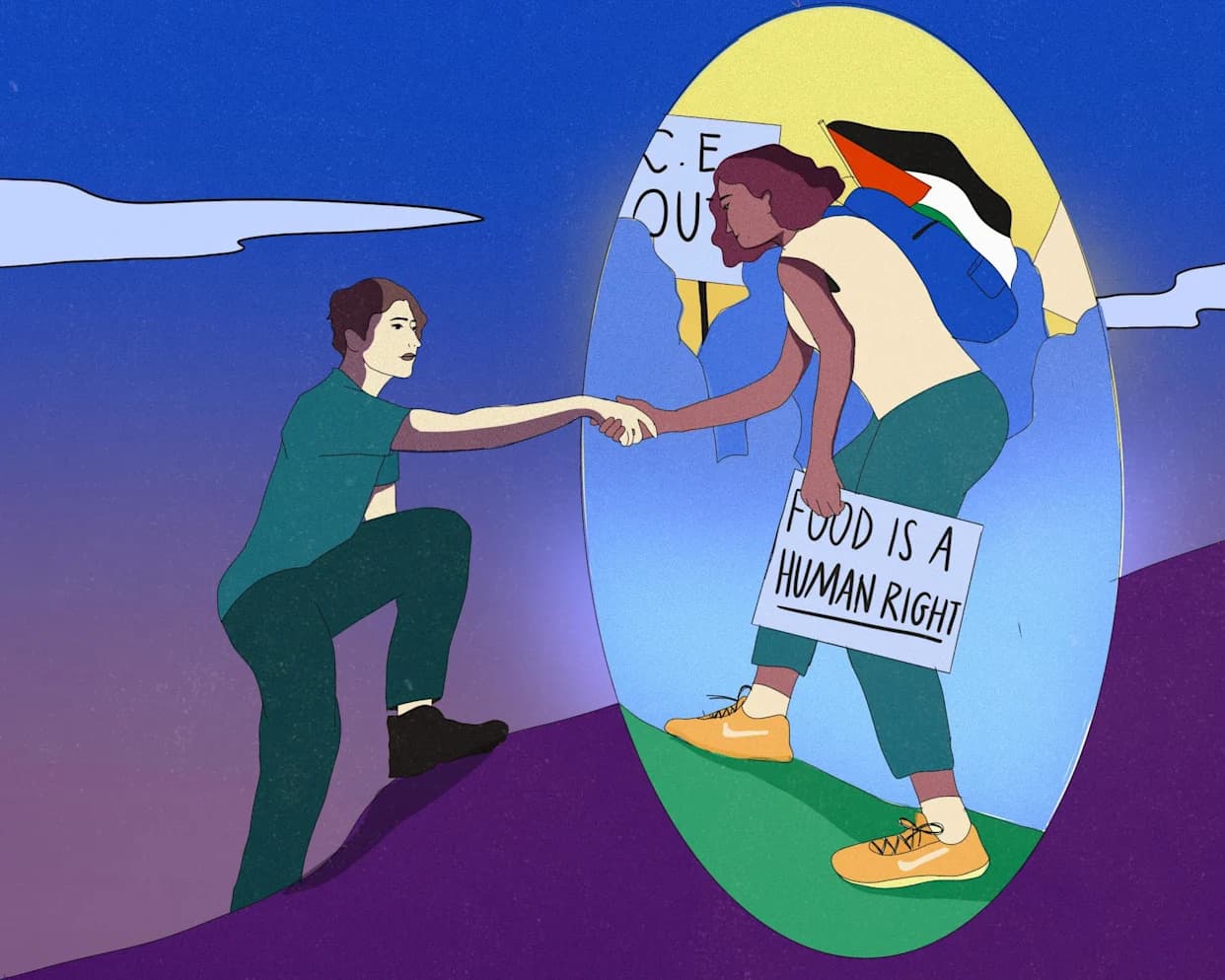
Illustration: Rita Liu/The Guardian
When Lani Ritter Hall’s husband of more than 40 years, Gus, died in 2022, the 76‑year‑old felt unmoored. Caring for him had been the reason she rose each day; his loss left her searching for meaning. She found it in activism.
Shortly after Gus’s death, Ritter Hall read an opinion piece about Third Act, a group organizing older adults to protect democracy and confront the climate crisis. Though she had never been politically active before, the former public‑school teacher volunteered as a coordinator and arranged more than 120 Zoom welcome calls over 10 months to help new members plug into the organization. “It’s been the biggest joy of my life,” she said.
Activism as a Path Out of Isolation
Ritter Hall’s experience is part of a broader trend. Across the United States activists, mutual‑aid volunteers, canvassers and organizers report that movement work creates lasting social ties and brings renewed purpose — a meaningful counterweight to what former U.S. surgeon general Vivek Murthy called a “loneliness epidemic.” From young canvassers who held a post‑campaign “Friendsgiving” after working for Zohran Mamdani to millennials who remain close a decade after volunteering at reproductive‑health clinics, people describe activism as a route back to community.
Stories of Connection
For Emmanuel “Juni” Taranu, an organizer with the St. Louis Palestine Solidarity Committee, movement spaces became a chosen family after their birth family disagreed with their views on the Israeli‑Palestinian conflict. Taranu describes deep bonds with a Palestinian American couple who mentored them: “We go out to dinner together, to comedy shows, celebrate birthdays together,” they said, noting that trust forged through shared struggle lets relationships deepen in family‑like ways.
Mary Holzman‑Tweed, 48, of Queens, found community while helping run a pandemic‑era food pantry that started from the trunk of a volunteer’s car. Recovering from alcoholism and living with extreme social anxiety and Ehlers‑Danlos syndrome (which affects mobility), Holzman‑Tweed says the pantry didn’t instantly produce easy friendships. But the experience taught her how to work with others toward a shared goal and gave her the confidence to join poetry readings, craft nights and book clubs. After nearly 25 years in her neighborhood, she now feels known there.
What Experts Say
“Movement spaces can offer a radical alternative” to mainstream pressures about productivity and appearance, said Gabrielle Gelderman, a movement chaplain who provides spiritual and mental‑health support to organizers. Those spaces often give people a sense of belonging and a role to play regardless of background.
Psychologist Dr. Tangela Montgomery, an assistant professor at the University at Buffalo, adds that activism links community to values. “Seeing the group as a movement, seeing the group as a body that can change something for the better — that’s different from just sitting and having a beer with people every Saturday,” she said. For marginalized people, that sense of community can be life‑saving.
Risks and the Need for Collective Care
Participation is not without peril. Montgomery’s research — which often centers on queer people of color — finds that “high‑risk activism” (actions that could lead to arrest or violent confrontation) can harm mental health and increase exposure to trauma. Gelderman warns that movements can also foster unhealthy self‑sacrifice and burnout if collective care is not prioritized.
“Organizers often plan roles to protect vulnerable participants from the highest‑risk tasks,” the practitioners note. Impactful movement work takes many forms: frontline protests attract attention, but canvassing, neighborhood outreach and workplace organizing can produce powerful results with lower personal danger.
Why This Matters
At a time when civic engagement and informal social ties have declined for decades, movement spaces offer people an avenue to rebuild social capital around shared purpose. For many participants, activism supplies both agency — the ability to try to fix something wrong in the world — and social connection that endures beyond the campaign or crisis that sparked it.
Ritter Hall, Taranu and Holzman‑Tweed all say their involvement gave them relationships and meaning that improved their daily lives. As Holzman‑Tweed put it: “We have to go out and touch people, because we never know what’s going to save us.”
Help us improve.