
At least 29 people have reportedly died and more than 1,200 have been detained as anti-government protests entered their 10th day across Iran, HRANA reports. The unrest began over rising inflation in Tehran and spread to more than 250 locations across 27 provinces, with nightly clashes between demonstrators and security forces. President Trump issued a veiled warning that the U.S. could intervene if protesters are violently suppressed, while Tehran denies reported deaths and has introduced limited economic relief measures. Rumors and unverified reports continue amid tight information controls.
Dozens Reported Killed As Iran Protests Enter 10th Day Amid U.S. Warning

Dozens said to have been killed in Iran protests despite Trump's warning
At least 29 people have reportedly died and more than 1,200 have been detained as anti-government demonstrations entered a 10th day across Iran, the U.S.-based Human Rights Activists News Agency (HRANA) said. Tehran has moved to suppress unrest while reacting angrily to a veiled warning from U.S. President Donald Trump.
HRANA, which relies on a network of contacts inside Iran, published its daily update saying the unrest began in Tehran when business owners protested soaring inflation and spread rapidly. The group reported protests in more than 250 locations across at least 27 of Iran's 31 provinces, with social media footage showing repeated clashes between demonstrators and security forces.
Clashes at Tehran’s Grand Bazaar were among the incidents HRANA highlighted, sharing video that it said showed confrontations between shopkeepers and security personnel at the capital’s major commercial hub — a long-standing center of economic activity and political expression.
People who spoke with CBS News from inside Iran described smaller gatherings in Tehran on Tuesday, a sign some observers interpret as a possible short-term effect of government concessions and a heavy security presence. Tehran has implemented a mix of security measures and limited economic relief, including temporary price freezes on certain commodities, tax relief for some businesses, and a one-time cash subsidy for essential items.
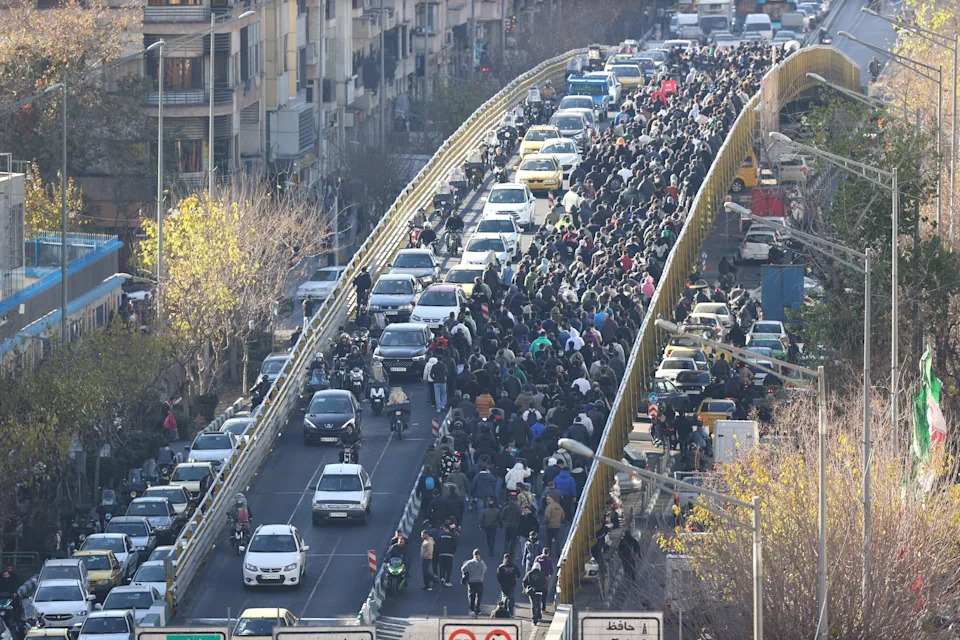
Protesters march in downtown Tehran, Iran, Dec. 29, 2025. / Credit: Fars News Agency via AP
On Friday President Trump warned that the U.S. was "locked and loaded and ready," saying that if Iran "violently kills protesters, which is their custom, the United States of America will come to their rescue." He provided no operational details. Critics say such statements add pressure on Tehran and may influence how the Iranian leadership responds; supporters argue they signal support for protesters. Observers caution that public comments from foreign leaders can have unpredictable effects in volatile situations.
Iranian officials have not confirmed the reported protest deaths. While acknowledging demonstrations and economic hardship, state authorities have downplayed the scale of street violence and accused foreign adversaries — notably the U.S. and Israel — of fomenting unrest. The semi-official Fars news agency reported injuries among dozens of police and members of the Basij volunteer force.
Uncertainty inside Iran has produced unverified reports and rumors, including speculation about the country’s top leadership and possible diversionary military actions. International analysts and journalists warn that such claims remain unconfirmed and that Iran’s intelligence apparatus has in the past circulated misleading information to shape narratives.
For now, protests continue in parts of the country as many watch for further signals from both Iranian authorities and foreign governments. The situation remains fluid and difficult to independently verify because of tight information controls and restricted access for international media.


