The drought that began this summer has entered its seventh month and may persist into spring 2026, causing millions in crop losses and leaving 541 private wells dry. Farmers across Maine are investing in irrigation, water storage and soil improvements to protect crops, while state and federal aid — including a new Maine Farmers Drought Relief Fund — is starting to flow. The rapid onset of heat-driven drying has exposed vulnerabilities on largely unirrigated farmland and highlighted the need for longer-term water resilience.
Maine Farmers Battle Drought That Could Stretch Into 2026 — Millions In Crop Losses And Costly Adaptations Underway

Rob Johanson stands next to an intake hose he was using to pump water from the Eastern River for crop irrigation on his Dresden Farm on April 20, 2022. Photo by Troy R. Bennett of the Bangor Daily News.
Consumers noticed smaller apples and potatoes and pricier blueberries this fall after one of Maine’s driest summers in three decades triggered statewide drought alerts. The National Weather Service warned that the dry conditions could persist into spring 2026, leaving farmers and communities racing to protect crops, livestock and water supplies.
Economic and Agricultural Impacts
Federal and state data show millions in agricultural losses: roughly $30 million in blueberry losses and about $10 million in apple losses. The drought also contributed to shortages of hay for livestock and left 541 private wells dry, placing stress on rural households as well as farms. Agriculture represents about 5% of Maine’s gross domestic product — approximately $12.6 billion — so these impacts ripple through the state economy.
Rapid Onset and Climatic Context
What made this drought notable was how quickly it developed. Above-average temperatures in June and August combined with scant rainfall to deplete soil moisture faster than growers expected. State climatologist Sean Birkel said the dry air amplified evaporation from plants, accelerating stress on crops. Although Maine’s long-term climate trend has become wetter, episodic and fast-developing droughts remain a serious risk during critical growing months.
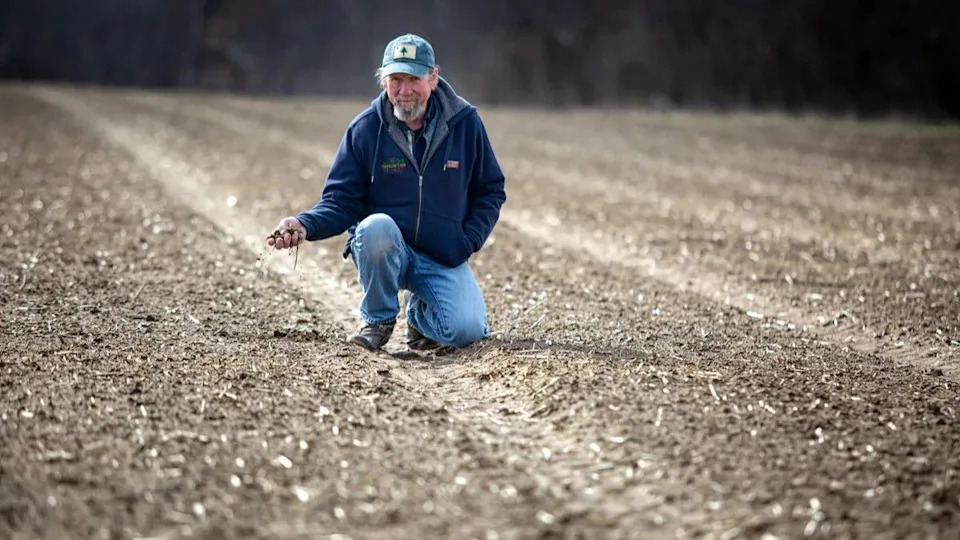
Rob Johanson, co-owner of Goranson Farm, holds a handful of his best potato-growing soil near the Kennebec River in Dresden on April 20, 2022. Johanson said despite the good earth, he often gets too little — or too much — rain due to climate change. Photo by Troy R. Bennett of the Bangor Daily News.
How Farmers Are Responding
Many farmers are investing in expensive drought-mitigation measures. Center pivot irrigation machines cost more than $60,000 each, and complete irrigation systems commonly top $100,000 in initial investment. Fuel for pumping can run to hundreds of dollars a day, while smaller farms may have to truck in water.
“It’s easy to get somewhat complacent about things like drought because you hope it’s an aberration and that things will be better next year,” said Tom Gordon, coordinator for the state’s Soil and Water Conservation Program. “It’s important for farmers to begin to plan for ongoing water deficits and look at what they can do to enhance their water sources and conserve water wherever possible.”
Paul Thomas of Thomas Farms in Corinth said he lost roughly half of his 250 acres of squash, potatoes and other vegetables this season. He is installing two additional pivot systems and relies on two large manmade ponds for irrigation. This summer, record heat and little rain caused his ponds to run dry for the first time in more than a decade.
Rob Johanson, co-owner of Goranson Farm, described nearly continuous pumping from the Eastern River through buried pipe and hydrants to cover his fields. He is also adding organic matter to the sandy soils to improve water retention. Different crops require different watering rates — Johanson said about 1 inch per week, while Thomas estimates 2 inches per week for some of his crops.
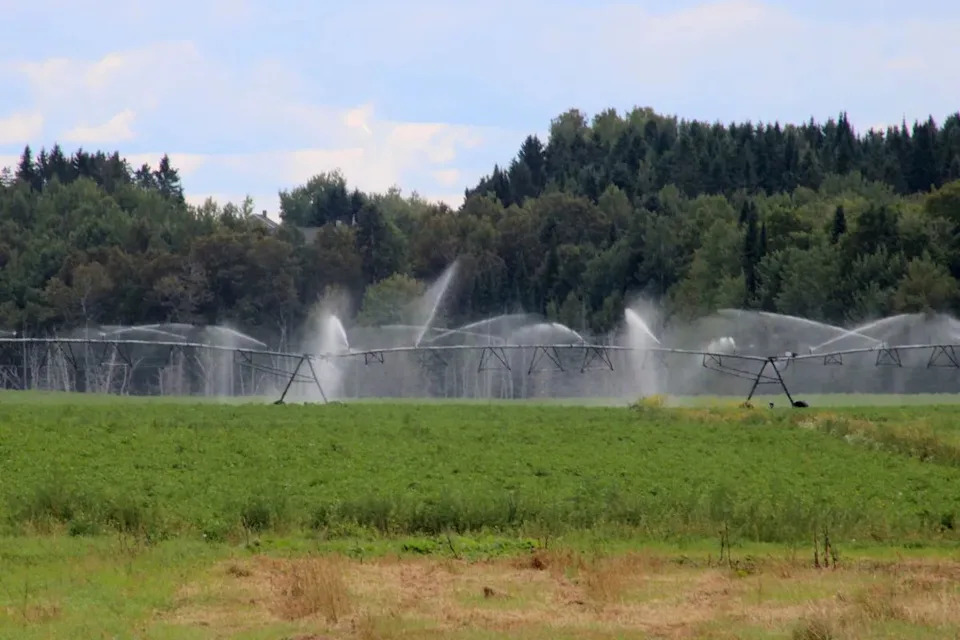
Irrigation equipment sprays much-needed water onto a Presque Isle-area field on Aug. 21. Most of Maine is experiencing either moderate or severe drought conditions. Photo by Paula Brewer of The County.
Crops Most Affected
Potatoes — a cool-season crop widely grown in Maine — suffer when temperatures rise. Heat increases plant respiration and stress-related defects, which can lower starch content important for processing into fries and chips. Blueberries were also damaged when high temperatures interfered with flower development, and shallow-rooted vegetables such as lettuce and tomatoes dried out quickly.
Aid And Policy Responses
The USDA declared Maine a natural disaster area in November, unlocking federal aid for affected farms. The Maine Legislature created the Farmers Drought Relief Fund this year to provide financial and technical assistance for water-management planning, agricultural well drilling and farm pond construction. So far, 10 farms have received $75,000 for water-needs planning; another 10 farms received $194,000 for well drilling; and four farms were awarded $163,000 for water storage ponds. The program aims to disburse roughly $900,000 to 40 or more farms in 2026.
Officials expect applications to the relief fund to more than double next year as more farmers recognize the costs of drought preparedness. The drought, now in its seventh month, has highlighted a growing need for investments in resilient water systems across Maine’s largely unirrigated farmland — just 10% of total farmland is irrigated, with potatoes and blueberries having closer to 25% coverage.
Outlook
Researchers caution that it is unclear when the drought will end. Frozen ground through much of the region will limit the ability of midwinter rains or snow to recharge groundwater until spring thaw. The pace of snowmelt will determine how much water infiltrates the ground versus running off. For farmers, the coming months will be critical for planning irrigation, water storage and soil improvements to reduce vulnerability should the dry trend continue into 2026.
Help us improve.