California is free of drought and abnormally dry classifications statewide for the first time in roughly 25 years, according to the U.S. Drought Monitor map valid Jan. 6, 2026. The state received 14.39 inches of precipitation as of Jan. 7 — about 155% of the seasonal average and roughly 60% of a typical full water year. Meteorologist Dalton Behringer cautioned that the drought-free status reflects multiple wet years across regions rather than a single storm. California is currently the only U.S. state without drought or abnormally dry areas.
California Declared Completely Drought‑Free for First Time in 25 Years After Wet Start to 2026
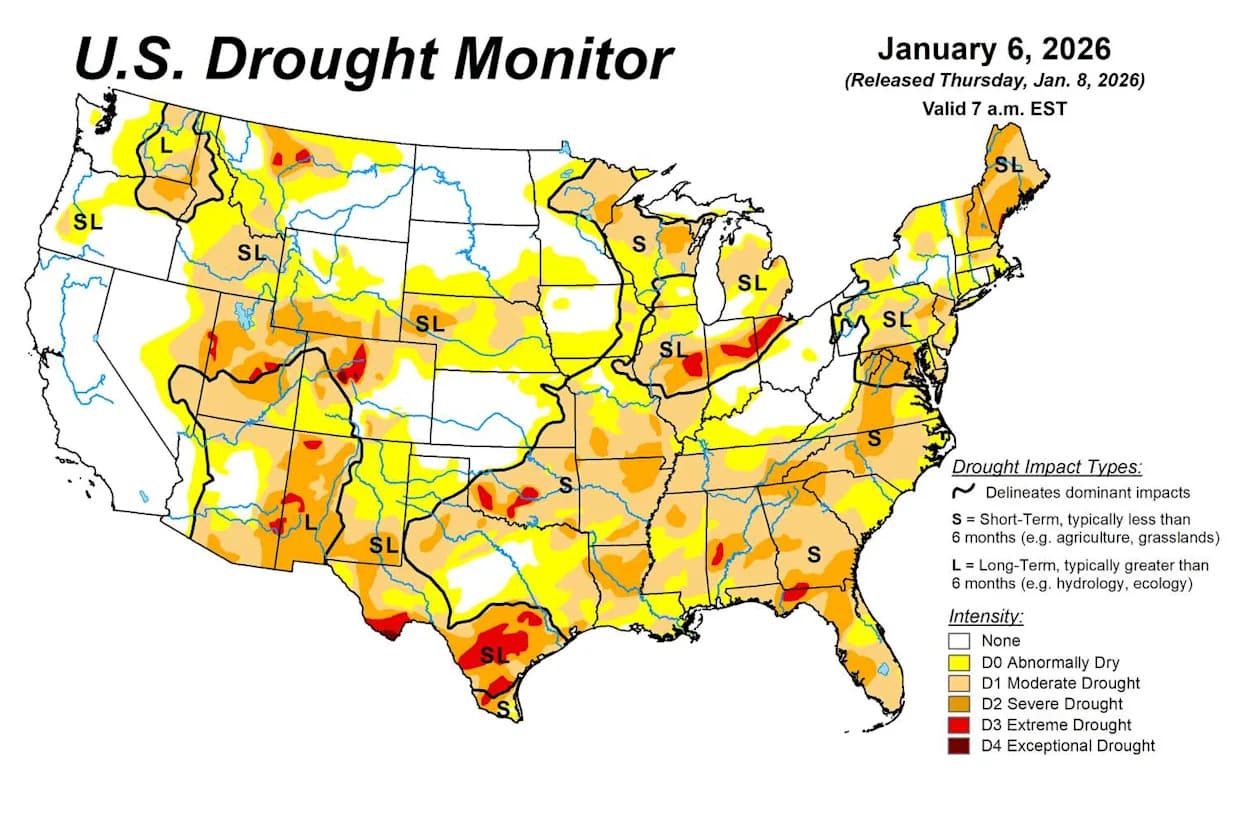
The latest U.S. Drought Monitor map, from Jan. 6, 2026, shows the entire state of California is free of drought conditions. (USDM)
California's unusually wet start to 2026 has erased drought classifications statewide for the first time in about 25 years, federal and state data show.
All of California Free of Drought as of Jan. 6
The U.S. Drought Monitor map released Thursday, using conditions valid on Jan. 6, 2026, shows 100% of California classified as free of drought: no areas are listed as abnormally dry or experiencing moderate, severe, extreme or exceptional drought.
"It's the first time I've seen it where there's no drought anywhere," said Dalton Behringer, a meteorologist with the National Weather Service's Bay Area office.
According to Behringer and the U.S. Drought Monitor, the last time the state reached that benchmark was Dec. 26, 2000 — roughly 25 years ago. As of the latest map, California is the only U.S. state without any drought or abnormally dry conditions.
How We Got Here
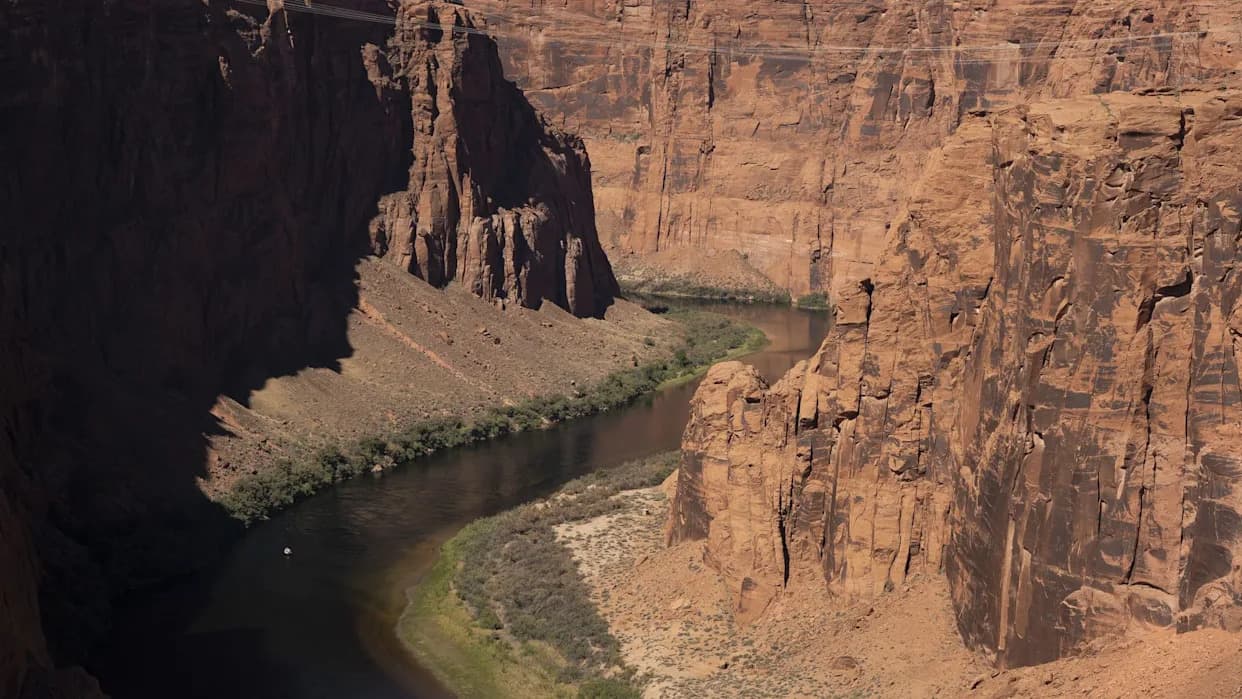
Just three months earlier, more than 70% of the state was experiencing some level of drought. The current drought-free status reflects multiple wet years and seasons across different regions, not a single storm or one wet season, Behringer noted. Recent wet years in the Bay Area helped erase long-term deficits, while Southern California's recovery improved later this season after receiving additional precipitation.
Precipitation Numbers
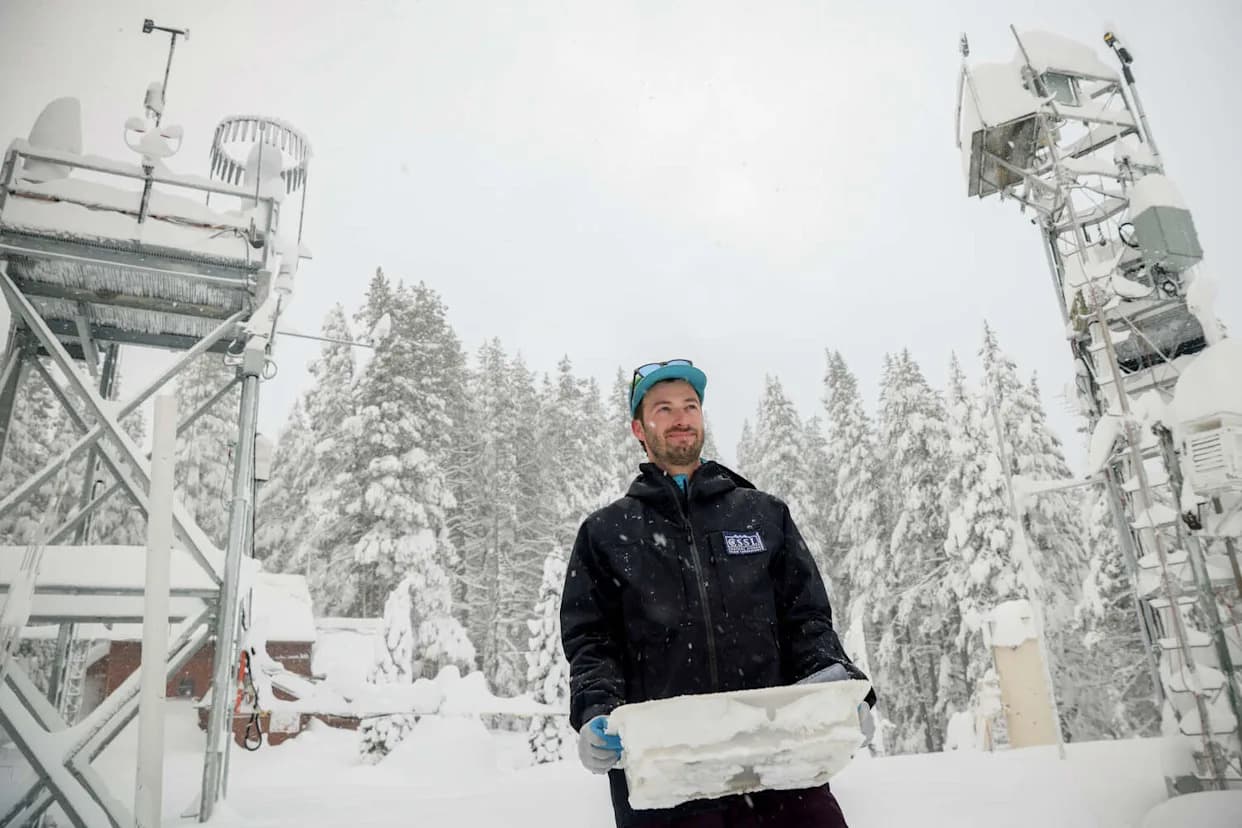
California received 14.39 inches of precipitation statewide as of Jan. 7, 2026 — about 155% of the average for that point in the water year, which began Oct. 1. The historical average for the same date is 9.26 inches, based on records dating to 1981 (California Department of Water Resources).
Although this early-season rainfall ranks among the wettest starts on record, it is still below the historical maximum of 18.43 inches measured by that date. Historically, most of the state’s precipitation falls between November and March, and the rain recorded so far represents roughly 60% of a typical full water year total (the water year runs through Sept. 30).
What This Means
For residents who remember the severe droughts of the 2010s, the latest data demonstrate a marked shift in statewide moisture conditions. Water managers and communities will continue monitoring reservoir levels, groundwater and snowpack throughout the remainder of the water year to assess longer-term impacts and water supply outlooks.
Data sources: U.S. Drought Monitor, National Weather Service, California Department of Water Resources.
Help us improve.