Seasonal influenza is hitting the U.S. harder than usual, driven in part by an H3N2 subclade (K) and low vaccination rates. Current vaccines reduce severe disease but are limited by viral mutation and production timelines; early U.K. data show 70–75% protection against hospitalization in children and 30–35% in adults. Researchers are pursuing universal vaccines (HA-stem and nanoparticle designs), broader immune targets (NA and T cells), long-acting preventives, and CRISPR antivirals. Increasing vaccination now and investing in next-generation approaches could make a world with far less flu feasible.
A World Without Flu Is Within Reach — But This Winter Shows Why We Must Act
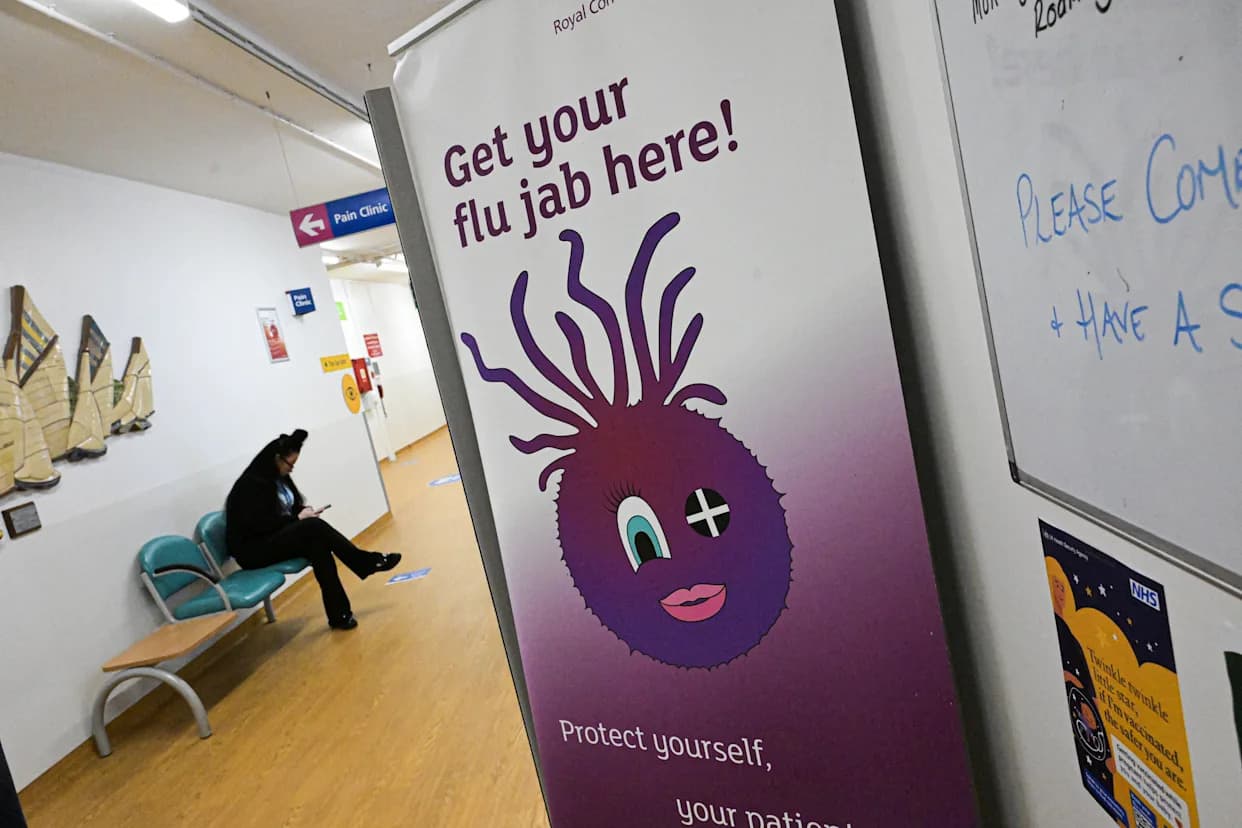
This year is shaping to be a tough flu season, with less than half of adults getting a flu shot. | Hugh Hastings/Getty Images
Here’s the bad news first.
If you are unvaccinated, there’s a meaningful chance — perhaps as high as 11% — that sometime this winter you’ll develop the familiar cascade of influenza symptoms: chills, profound fatigue, body aches and cough, followed by a sudden fever spike. In short: you likely have the flu.
Every winter the United States sees large numbers of flu cases, but this season is unusually severe. The Centers for Disease Control and Prevention recently categorized the season as “moderately severe,” estimating roughly 11 million illnesses, 120,000 hospitalizations and 5,000 deaths so far. In New York City, health services began 2026 with record flu-related hospital admissions.
This surge is not caused by a single novel “superflu,” but by an aggressive subgroup of the familiar H3N2 virus known as subclade K. That subgroup carries mutations that appear to have reduced the current vaccine’s effectiveness somewhat, although the vaccine still provides meaningful protection. Low vaccination coverage hasn’t helped: only about 44% of U.S. adults have received a flu shot this season, and uptake among children has fallen particularly sharply, contributing to higher pediatric hospitalizations.
Why Influenza Keeps Coming Back
Influenza is a highly mutable and "promiscuous" virus: it mutates continually and can swap genetic segments (reassortment), producing new combinations that sometimes evade existing immunity. Global health authorities must select vaccine strains months before distribution; if circulating strains shift in the interim, a vaccine can be a poor match. Annual revaccination also makes public-health campaigns harder to sustain amid vaccine hesitancy.
Global burden: The World Health Organization estimates about 1 billion influenza infections each year worldwide, up to 5 million severe cases, and as many as 650,000 flu-related respiratory deaths — mainly among the very young and very old.
What You Can Do Right Now
- Get vaccinated: Even mid-season, vaccination reduces the risk of severe disease. Early U.K. data show reductions in hospital admission of roughly 70–75% for children and 30–35% for adults.
- Test early: At-home flu tests are now widely available and can guide timely treatment decisions.
- Seek antivirals quickly: When appropriate, antivirals such as oseltamivir (Tamiflu) are most effective when started early and can reduce complications and disease severity.
Science Is Moving Toward Lasting Solutions
There is growing optimism that we can do far better than annual, strain-matched shots. Researchers and industry are pursuing a portfolio of next-generation approaches designed to provide broader, longer-lasting protection:
- Universal-vaccine Strategies: A true “universal” flu vaccine is defined as at least ~75% effective against influenza A viruses with durable protection of a year or more. Approaches include targeting the conserved hemagglutinin (HA) stem (stalk) rather than the rapidly changing HA head, and using mosaic or nanoparticle displays that present multiple HA antigens to teach the immune system to recognize shared features across strains. The U.S. FluMos program is testing some of these designs in early clinical trials.
- Broader Immune Targets: Other strategies aim at neuraminidase (NA, the “N” in HxN viruses) or at boosting T-cell responses to internal viral proteins that change little over time — approaches that may not always block infection but could substantially reduce severity.
- Non-vaccine Preventives: Long-acting prophylactics are in development. For example, San Diego biotech Cidara has built a long-lasting preventive that links neuraminidase inhibitors to an enduring antibody scaffold; preclinical work shows broad activity against A and B strains, and Merck has moved to acquire the company.
- Novel Antivirals: Experimental ideas include CRISPR-based antivirals. Researchers in Australia are exploring CRISPR nasal sprays designed to target and disable a wide range of influenza viruses.
- Manufacturing Advances: Rapid mRNA platforms can shorten the time between strain selection and production compared with traditional egg-based vaccines, improving agility and potentially raising effectiveness for seasonal vaccines.
Historically, investment in universal-flu research has lagged, though some governments and agencies have increased funding — for example, a U.S. plan announced in May proposed $500 million toward expanded influenza vaccine efforts. Sustained resources and political will would accelerate progress.
Why This Matters
Seasonal influenza kills hundreds of thousands worldwide and causes widespread suffering and economic loss. The history of successful vaccine-driven control of once-deadly diseases (smallpox, and large reductions in measles and mumps where vaccination is high) shows that transformative progress is possible. With better vaccines, antivirals and public-health investment, a world with dramatically reduced seasonal influenza — and far less pandemic risk — is scientifically plausible.
Bottom line: Get vaccinated, test early if symptomatic, seek antivirals when appropriate, and support accelerated research into universal and long-acting flu defenses. These steps protect individuals now and build toward a future in which seasonal flu is no longer an annual crisis.
Help us improve.