The CDC reports a sharp nationwide rise in influenza this holiday season, estimating at least 7.5 million cases, 81,000 hospitalizations and 3,100 deaths as of Dec. 20. Thirty-two jurisdictions now report "high" or "very high" activity, up from 17 last week. H3N2 accounted for nearly 92% of subtyped influenza A samples between Dec. 13–20, raising concern because that subtype often causes more severe seasons. Vaccination rates are down; health officials continue to recommend flu shots to reduce the risk of severe illness, especially for high-risk groups.
Flu Cases Surge Nationwide This Holiday Season as H3N2 Spreads, CDC Says
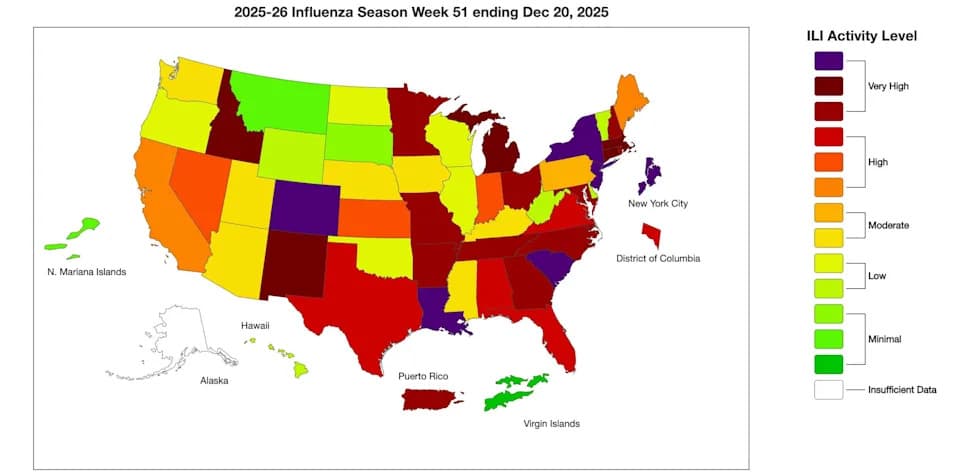
A CDC map uses the proportion of outpatient visits to health care providers for influenza-like illnesses that include a fever plus a cough or sore throat to measure flu activity levels in the jurisdiction. / Credit: Centers for Disease Control and Prevention
New data from the Centers for Disease Control and Prevention show influenza activity rising across the United States this holiday season, with several states reporting record levels of illness and hospitalizations.
Nationwide Numbers
The CDC estimates there have been at least 7.5 million flu cases this season as of Dec. 20, along with at least 81,000 hospitalizations and 3,100 deaths. The agency also reported eight pediatric deaths linked to influenza.
Wider Spread and Local Surges
As of the latest update, 32 jurisdictions — including all 50 states, several territories, the District of Columbia and New York City — are reporting "high" or "very high" flu activity, up from 17 jurisdictions the prior week. The rapid increase indicates accelerating community spread in many regions.
The New York State Department of Health recorded roughly 71,000 cases for the week ending Dec. 20 — the largest single-week total since the state began tracking influenza in 2004 — and logged more than 3,600 hospitalizations that week. Massachusetts health officials also reported high activity; Boston saw a 114% jump in recent cases, with the largest increases among children. A spike in Minnesota led at least one school to move classes online ahead of Christmas, and CBS News Minnesota reported 113 flu-related hospitalizations recorded in 2025, more than double last year’s tally.
Dominant Strain: H3N2
Public health experts are especially concerned about a rapid spread of the influenza A subtype H3N2, which is often associated with more severe seasons, particularly for older adults. Between Dec. 13 and Dec. 20, of 2,086 positive influenza specimens, 2,029 were influenza A; of 1,627 specimens subtyped, 1,493 (nearly 92%) were H3N2.
"The virus has changed just enough to make it harder for people's immune systems to recognize it," said Jesse Bloom, a viral evolution researcher at the Fred Hutchinson Cancer Center. "Getting vaccinated can reduce the risk of severe illness, especially in high-risk groups."
Vaccination And Effectiveness
Vaccination uptake is lower than ideal this season: about 130 million doses of seasonal flu vaccine have been administered nationwide to date, the CDC says. Richard Webby, director of the WHO Collaborating Centre for Studies on the Ecology of Influenza in Animals and Birds, warned of a possible "H3N2 mismatch" with this season’s vaccine, although the shot is expected to match well to H1N1 and influenza B. Early data from the United Kingdom suggest vaccines are still helping prevent severe illness, particularly in children.
Public health recommendation: Health officials urge people — especially older adults, young children, pregnant people and those with chronic conditions — to get vaccinated, practice good hand hygiene, and stay home when sick to reduce spread and protect vulnerable populations.
For ongoing updates, watch CDC advisories and local health department guidance as the season evolves.
Help us improve.