Former FDA staff say waves of firings, early retirements and resignations since Donald Trump's return to the presidency have eroded the agency’s capacity and raised the risk of food safety lapses. They cite a listeria outbreak that killed six people and sickened 27 as evidence. Inspections—both foreign and domestic—have declined and CDC FoodNet pathogen surveillance was reportedly cut from eight pathogens to two. Critics also warn that politicization and controversial public claims by agency leaders have undermined scientific integrity and morale.
Former FDA Staff Warn Trump-Era Cuts and Politicization Raised Risk of Food Safety Failures
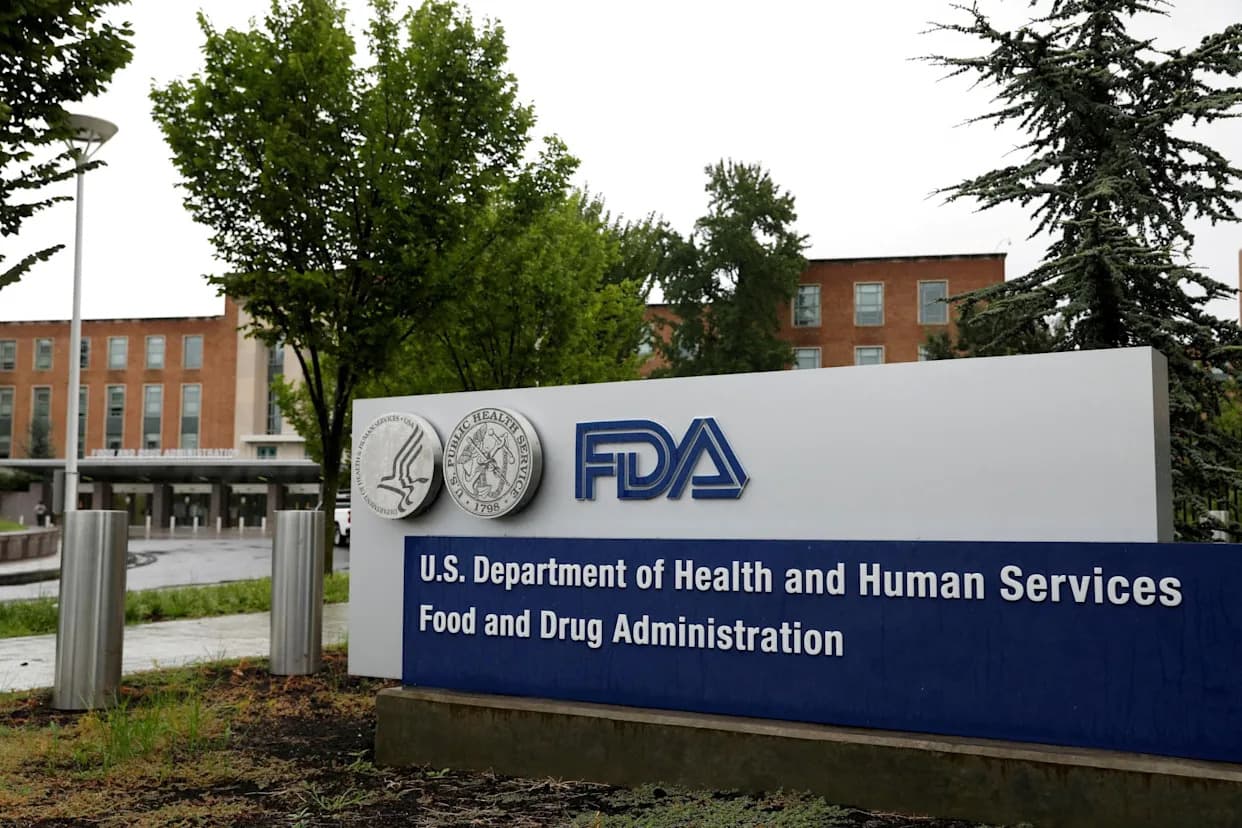
Signage is seen outside of the Food and Drug Administration headquarters in White Oak, Maryland.Photograph: Andrew Kelly/Reuters
Former employees of the Food and Drug Administration warn that large-scale staff reductions and what they describe as the "politicization of science" have weakened the agency’s ability to protect the food supply, increasing the risk of safety lapses across the United States.
They point to a recent listeria outbreak linked to prepared pasta meals that killed six people and sickened 27 across 18 states as an example of what can go wrong when oversight is reduced. The outbreak, former staff say, underlines the potential consequences of diminished inspections and surveillance.
Staffing Cuts and Institutional Impact
Before the departures, roughly 19,700 people worked at the FDA. Following waves of firings, voluntary retirements and resignations, thousands left the agency, and while some positions were later refilled, former employees say the churn damaged institutional knowledge and capacity.
"Those kinds of things are going to keep coming," said David Harbourt, a former veterinary safety manager at the FDA who was dismissed last year. "The agency’s work has been compromised for at a minimum the short term, hopefully not the long term."
Sandra Eskin, CEO of Stop Foodborne Illness and a former USDA deputy under secretary for food safety, warned the cuts are destabilizing. "It’s like that kids’ game Jenga," she said. "If you pull one out from the bottom or even the middle, the whole thing falls apart." Eskin added that the FDA "does not have a robust inspection program for the foods that it regulates," making reductions in inspector numbers particularly worrisome.
Fewer Inspections And Reduced Surveillance
Former staff report that foreign food inspections have fallen to their lowest recorded levels since the FDA began inspecting foreign food facilities in 2011, aside from pandemic years, and domestic inspections have also declined sharply. They also say that resourcing cuts at the Centers for Disease Control and Prevention forced FoodNet surveillance to drop the number of tracked pathogens from eight to two.
Frank Yiannas, a former FDA deputy commissioner for food policy and response, emphasized the importance of surveillance: "FoodNet and the pathogens that they track is critical, because it’s the ultimate scorecard of whether we’re getting better or worse on performance in food safety." He warned that reduced surveillance risks leaving foodborne illness invisible and undermines prevention efforts.
Workplace Treatment, Rehirings, And Morale
Former employees criticized the treatment of staff and what they view as wasteful firings followed by rehiring. Harbourt said responsibilities from his former role were later reassigned to two full-time employees who were pulled from their original duties. "Turning the federal government into a temp employee agency is going to have negative effects for all Americans," he said.
Several former employees, speaking anonymously for fear of retaliation, described shifts in how policy is announced and science communicated—saying announcements now sometimes appear via journal pieces and podcasts rather than formal guidance documents that invite public comment.
Concerns About Leadership And Scientific Integrity
Some former staff criticized current leadership and those overseeing the agency, saying public promotion of controversial health theories has undermined scientific credibility. They named FDA leader Martin Makary and HHS Secretary Robert F. Kennedy Jr. as figures whose public statements have fueled those concerns.
"Scientific integrity has been destroyed by Secretary Kennedy and Secretary Makary. Many longtime FDA leaders have been pushed out, or left, because there is no more credibility in US public health," one former employee said. "I believe that this decimation of the federal workforce will set us back as a country for decades."
Agency Response
The Department of Health and Human Services did not comment directly on specific leadership statements. An HHS spokesperson, Emily Hilliard, said: "FDA inspectors were not impacted, and this critical work will continue uninterrupted. The FDA remains fully committed to protecting the public and ensuring the safety and efficacy of the products it regulates. Enforcement decisions are grounded in the latest gold-standard science. This will not change." Former employees disputed the claim that large-scale departures would have no effect, calling that assertion "absurd."
Experts and former officials warn the combination of fewer inspectors, reduced international oversight and narrowed pathogen surveillance could hinder the detection of outbreaks, slow recalls and weaken long-term prevention efforts—raising the stakes for consumers and public health alike.
Help us improve.