
The Trump administration’s second term has seen systematic weakening of federal data collection through job and budget cuts, ideological appointments and policy changes that suppress or erase inconvenient statistics. Agencies including the CDC, NIH, NOAA and the EPA have lost staff, funding or key programs, jeopardizing public-health surveillance, climate research and pollution monitoring. Changes to vaccine guidance, census questions and labor reporting illustrate the broader risks: slower science, reduced early-warning capacity and diminished public accountability.
Inside Trump’s “No Data, Just Vibes” Approach: How Federal Data Collection Was Undermined

Just trust him, right? | Julia Nikhinson/Pool/AFP via Getty Images
One of the most consequential developments of President Donald Trump’s second term has been a concerted weakening of the federal government’s capacity to collect basic, objective data. Budget cuts, staff reductions and political pressure have reduced key surveillance systems and scientific programs that provide the nation’s best information on health, the environment, the economy and population trends.
Why Federal Data Matters
Federal statistics and research programs are central to policymaking: the Constitution mandates the census, and agencies like the CDC, NIH, NOAA and the EPA produce long-running datasets that guide resource allocation, public-health responses, environmental protection and economic policy. Robust, unbiased data also enable independent science, early-warning systems and public accountability. When those measurements are scaled back or politicized, the consequences are widespread: slower scientific progress, missed signals about emerging threats, worse-targeted public spending and erosion of trust in institutions.
Targeted Cuts and Personnel Changes
Across multiple agencies the administration has implemented cuts and reorganizations that have degraded data collection and research capacity. Some actions appear motivated by ideology—removing certain demographic questions or sidelining climate science—while others reflect deep budget and hiring constraints.
Public Health: CDC and NIH
Roughly 3,000 positions were eliminated at the Centers for Disease Control and Prevention, including staff who ran surveys on pregnancy risks, youth smoking, sexual violence and other public-health indicators. Those reductions slow detection of emerging health trends and weaken the nation’s ability to target interventions.
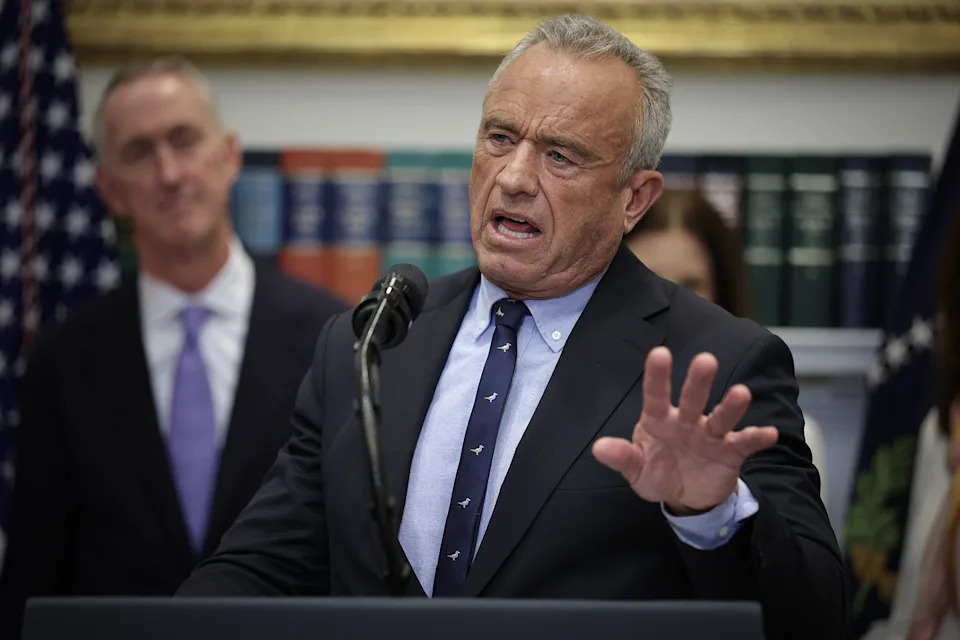
Health Secretary Robert F. Kennedy Jr. has pushed his department to scale back health data collection, federal research grants, and the childhood vaccination schedule. | Alex Wong/Getty Images
The National Institutes of Health, the world’s largest single funder of biomedical research, saw an estimated $2.7 billion reduction in grant support this year and faces proposed multi-billion-dollar cuts in future budgets. Numerous NIH-funded projects—ranging from improving Alzheimer’s trial recruitment to studying how contaminated water affects fetal development—were canceled, removing vital avenues for answering complex public-health questions that federal surveys alone cannot resolve.
Vaccines and Advisory Decisions
The administration reworked the childhood vaccination schedule under the influence of Health Secretary Robert F. Kennedy Jr. and vaccine-skeptical advisers. For example, the long-standing recommendation for a birth dose of hepatitis B was rescinded and replaced with guidance that, if skipped, the dose be delayed until two months of age—despite committee members raising concerns about insufficient evidence for that specific change.
Climate and Weather Monitoring
Agencies such as the National Oceanic and Atmospheric Administration (NOAA) experienced budget and staffing cuts that reduced activities like weather-balloon launches and hurricane research flights. The U.S. also withdrew its last research vessel from Antarctica and moved to dismantle or downsize leading climate institutions. The White House signaled a desire to remove climate references from policy discourse and to shutter climate-related datasets and tools.
Environmental Enforcement and Research
The Environmental Protection Agency narrowed its enforcement role, reduced litigation and eased avenues for compliance exemptions. The EPA’s Office of Research and Development and the Human Studies Facility were shuttered, and plans have been floated to remove pollution-monitoring instruments from next-generation satellites and to end mandatory greenhouse-gas reporting for thousands of facilities—measures that would reduce visibility into pollution and hamper accountability.

Weather balloons are important devices for weather forecasting. The US has seen a decline in weather balloon launches after cuts to NOAA. | Seth Herald/AFP via Getty Images
Economic and Census Data
Labor statistics were threatened after the president removed the head of the Bureau of Labor Statistics following revised jobs data that showed weakness. Leadership vacancies at the agency and earlier proposals to suspend routine reports raised alarms about the integrity of labor-market measurement.
Separately, the administration has sought to roll back planned Census Bureau updates that would add a Middle Eastern or North African checkbox and alter Hispanic/Latino reporting—changes designed to improve representation for undercounted groups. There have also been repeated attempts to exclude undocumented residents from census counts, a move with major implications for representation and federal funding.
Why This Matters
Federal data are difficult for private actors to replicate at scale. Universities, nonprofits and news organizations are archiving and attempting to preserve government datasets, but those efforts cannot fully substitute for comprehensive, ongoing federal measurement. A sustained campaign to diminish or politicize official numbers will have long-term consequences: impaired public-health responses, weaker climate and pollution monitoring, murky economic signals and diminished public trust.
"Strip away the measurements and tallies, and the consequences pile up fast: scientific research slows, early warnings get missed, and trust in institutions erodes."
Unless reversed, these policy choices will shape the nation’s ability to identify problems and measure progress for years to come.


