Florida State University researchers used advanced computer modelling to identify a novel quantum phase they call the "pinball state", where electrons in a moiré-patterned Wigner crystal alternate between insulating and conducting roles. The effect arises in two-layer moiré systems that template electrons into generalized Wigner crystals with varied shapes (stripes, honeycomb, etc.). The team presents both zero-temperature and finite-temperature analyses showing the partially melted "pinball liquid" phase can be surprisingly stable, though likely only at temperatures near absolute zero. These results guide experimental tests and suggest new ways to manipulate electronic phases by tuning geometry, density, and temperature.
Researchers Model a Strange 'Pinball' Quantum State in Moiré Electron Crystals
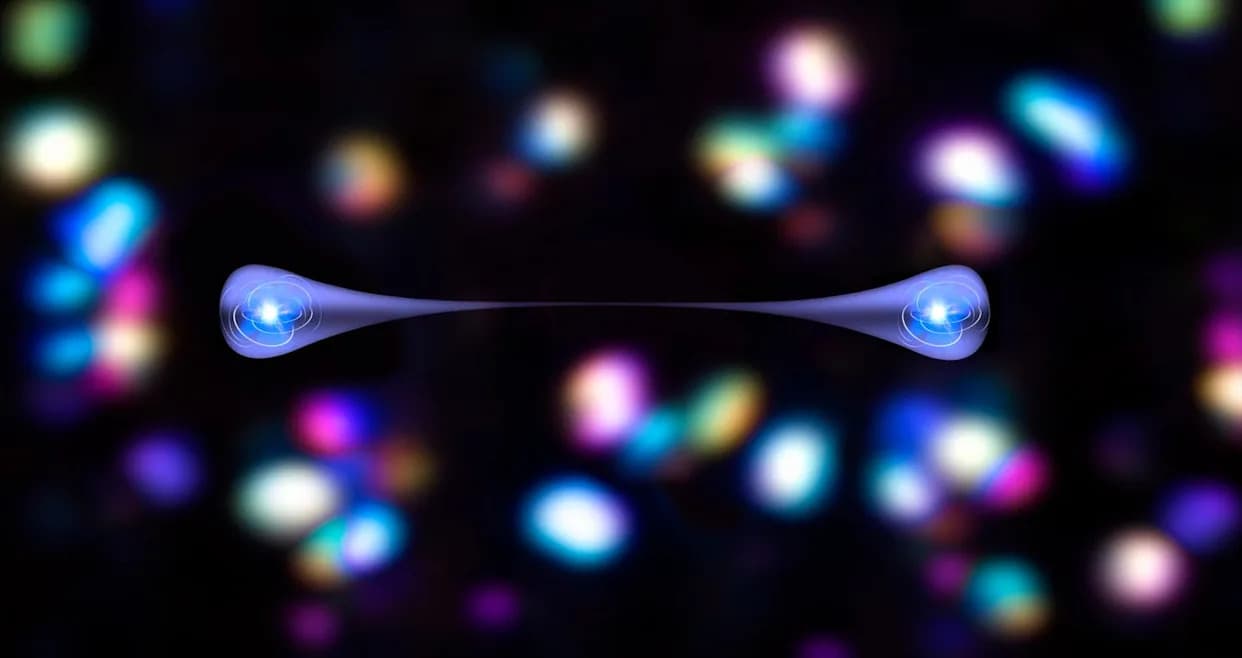
Scientists Discovered a New, Weird Quantum StateVICTOR de SCHWANBERG/SCIENCE PHOTO LIBRARY - Getty Images
Scientists at Florida State University report a strikingly unusual quantum phase they call a "pinball state", in which electrons in a specially patterned two-dimensional system alternate between localized (insulating) and mobile (conducting) roles. The result comes from detailed computational modelling of electrons confined by a moiré-patterned ``stencil'' that stabilizes a generalized Wigner crystal.
How the Effect Emerges
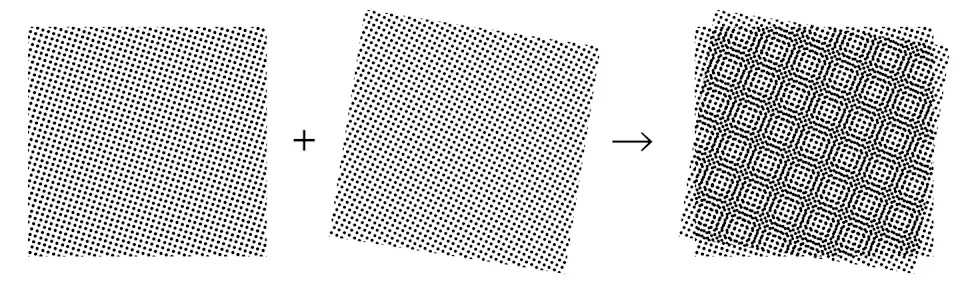
The team modelled a two-layer moiré system—two atomically thin films stacked with a slight twist so their patterns interfere and create a larger-scale template. When electrons are added to this landscape, their mutual repulsion can organize them into a Wigner crystal, a lattice formed essentially by the electrons themselves. By tuning parameters such as electron density, temperature, and moiré geometry, the researchers found conditions that produce novel crystalline shapes (stripes, honeycombs, and other arrangements) and a partially melted phase in which some electrons remain fixed while others move freely.
What the "Pinball" State Means
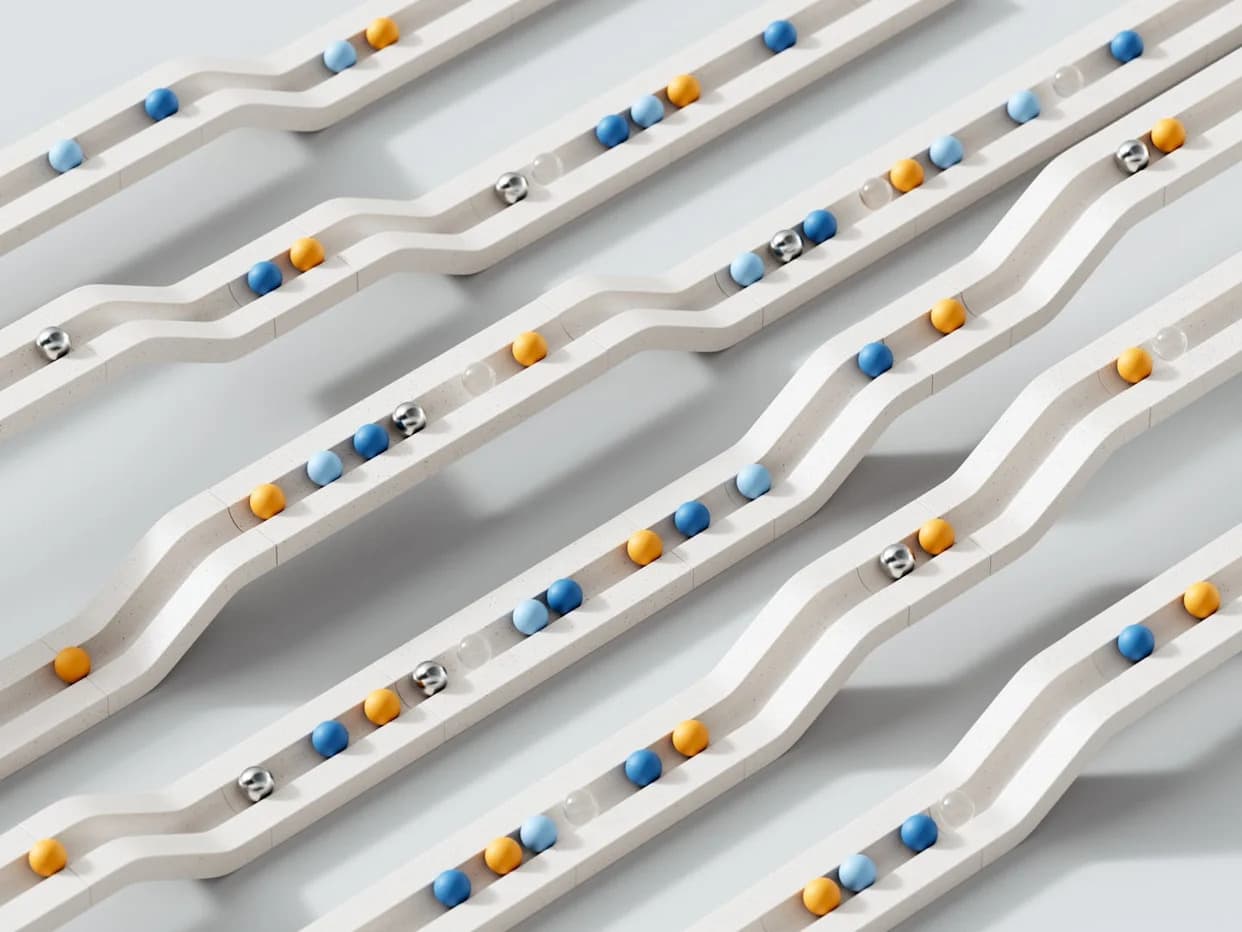
In the modeled "pinball liquid" phase, part of the electron system forms an insulating backbone while the remainder flows through the gaps, similar to balls bouncing past stationary pins in a pinball machine. The team emphasizes this behavior was predicted theoretically before, but their more realistic simulations show it is feasible in laboratory-like conditions—although likely only at temperatures approaching absolute zero.
Nilsjohan~commonswiki
"Some electrons want to freeze and others want to float around, which means that some are insulating and some are conducting electricity," said coauthor Cyprian Lewandowski.
Why This Matters
The study provides a unified analysis of zero-temperature and finite-temperature behavior for twisted metal dichalcogenide (moiré TMD) systems and maps how generalized Wigner crystals melt as conditions change. Besides identifying the pinball phase, the authors draw connections between parts of their model and other theoretical frameworks—useful analogies that can guide future experiments and theory.
Although practical applications are speculative now, the ability to switch regions of a material between insulating and conducting behavior—with control over geometry and density—could inform future quantum devices or electronic components that exploit correlated electron behavior. The researchers note the next steps are experimental verification and exploring which "quantum knobs" (layer alignment, density, temperature) allow reliable control of these phases.
Bottom line: Advanced computational modelling shows that moiré-patterned electron crystals can host a robust, partially melted "pinball" phase where localized and mobile electrons coexist—an intriguing new state of matter that invites experimental testing at cryogenic temperatures.
Help us improve.