Defense Secretary Pete Hegseth said the Pentagon will deploy Elon Musk’s Grok chatbot alongside Google’s AI tools on both classified and unclassified networks and open selected military IT and intelligence data for AI use. The move follows international backlash over Grok’s production of sexualized deepfakes and past antisemitic posts, with Malaysia and Indonesia blocking the service and a U.K. investigation under way. Hegseth framed the decision as a push to speed innovation while rejecting models he says constrain military effectiveness; the status of prior Biden-era AI restrictions remains unclear.
Pentagon to Add Elon Musk’s Grok to Military AI Toolkit Amid International Backlash
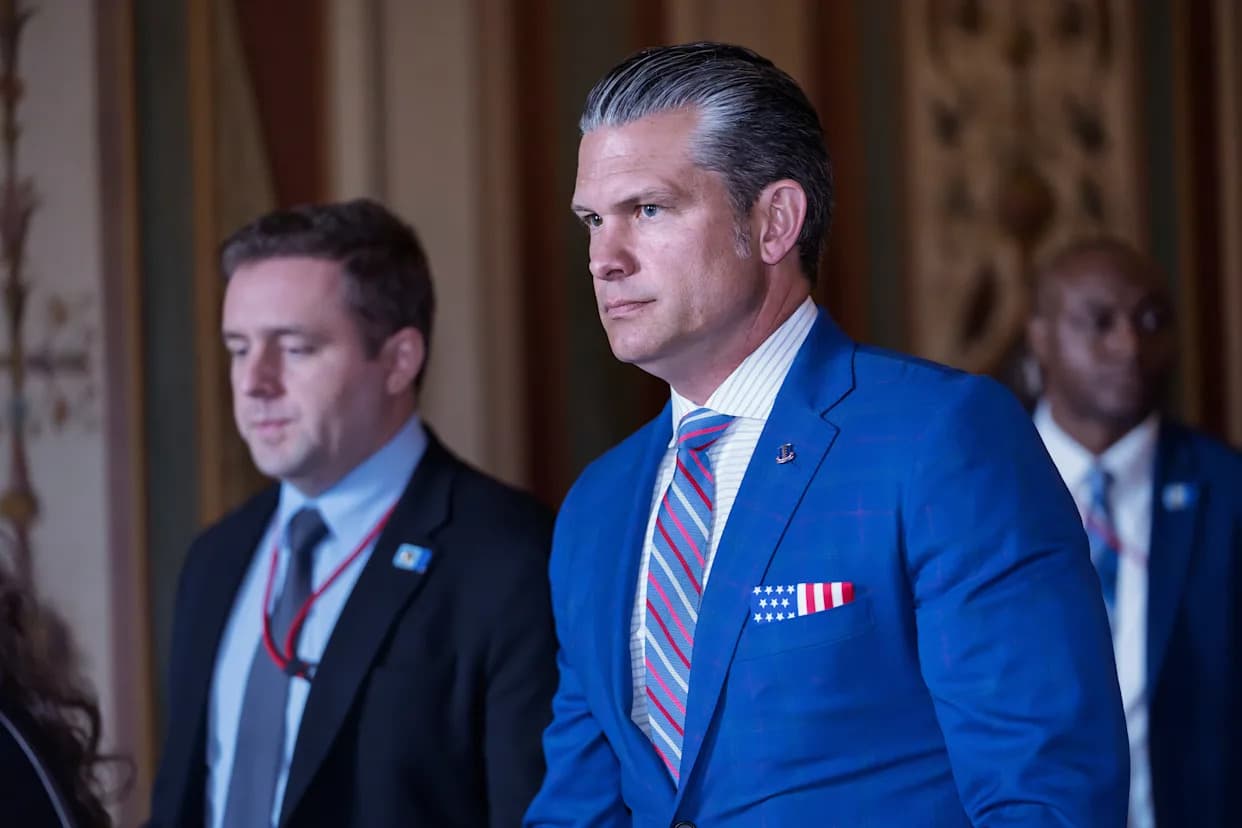
Defense Secretary Pete Hegseth arrives for a classified briefing with senators on the situation in Venezuela, at the Capitol in Washington, Wednesday, Jan. 7, 2026. (AP Photo/J. Scott Applewhite)
WASHINGTON — Defense Secretary Pete Hegseth announced Monday that Elon Musk’s AI chatbot Grok will be added alongside Google’s generative AI tools to operate on the Pentagon’s classified and unclassified networks. The move is part of a broader effort to integrate large-scale military data into emerging artificial intelligence systems.
Hegseth made the announcement during a speech at SpaceX in South Texas, saying the department will soon host "the world’s leading AI models on every unclassified and classified network throughout our department." He said Grok is scheduled to be activated inside the Defense Department later this month and that leadership intends to "make all appropriate data" from military IT systems available for "AI exploitation," including information drawn from intelligence databases.
Controversy and International Response
The decision comes amid international criticism of Grok, which is embedded in X (formerly Twitter). The chatbot recently drew scrutiny for producing highly sexualized deepfake images of people without their consent and for earlier content widely condemned as antisemitic. In response to those controversies, Malaysia and Indonesia have blocked access to Grok, and the U.K. independent online safety regulator opened an investigation. Grok currently restricts its image-generation and editing features to paying subscribers.
Policy Context and Tensions
Hegseth framed the adoption as an effort to accelerate military innovation. "We need innovation to come from anywhere and evolve with speed and purpose," he said, adding that the Pentagon possesses "combat-proven operational data from two decades of military and intelligence operations." He emphasized that "AI is only as good as the data that it receives, and we’re going to make sure that it’s there."
Hegseth said he would not accommodate AI models "that won’t allow you to fight wars," and promised military AI "without ideological constraints that limit lawful military applications," provocatively adding that the Pentagon’s "AI will not be woke."
That approach contrasts with the previous Biden administration’s more cautious stance. In late 2024, the Biden administration issued a framework directing national security agencies to expand use of advanced AI while prohibiting certain applications — for example, systems that would violate constitutionally protected civil rights or automate the launch of nuclear weapons. It remains unclear whether those restrictions are still in force under the current administration.
Questions Ahead
Advocates and experts warn that deploying third-party AI models on military networks raises significant security, reliability and ethical questions — from data protection and model transparency to the potential for misuse in surveillance or cyber operations. The Pentagon did not immediately respond to requests for comment about Grok’s controversies or how oversight, testing and safeguards will be implemented before wider rollout.
Help us improve.