The largest recent review of stopping weight-loss drugs found that people who stop GLP-1 agonists regain weight about four times faster than those who stop diet-and-exercise programmes. Across 37 studies, average regain was 0.4 kg per month; trials of semaglutide and tirzepatide showed ~15 kg lost on treatment and ~10 kg regained within a year. Researchers project a return to starting weight in ~18 months and note cardiovascular improvements also reverted in roughly 1.4 years, highlighting the need for long-term strategies and cost-effectiveness planning.
Stop the Shot, Watch the Kilos Return: New Review Finds Rapid Weight Regain After Stopping GLP-1 Drugs
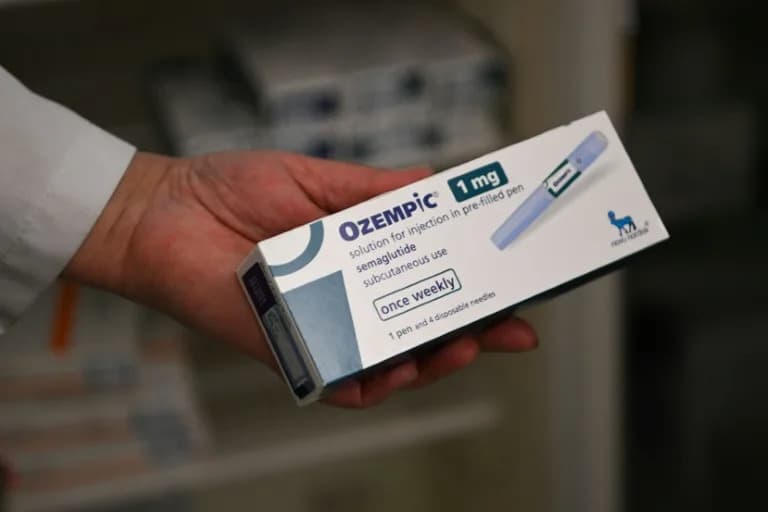
A new generation of appetite-suppressing drugs called GLP-1 agonists -- which includes blockbuster brands Ozempic -- has become massively popular in recent years. (Armend NIMANI)(Armend NIMANI/AFP/AFP)
New research shows that people who stop taking the latest injectable weight-loss drugs — GLP-1 agonists — tend to regain weight much faster than those who stop diet-and-exercise programmes. The study, a comprehensive review led by British researchers and published in the BMJ, examined 37 studies and highlights important implications for patients, clinicians and health systems.
Key Findings
The review found that, on average, people who discontinued weight-loss medications regained about 0.4 kg per month. In trials of the newer agents semaglutide (found in Ozempic and Wegovy) and tirzepatide (used in Mounjaro and Zepbound), participants lost nearly 15 kg on treatment but regained roughly 10 kg within one year. At that pace, researchers projected a return to baseline weight in about 18 months.
Cardiovascular markers that had improved while patients were on medication—such as blood pressure and cholesterol—also reverted to baseline after about 1.4 years following treatment cessation.
Why The Weight Returns
Lead author Sam West of Oxford University noted that "greater weight loss tends to result in faster weight regain." He added that a separate analysis suggested weight regain was "consistently faster after medication, regardless of the amount of weight lost in the first place." One possible explanation is that lifestyle programmes can produce smaller weight loss but more durable behaviour change—people who adopt healthier eating and activity habits may keep those habits longer as weight slowly returns.
"This all appears to be a good news story," said Susan Jebb, a public health nutrition scientist at Oxford University and co-author of the BMJ study. "But obesity is a chronic relapsing condition. One would expect that these treatments need to be continued for life, just in the same way as blood pressure medication."
Practical Implications
The review also highlighted real-world challenges: approximately half of patients discontinue GLP-1 medications within a year, often because of side effects such as nausea or high cost (these drugs can exceed $1,000 per month in the United States). If long-term or lifelong treatment is required to maintain weight loss, this will affect how national health systems assess cost-effectiveness.
Outside experts stressed the need for broader strategies. Garron Dodd, a metabolic neuroscience researcher at the University of Melbourne, said: "This new data makes it clear they are a starting point, not a cure. Sustainable treatment will likely require combination approaches, longer-term strategies, and therapies that reshape how the brain interprets energy balance, not just how much people eat."
What Patients Should Know
GLP-1 drugs remain a valuable tool for achieving substantial short-term weight loss and can improve metabolic health while they are taken. However, patients and clinicians should plan for long-term management, including lifestyle support and realistic discussions about duration of therapy, side effects, costs and monitoring of cardiovascular risk factors.
Bottom line: New injectable weight-loss drugs deliver large initial losses but may require ongoing use or comprehensive follow-up strategies to sustain benefits.
Help us improve.