
A 66-million-year-old mosasaur tooth from the Hell Creek Formation shows oxygen and strontium isotope signatures consistent with freshwater exposure and bears no signs of long-distance transport. Surface textures suggest the tooth belongs to Prognathodontini, and the animal may have reached about 12 metres (40 ft). Researchers propose falling salinity in the Western Interior Seaway allowed some mosasaurs to adapt to brackish or freshwater habitats and exploit riverine niches, though more fossils are needed to confirm regular freshwater behaviour.
Giant Mosasaur — Bigger Than A Killer Whale — Fossil Tooth Suggests It Also Hunted Rivers

Prehistoric sea monster bigger than a killer whale may have terrorised rivers too
A colossal mosasaur tooth unearthed in North Dakota indicates that at least some of these late Cretaceous marine predators may have entered river systems as well as prowled the open ocean.
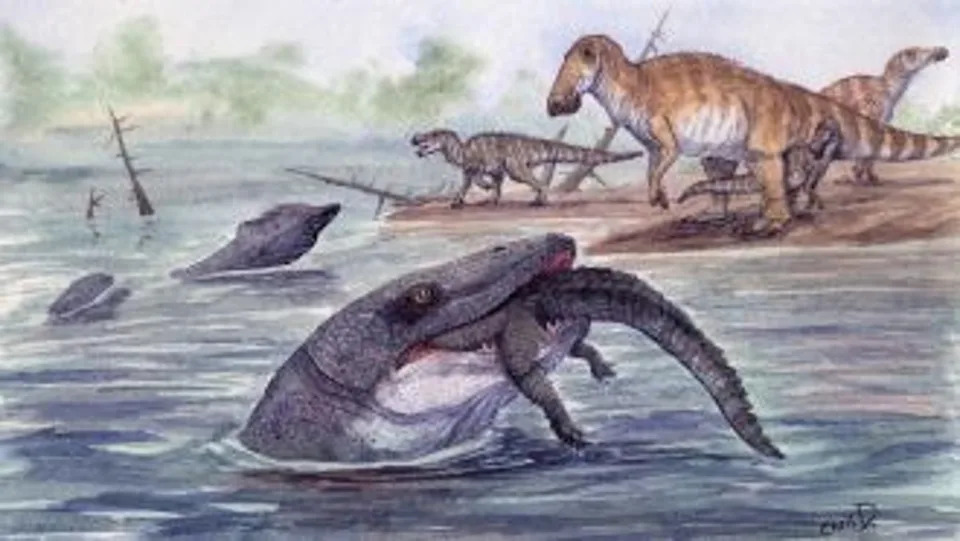
Reconstruction of Hell Creek Mosasaur (Christopher DiPiazza)
Discovery and Chemical Evidence
The 66-million-year-old tooth was recovered from the Hell Creek Formation and analysed by researchers at Uppsala University. Chemical signatures — notably variants of oxygen and strontium isotopes — are consistent with exposure to freshwater rather than open ocean conditions. The tooth's surface texture also resembles teeth from the mosasaur tribe Prognathodontini, and the team has nicknamed the specimen the 'King of the Riverside.' The find was reported in the journal BMC Zoology.
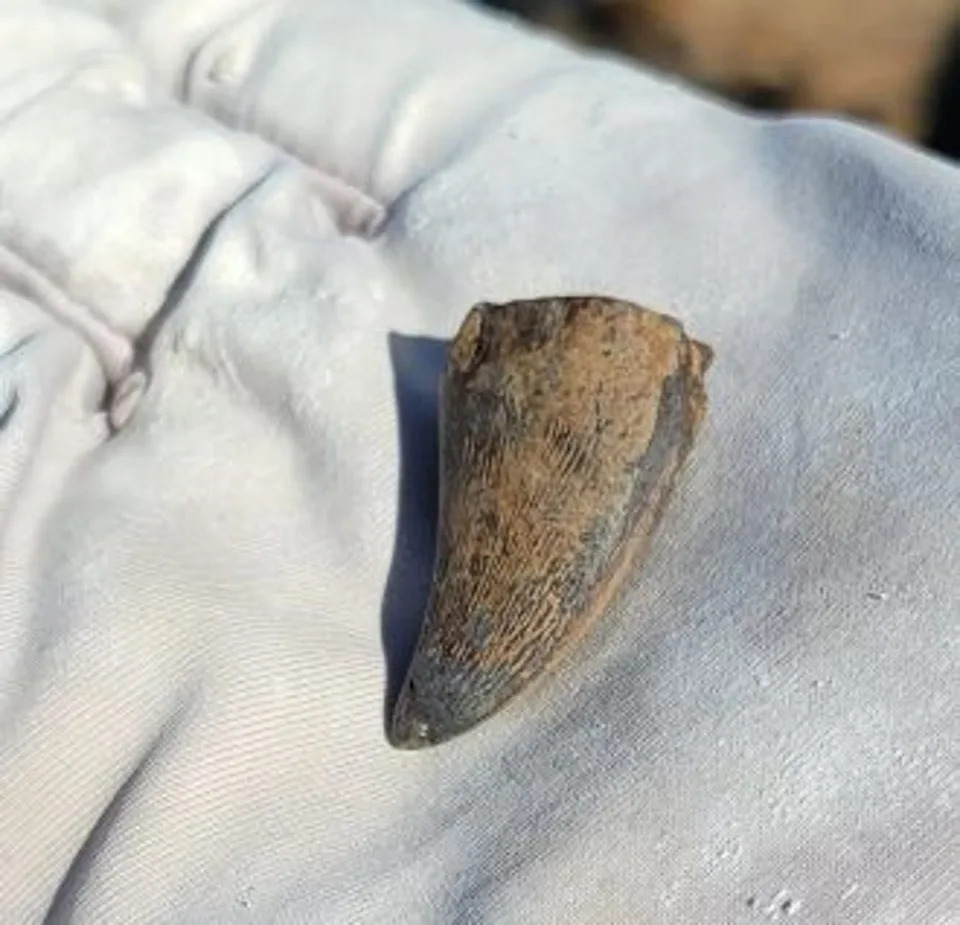
Mosasaur tooth found in Hell Creek (Trissa Shaw)
Why Scientists Think It Was Riverborne
In addition to isotopic markers, the tooth shows no clear signs of long-distance transport after death, suggesting the animal may have lived and died locally in a river-connected environment. Based on size estimates for related species, the mosasaur that owned the tooth may have reached up to about 12 metres (40 ft), occupying a niche similar to modern saltwater crocodiles — powerful, bulky-skulled predators capable of taking large prey.
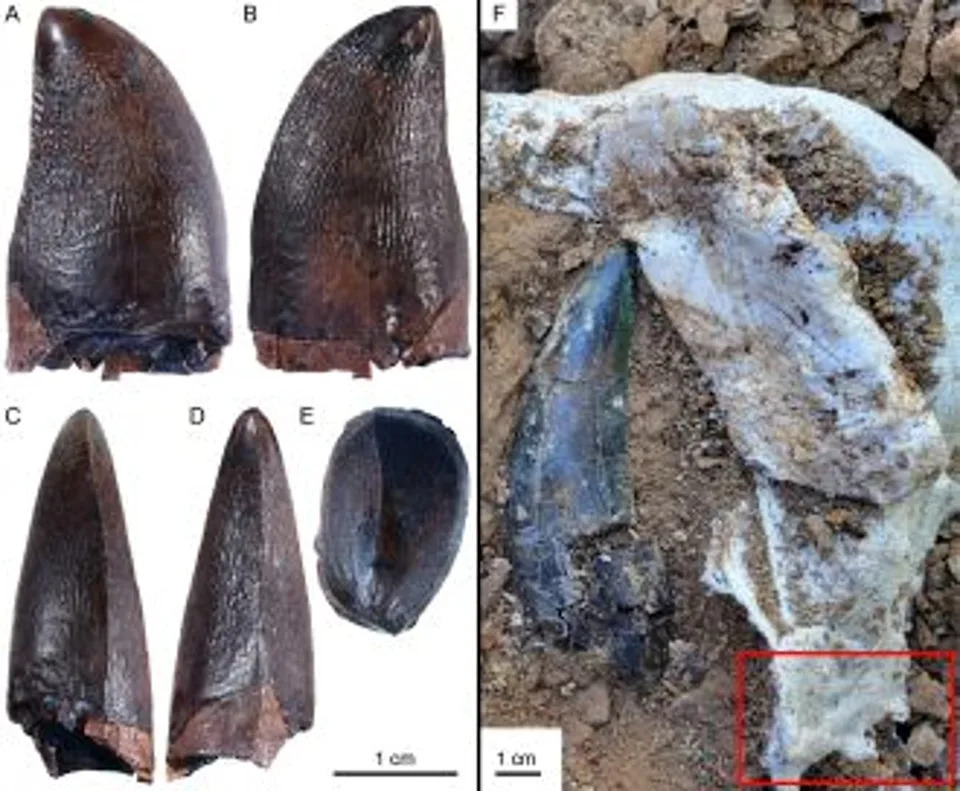
(L) Different sections of the mosasaur tooth, and (R) the tooth photographed in situ next to a t. rex tooth (Melanie During)
Paleoenvironmental Context
Researchers propose the Hell Creek site was once connected to the Western Interior Seaway, a vast inland sea that shrank and freshened toward the end of the Cretaceous. As regional salinity declined, some marine taxa — possibly including mosasaurs — may have adapted to brackish or freshwater conditions and moved into river channels.
'This adaptability may indicate that the large rivers of the Hell Creek paleoenvironment could support large-bodied taxa,' the authors write, adding that ecological flexibility could have helped mosasaurs exploit a range of niches during the Late Cretaceous.
Limitations and Next Steps
The authors caution that this interpretation currently rests on a single tooth. While the geochemical and anatomical evidence is compelling, additional fossils from the region would strengthen the case for regular freshwater habitation or hunting. Future discoveries and broader sampling of isotopes in contemporary fauna will help clarify how widespread freshwater use by mosasaurs may have been.
Bottom line: The Hell Creek tooth provides intriguing evidence that some mosasaurs could enter and perhaps hunt in rivers, reflecting ecological flexibility as coastal seas changed in the final million years of the Cretaceous.


