The study finds that satellite glial cells can transfer mitochondria into sensory neurons via tunneling nanotubes, extracellular vesicles, and membrane channels, helping maintain nerve health. Disrupting this transfer increases spontaneous neuronal firing and pain sensitivity in mice, while supplying healthy glia reduces pain in neuropathy models. The protein MYO10 is essential for nanotube formation, and larger fibers receive more donated mitochondria than small fibers. These insights suggest potential mitochondrial-based therapies, though clinical translation will require more study.
Glial Cells Can Donate Mitochondria To Sensory Nerves — A New Path To Treat Chronic Pain
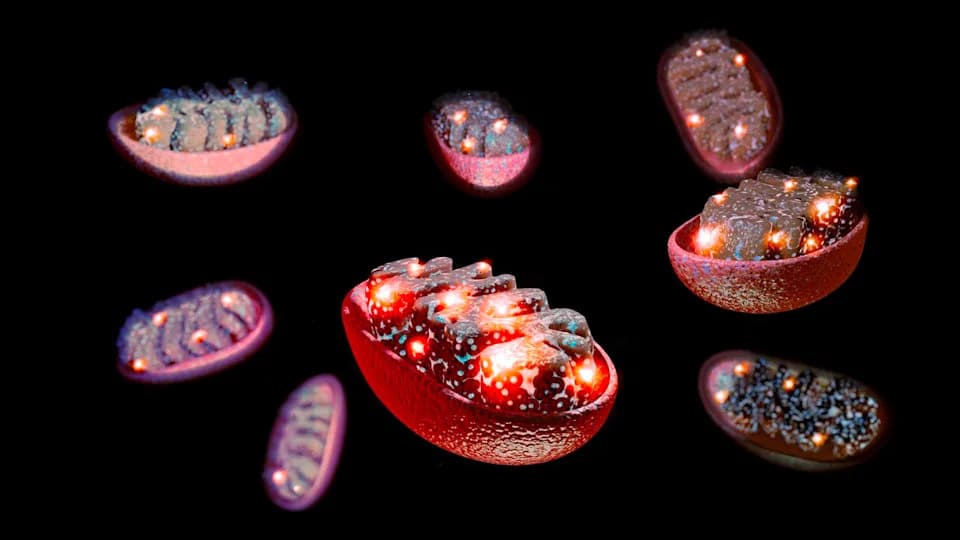
The powerhouses of cells, the mitochondria, may be key to protecting nerves from damage and dysfunction. | Credit: Naeblys via Getty Images
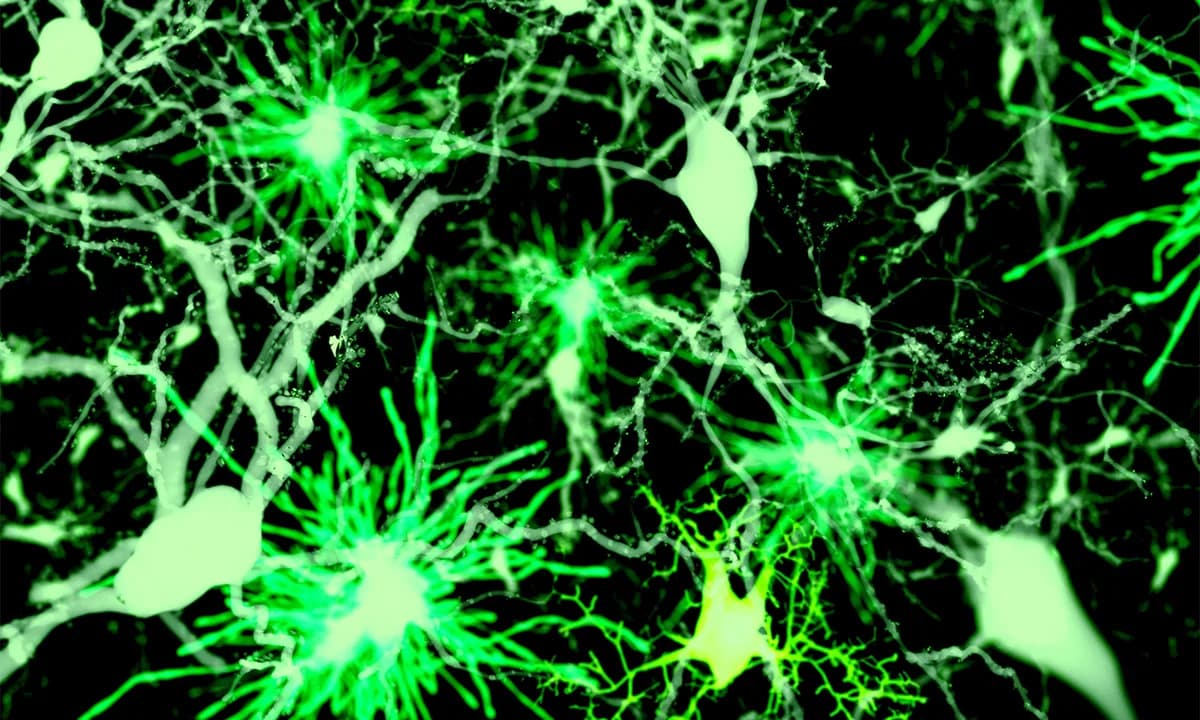
Supplying damaged peripheral nerves with fresh mitochondria may reduce chronic nerve pain, according to a new study that combined experiments on mouse cells, live mice and human tissues. The research reveals that satellite glial cells — support cells that wrap sensory nerve cell bodies — can transfer mitochondria into neurons, and that failures in this transfer can leave nerves energetically depleted and hyperactive.
How Glia Help Power Nerves
Neurons that detect pressure, temperature and pain have cell bodies clustered near the spinal cord and extend very long fibers out to the body. Maintaining energy along these long axons is a logistical challenge because mitochondria produced near the cell body must be transported far down the fiber. The new work shows that satellite glial cells can supplement neuronal energy supplies by donating mitochondria directly to sensory neurons.
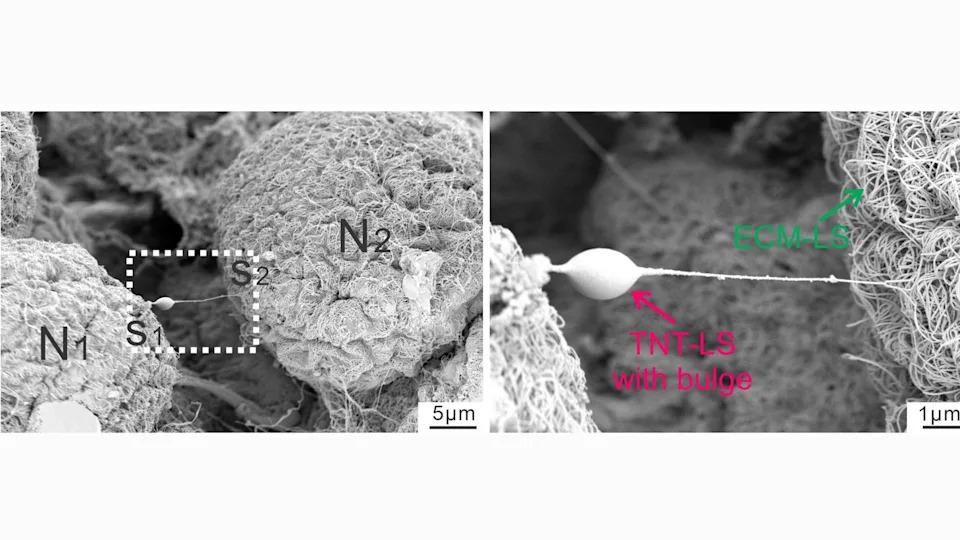
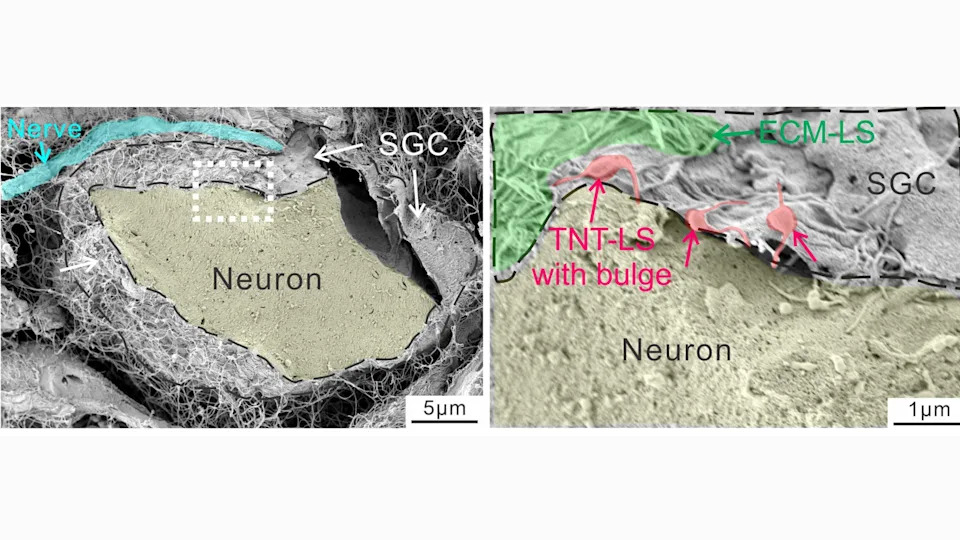
two images show a nerve cell with a tiny tube extending from its surface. a bulge in the tube indicates something is inside it
Evidence From Images And Molecular Tags
Using fluorescent tags, the team observed mitochondria moving from glial cells into neurons. They captured transient tunneling nanotubes — tiny conduits between cells — with characteristic "bulges" that traveled along the tubes, consistent with organelle transport. The nanotubes disassembled after transfer, and the researchers identified the motor-related protein MYO10 as critical for constructing and extending these tubes from glia.
Multiple Transfer Routes
Besides tunneling nanotubes, mitochondria were sometimes transferred inside extracellular vesicles released by glia or via brief membrane channels that connected donor and recipient cells. These alternative routes suggest redundancy in how glia support neuronal energetics.
two images show a neuron and glial cell and tiny tubes connecting the two
Physiological And Disease Relevance
Disrupting glia-to-neuron mitochondrial transfer in healthy lab mice increased sensitivity to painful stimuli and caused abnormal spontaneous firing of sensory neurons — a mechanism that can drive chronic pain and, over time, neurodegeneration. In mouse models of neuropathy triggered by chemotherapy or diabetes, the authors found impaired mitochondrial exchange from glia to neurons, which contributed to pain. Transplanting healthy glial cells into affected mice reduced pain, apparently by supplying functional mitochondria.
Size Matters: Small Fibers More Vulnerable
The team observed that larger sensory fibers received a higher volume of mitochondria from glia than smaller fibers. This apparent preference may help explain why small-fiber neuropathies (which cause numbness, burning or tingling in hands and feet) are especially common in diabetes and some chemotherapy-induced neuropathies.
Therapeutic Possibilities And Cautions
These findings suggest two broad therapeutic approaches: boosting satellite glial cell function so they produce and transfer more mitochondria, or harvesting and delivering mitochondria (or healthy glia) to damaged nerves. However, the research is preclinical. Important open questions remain about safety, delivery methods, long-term effects and whether similar mechanisms operate across all human neuropathies.
Study lead: Ru-Rong Ji, director of the Duke Center for Translational Pain Medicine. Published in Nature, Jan. 7.
Further research is needed to map molecular regulators of transfer, determine why glia preferentially support larger fibers, and test whether mitochondria-based therapies are safe and effective in humans. Still, the study highlights a previously underappreciated role for glia in maintaining neuronal energy balance and points to new directions for treating chronic nerve pain.
Help us improve.