Mississippi will see 13 full moons in 2026, including a calendar blue moon on May 31, three supermoons (Jan. 3, Nov. 24, Dec. 23), two micromoons (May 31, June 29) and two lunar eclipses (total on Mar. 3; partial on Aug. 27). Peak times are listed in Central Time with Jackson-area rise/set estimates and notes on traditional moon names. Check local listings and weather for final viewing times.
Full Moons of 2026 in Mississippi: Dates, Peak Times, Eclipses and the Stories Behind Their Names
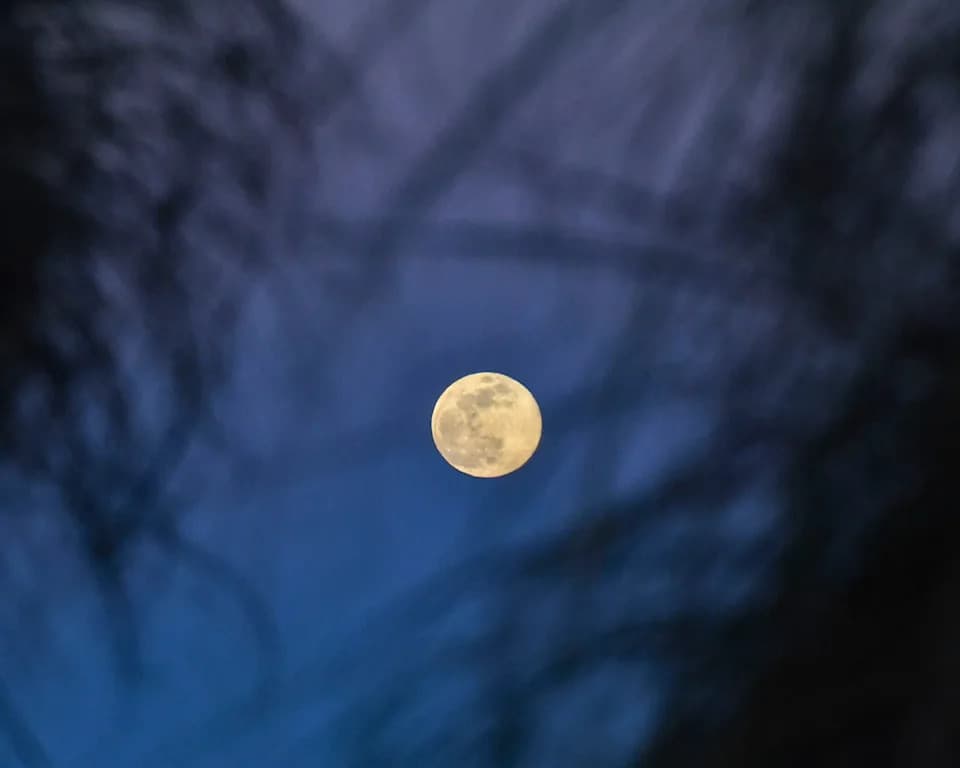
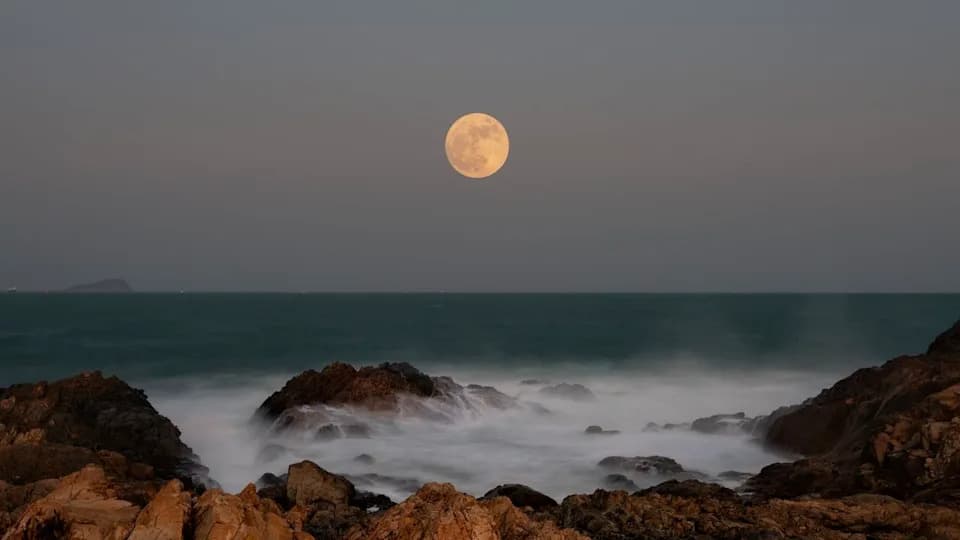
The wolf moon is seen in 2023 rising over the Atlantic Ocean on Friday, Jan. 6, 2023 in Stuart, Florida.
Skywatchers in Mississippi have plenty to look forward to in 2026: there will be 13 full moons (including a calendar blue moon), three supermoons, two lunar eclipses (one total and one partial) and two micromoons. Below are the full-moon dates, peak times in Central Time (CT), local Jackson-area moonrise/meridian/set estimates from timeanddate.com, and brief notes on traditional names and viewing highlights.
Full Moons Calendar (2026)
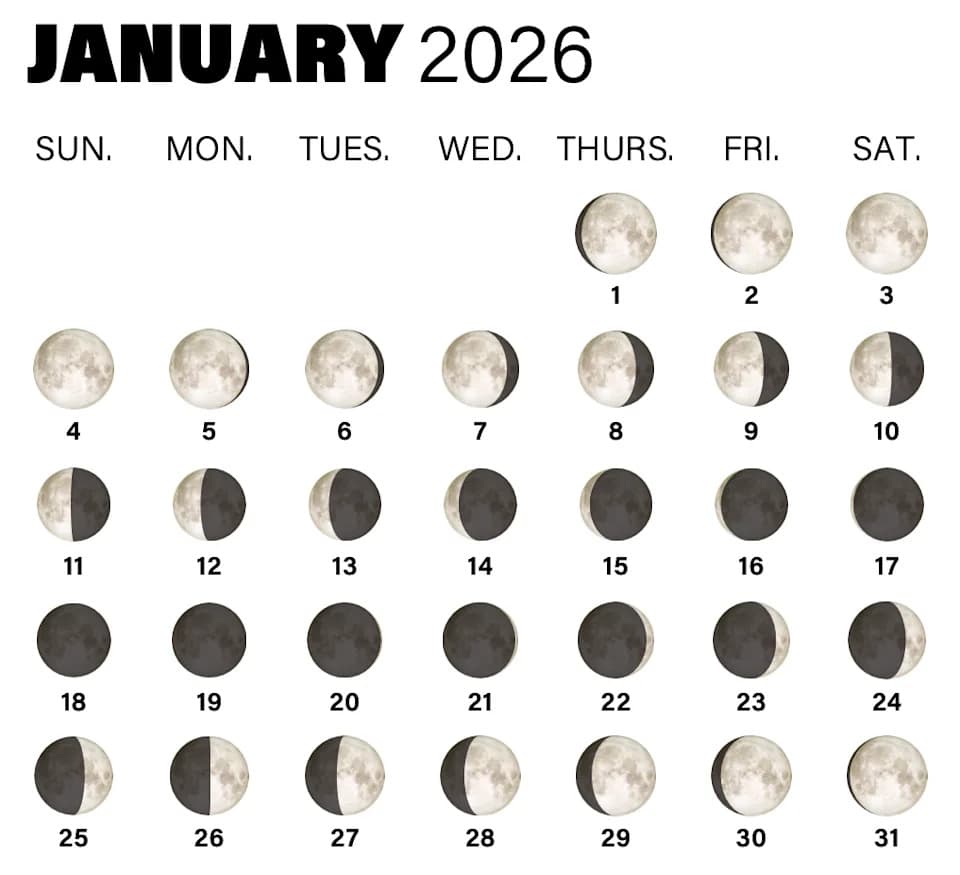
Every calendar month in 2026 contains a full moon on these dates (all CT): Jan. 3; Feb. 1; March 3; April 1; May 1 and May 31; June 29; July 29; Aug. 27; Sept. 26; Oct. 25; Nov. 24; Dec. 23.
Jan. 3 — Wolf Moon (Supermoon)
Peak: Jan. 3 at 4:02 a.m. CT (Mississippi). This full moon is a supermoon — it will be closer to Earth and thus a bit larger and brighter than average. Jackson (approx.): moonrise ~4:19 p.m. Jan. 2, meridian ~11:56 p.m., set ~7:29 a.m. Jan. 3. Notes: Traditional names include Center Moon, Freeze Up Moon and Hard Moon. Supermoons can appear up to ~14% larger and ~30% brighter than the year's faintest full moon and can contribute to higher tides.
Feb. 1 — Snow Moon
Peak: Feb. 1 at 4:09 a.m. CT. Jackson (approx.): moonrise ~4:19 p.m. Jan. 31, meridian ~11:40 p.m., set ~6:52 a.m. Feb. 1. Notes: Named for typically heavy winter snow; other names include Bald Eagle Moon, Hungry Moon and Groundhog Moon.
March 3 — Worm Moon (Total Lunar Eclipse)
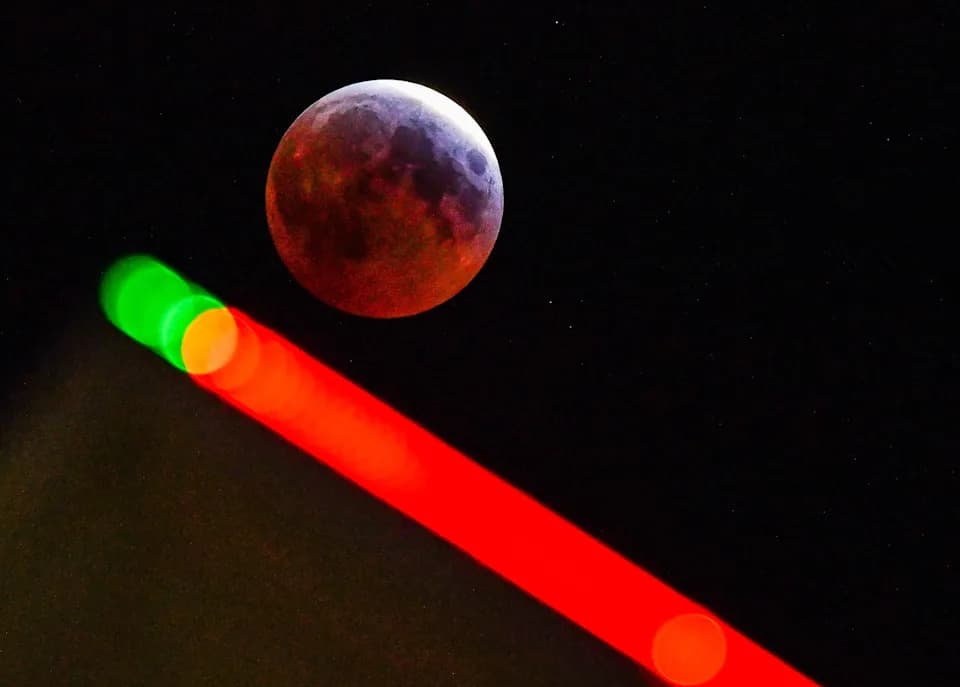
Peak: March 3 at 5:37 a.m. CT. Eclipse: A total lunar eclipse is visible for much of the Americas. Timeanddate.com lists totality starting around 2:44 a.m. CT, maximum ~5:33 a.m. CT, and continuing until moonset near 6:28 a.m. CT for some locations. Jackson (approx.): moonrise ~5:25 p.m. March 2, set ~5:59 a.m. March 3. Notes: The Worm Moon name ties to emerging insect life in spring; other historical names include Crow Comes Back Moon and Sugar Moon.
April 1 — Pink Moon
Peak: April 1 at 9:11 p.m. CT. Jackson (approx.): moonrise ~7:14 p.m., meridian ~12:24 a.m., set ~6:50 a.m. Notes: Named for spring wildflowers (ground phlox), not the moon’s color. Also called Breaking Ice Moon, Budding Moon, Sucker Moon.
May 1 — Flower Moon
Peak: May 1 at 12:23 a.m. CT. Jackson (approx.): moonrise ~7:03 p.m. April 30, set ~5:50 a.m. May 1. Notes: Reflects abundant spring blooms across North America.
May 31 — Blue Moon (Micromoon)
Peak: May 31 at 3:45 a.m. CT. This is the calendrical "blue moon" (the second full moon in May) and also a micromoon — it occurs near the moon’s farthest orbital point and will appear smaller than average. Jackson (approx.): moonrise ~7:52 p.m. May 30, meridian ~12:00 a.m., set ~5:43 a.m. May 31. Notes: Calendrical blue moons occur roughly every 30 months; the term can also mean the fourth full moon in a season with four full moons.
June 29 — Strawberry Moon (Micromoon)
Peak: June 29 at 6:56 p.m. CT. This will be a micromoon and appear slightly smaller than average. Jackson (approx.): moonrise ~8:24 p.m., meridian ~1:18 a.m., set ~6:14 a.m. Notes: Named for the seasonal ripening of strawberries; alternative names include Birth Moon, Hot Moon and Green Corn Moon.
July 29 — Buck Moon
Peak: July 29 at 6:56 p.m. CT. Jackson (approx.): moonrise ~8:50 p.m., meridian ~12:52 a.m., set ~7:05 a.m. Notes: Named for bucks’ antler growth; other names include Salmon Moon and Thunder Moon.
Aug. 27 — Sturgeon Moon (Partial Lunar Eclipse)
Peak: Aug. 27 at 11:18 p.m. CT. Eclipse: A partial lunar eclipse is visible across the Americas, Europe, Africa and parts of Asia. In Mississippi the moon will begin taking on an orangish tint around 9:33 p.m., reach maximum coverage about 11:12 p.m., and the partial phase ends near 12:51 a.m., per timeanddate.com and NASA. Jackson (approx.): moonrise ~7:21 p.m., meridian ~12:20 a.m., set ~6:55 a.m. Notes: Traditionally tied to seasonal sturgeon fishing in Great Lakes and Lake Champlain regions.
Sept. 26 — Corn Moon (Harvest Moon Timing)
Peak: Sept. 26 at 11:49 a.m. CT. Jackson (approx.): moonrise ~6:45 p.m., meridian ~12:26 a.m., set ~7:48 a.m. Notes: Named for corn harvests; many tribes also called it Autumn Moon or Falling Leaves Moon. The Harvest Moon is the full moon closest to the autumnal equinox and may fall in September or October.
Oct. 25 — Hunter’s Moon
Peak: Oct. 25 at 11:11 p.m. CT. Jackson (approx.): moonrise ~5:47 p.m., set ~7:45 a.m. Notes: Traditionally marks preparation for winter hunting and provisioning; sometimes this full moon serves as the Harvest Moon.
Nov. 24 — Beaver Moon (Supermoon)
Peak: Nov. 24 at 8:53 a.m. CT. This is the second supermoon of 2026. Jackson (approx.): moonrise ~4:51 p.m., set ~7:58 a.m. Notes: Named for beaver-trapping season; other names include Whitefish Moon and Frost Moon.
Dec. 23 — Cold Moon (Supermoon)
Peak: Dec. 23 at 7:28 p.m. CT. This is the third supermoon of 2026. Jackson (approx.): moonrise ~4:37 p.m., set ~7:45 a.m. Notes: Also called Winter Maker Moon; reflects cold winter conditions in the northern hemisphere.
Quick Terminology
Supermoon: A full moon near the moon’s closest orbital point (perigee). It can appear up to ~14% larger and ~30% brighter compared with the faintest full moon of the year and can cause higher-than-normal tides.
Micromoon: A full moon near apogee (the moon’s farthest point), appearing smaller than average.
Blue Moon: Most commonly the second full moon in a single calendar month (as in May 2026); alternatively defined as the fourth full moon in a season that has four full moons.
Sources and Viewing Tips
Peak times and Jackson-area rise/set estimates are drawn from timeanddate.com; eclipse visibility details are from NASA. For the best viewing: check local weather and final timing adjustments for your exact location, pick a dark site away from bright lights, and allow your eyes to adapt to the dark for 20–30 minutes.
Bylines: This improved version summarizes reporting from Mississippi Clarion Ledger, NASA, timeanddate.com and the Old Farmer's Almanac.
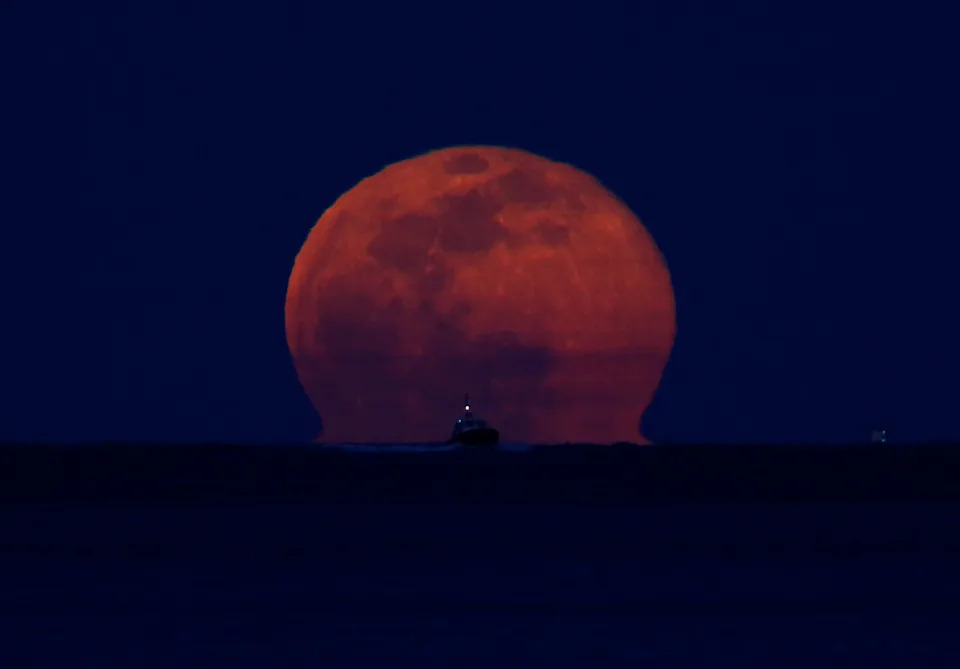
A boat heads into Marsamxett Harbour as the Full Snow Moon rises off Valletta, Malta, Feb. 9, 2020.
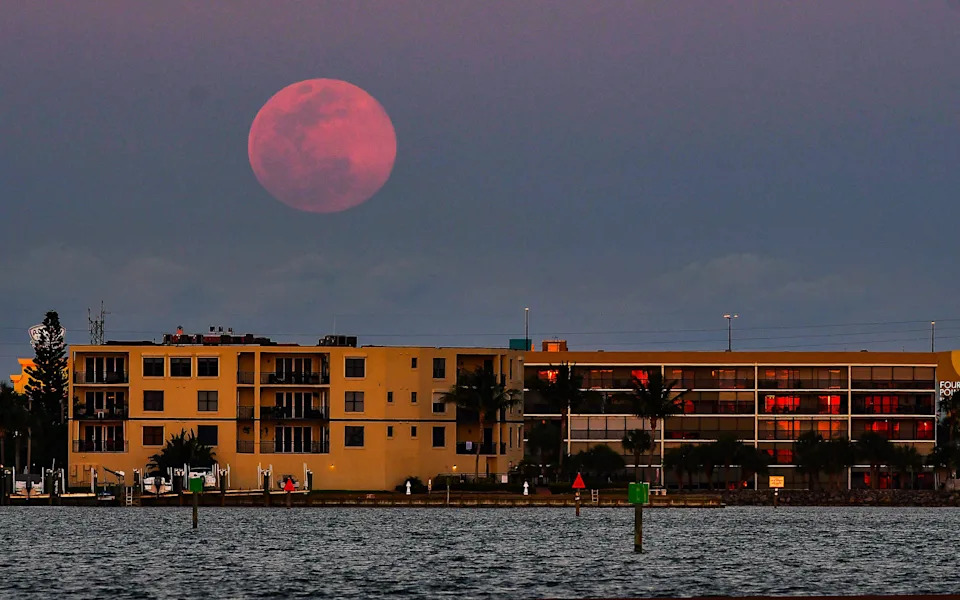
The full pink moon rises over the skyline of Cocoa Beach, Florida, on April 7, 2020. The name of April's moon comes from the early spring bloom of a wildflower native to eastern North America called Phlox subulata.
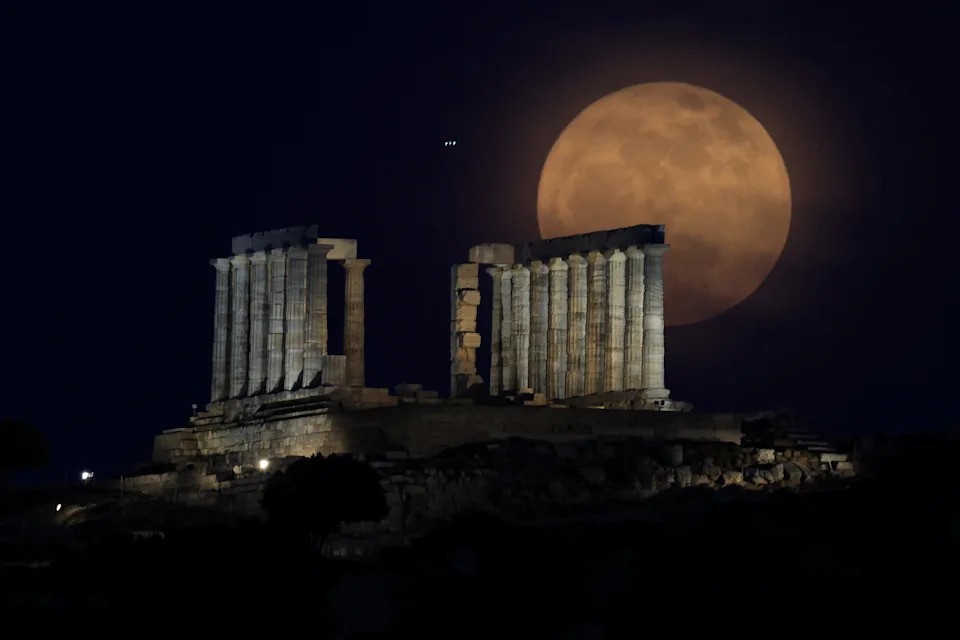
The May full moon, known as a "flower moon" rises May 12, 2025 behind the Temple of Poseidon in Cape Sounion, near Athens, Greece.
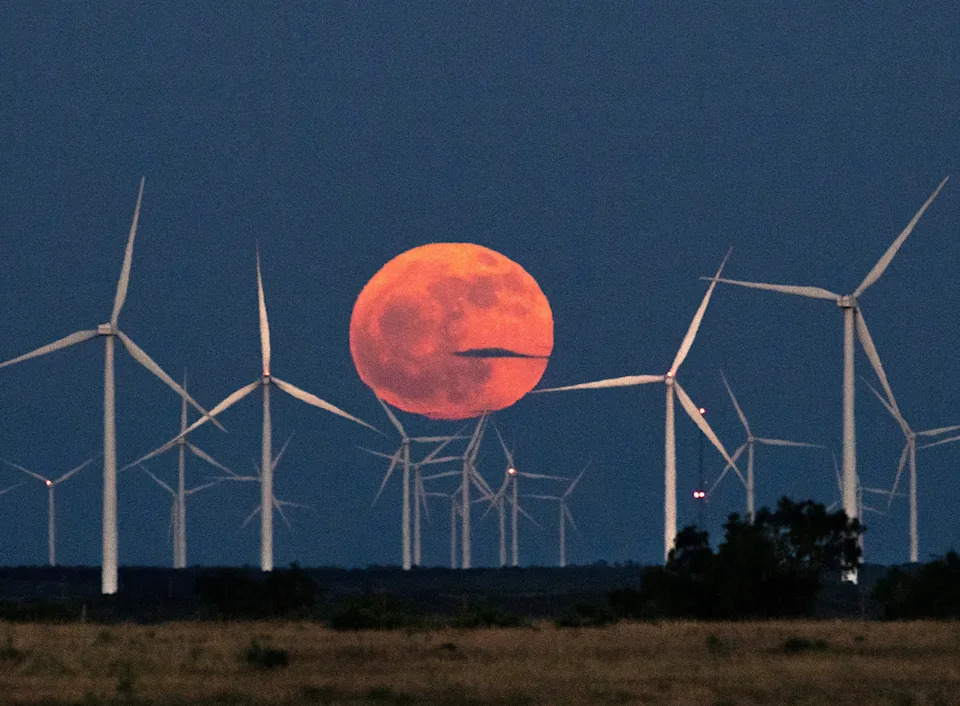
The moon rises behind the Buffalo Gap Wind Farm wind turbines as seen looking east from FM 126 Friday June 21, 2024. The summer solstice moon, known as the Strawberry Moon, rose at 9:09 p.m.
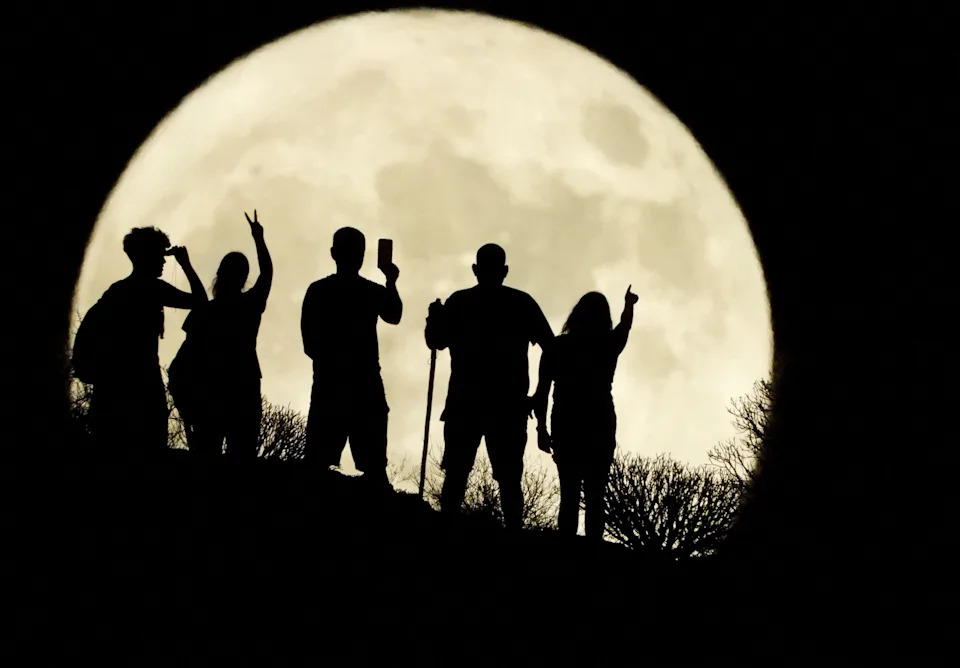
People stand with the full sturgeon moon in the background, in Arguineguin, on the island of Gran Canaria, Spain, Aug. 1, 2023.
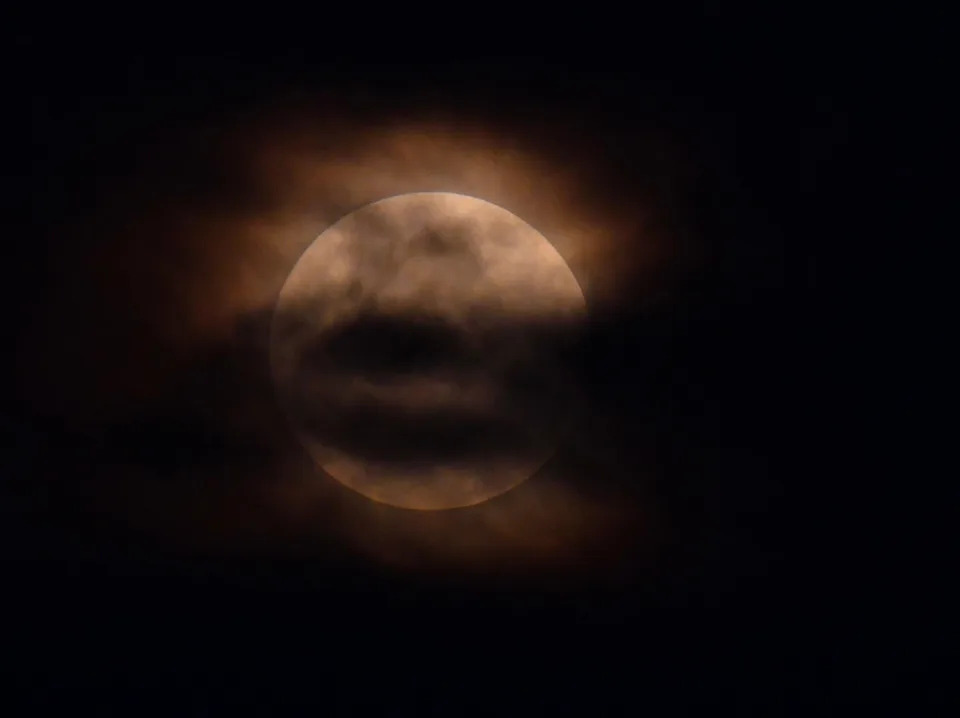
Peeking through the clouds just before 8:00 p.m., the Super Harvest Moon, also known as the Corn Moon, emerged through the clouds over the Atlantic Ocean Tuesday evening.
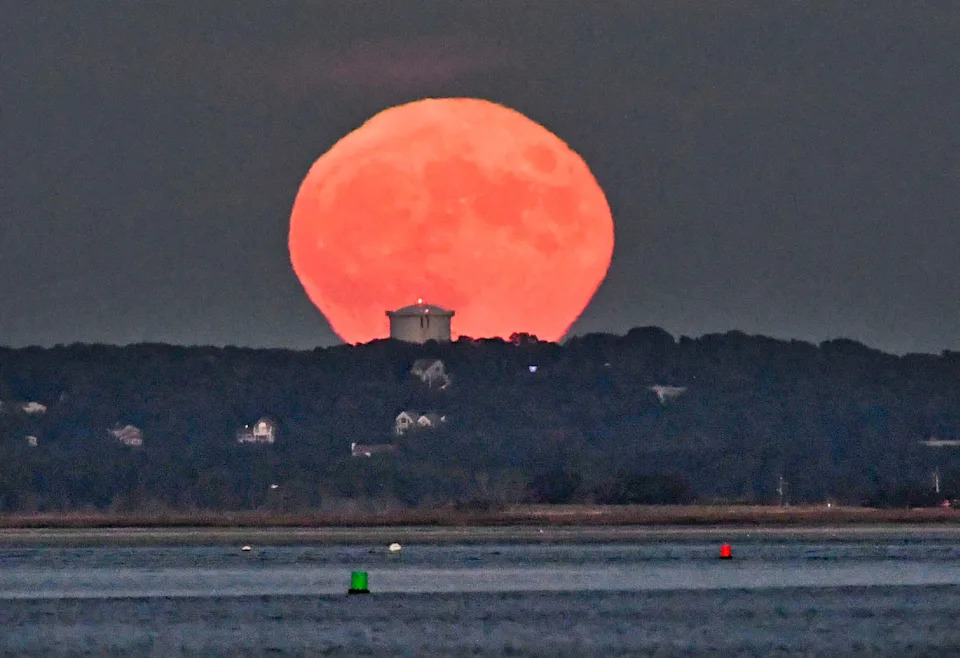
The full hunter's moon rises over Barnstable Harbor, Massachusetts, on Oct. 20, 2021. As you may have guessed, October is named the hunter's moon because October is prime hunting season.
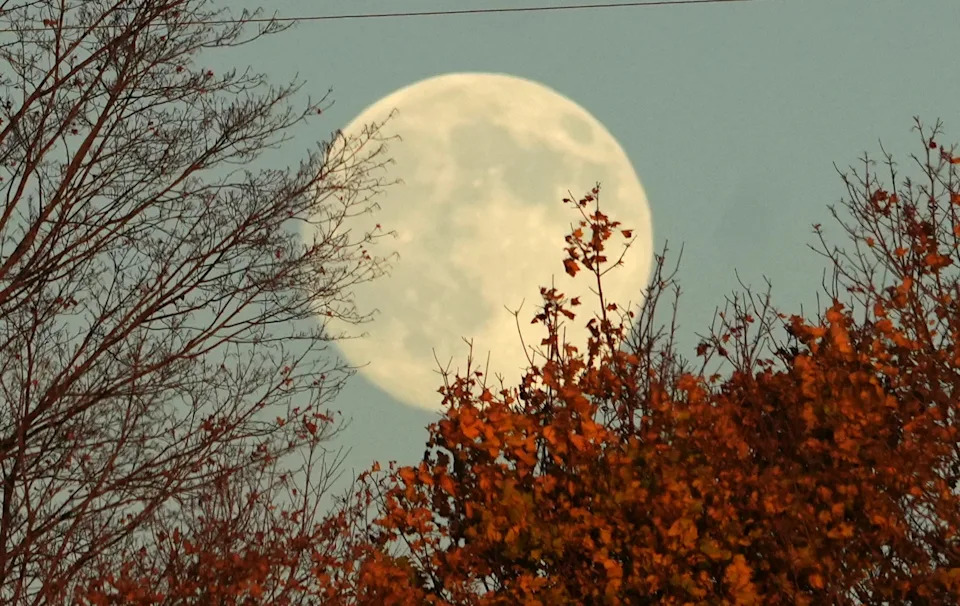
The beaver full moon rises over the horizon while the setting sun shines on trees in their Autumn colors in Blauvelt Nov. 4, 2025.
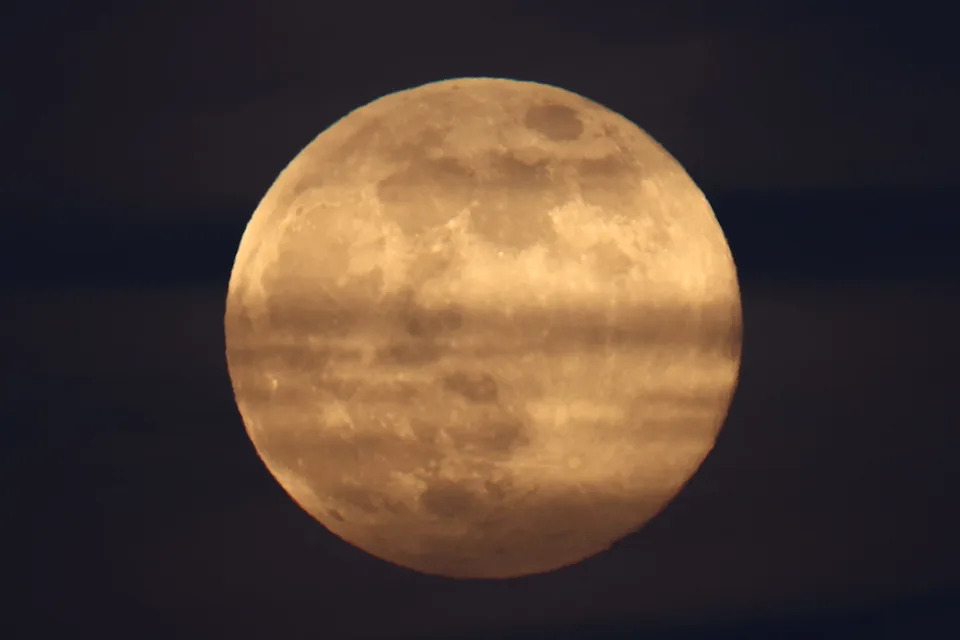
The last supermoon of 2025, the Cold Moon, rises above Los Angeles on December 4, 2025.
Help us improve.