Researchers at Glasgow Caledonian University have developed an AI-enabled headset that can predict epileptic seizures minutes before they occur by analysing EEG and ECG signals. The prototype—validated with a custom "phantom head" and trained on thousands of hours of recordings—reports prediction accuracy up to 95% and provides confidence levels for alerts. The team aims to produce a discreet, cap-like wearable suitable for children, but regulatory approvals mean broad availability may be several years away.
Scottish AI Headset Predicts Epileptic Seizures Minutes Before Onset — Reported Up To 95% Accuracy
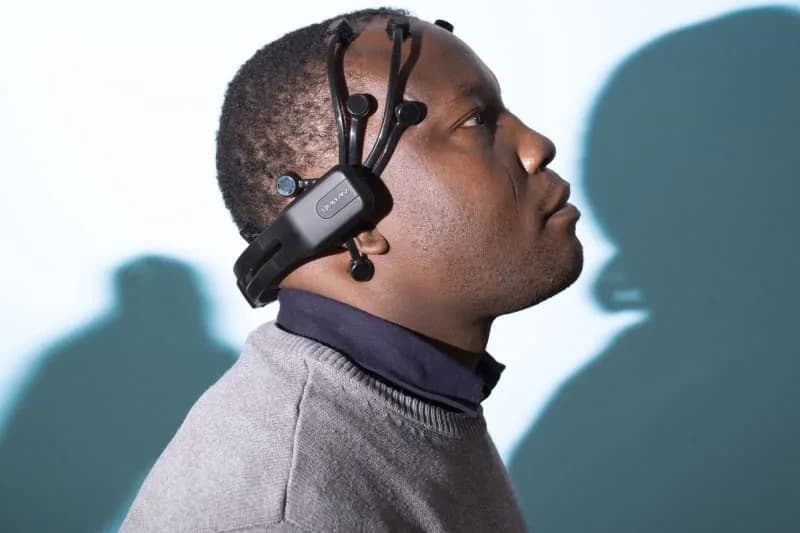
A “unique” AI-powered headset that can predict epileptic seizures minutes before they occur has been developed by scientists in Scotland. Glasgow Caledonian University/Press Association/dpa
Researchers at Glasgow Caledonian University have developed an AI-powered headset that can predict epileptic seizures minutes before they begin. The team describes the device as a discreet, cap-like wearable that analyses electrical and cardiac signals to give users advance warning, potentially reducing injuries and restoring confidence for people living with epilepsy.
How It Works
The prototype continuously monitors brain activity and heart signals using electroencephalography (EEG) and electrocardiography (ECG). A machine-learning algorithm trained on thousands of hours of historical EEG and ECG recordings learns to recognise subtle electrical and physiological patterns that often precede a seizure. When those patterns are detected, the system can issue a timely alert to the wearer and their carers.
Testing And Accuracy
To validate their approach, researchers also used a custom-built "phantom head" fitted with electrodes to simulate real-world signal collection during testing. The team reports prediction accuracy of up to 95% and says the algorithm provides a confidence score with each prediction, helping users and clinicians interpret alerts.
Potential Benefits
Professor Hadi Larijani, who leads the project, says that "providing even a few minutes' warning could be life changing." The primary benefits the team highlights are fewer secondary injuries, reduced fear for patients and families, and greater independence for people with epilepsy.
Design And Next Steps
Early prototypes have used third-party hardware, but the team aims to develop its own lightweight, wireless design suitable for adults and children. Because the device would be regulated as a medical product, further development, clinical testing and regulatory approval are required; widespread availability is likely several years away.
"The most regulated things are medical devices. It takes time to get through the hurdles," Prof Larijani said, noting that initial feasibility testing on both software and hardware has been completed.
While promising, the device will need independent clinical trials and regulatory clearance before it can be prescribed or widely used. If validated, the headset could represent a significant advance in seizure management and patient quality of life.
Help us improve.