
Scientists analyzing samples returned from the asteroids Ryugu and Bennu found about 90 amino acids (including 14 of the 20 used by life) and all five nucleic acid bases, and they detected tryptophan on Bennu for the first time in a space sample. While many researchers think life began independently on Earth, extraterrestrial organics likely enriched Earth's prebiotic chemistry. Also: the Winter Solstice falls at 9:03 a.m. on Dec. 21, and the Pleiades will sit roughly three finger-widths above the gibbous moon at 2:30 a.m. on Dec. 31.
How Your Holiday Nap Connects to Asteroids: Tryptophan, Star Dust and December Skies

One of the amino acids scientists have found on asteroids is tryptophan, which is also found in turkey and often blamed for making people sleepy.
Many of us blame turkey for the post-holiday slump, pointing to tryptophan — an essential amino acid used to build proteins and to make serotonin and the sleep-related hormone melatonin. While tryptophan is present in turkey, chicken, nuts and soy, a large meal, carbohydrates, alcohol and the body's digestion all contribute to that sleepy feeling. Still, there's a surprising cosmic twist: some of the molecules we associate with life on Earth — including tryptophan — have been found on asteroids.
From Dinner Tables to Space Rocks
Astrobiologists and origin-of-life researchers consider several ideas for how life began on Earth. One hypothesis, panspermia, proposes that organic molecules were carried to Earth on asteroids, comets or meteorites and helped seed prebiotic chemistry. Recent sample-return missions to the asteroids Ryugu and Bennu reveal an unexpectedly rich chemical inventory.
Scientists analyzing those samples have identified roughly 90 different amino acids, including 14 of the 20 amino acids used by life on Earth. They also detected all five nucleic acid bases — adenine, guanine, cytosine, thymine and uracil — the components of DNA and RNA. Notably, the amino acid tryptophan was detected on asteroid Bennu.
José Aponte, an astrochemist at NASA's Goddard Space Flight Center and co-author of the Bennu study, said: "Finding tryptophan in the Bennu asteroid is a big deal, because tryptophan is one of the more complex amino acids, and until now it had never been seen in any meteorite or space sample."
What This Means For Life On Earth
Many biologists favor the view that life originated independently on Earth. Still, the delivery of extraterrestrial organic molecules likely enriched Earth's prebiotic chemistry and expanded the local supply of life-building compounds. And on a poetic note, most of the atoms in our bodies were forged in stars — a reminder that, literally, we are made of star dust.
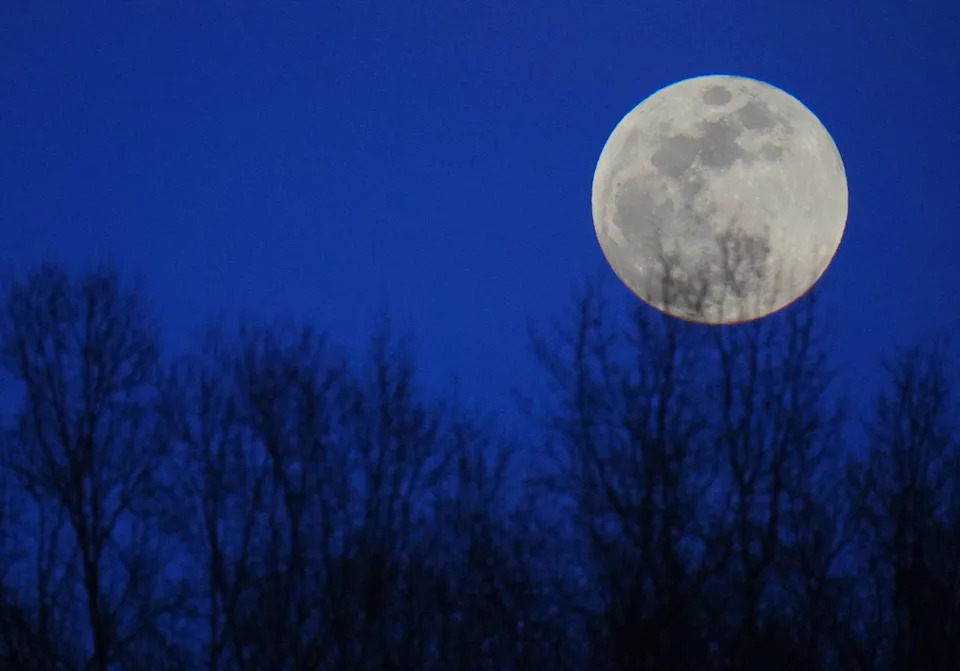
The moon in a waxing gibbous phase in seen rising over trees on Thursday, March 13, 2025 in Tallmadge, Ohio. The next phase is a full moon on Friday, March 14th.
December Skywatching: Solstice And Sights
Switching from chemistry to seasonal astronomy: Earth's axis is tilted about 23 1/2 degrees, so our planet's axis doesn't point straight up and down. When the North Pole tilts toward the sun (around June 20) the Northern Hemisphere experiences the Summer Solstice; when it tilts away (about Dec. 21) the Northern Hemisphere has the Winter Solstice, its shortest day. This year the Winter Solstice occurs at 9:03 a.m. on Dec. 21 (as reported by the source); after that date daylight hours lengthen in the Northern Hemisphere. Seasons are reversed in the Southern Hemisphere.
If you're awake at 2:30 a.m. on Dec. 31, step outside and look west for the gibbous moon. About three finger-widths above the moon you should be able to spot the Pleiades star cluster (the Seven Sisters). Astronomers recently found that many stars previously considered background objects actually belong to that cluster, giving the Pleiades many more stellar siblings.
What to look for in the December sky: Mercury may be visible just after sunset in the western sky early in the month; Saturn will be high at sunset and Jupiter rises around 9 p.m., remaining visible in the early evening. Mars and Venus are lost in twilight and do not make a prominent appearance. The moon reaches new phase on Dec. 19.
Whether you're pondering the origin of life or looking up at the winter sky, December offers a chance to connect everyday experiences — like post-meal drowsiness — to the larger story of the cosmos.


