Summary: One week after U.S. forces captured Nicolás Maduro, President Trump declared Venezuela “rich and safe,” but many on the ground report continued insecurity and uncertainty. State forces and armed colectivos patrol neighborhoods, and a U.S. travel advisory urged Americans to leave. Venezuelan officials say some political prisoners will be freed and diplomatic contacts are reopening, yet human rights groups report only a handful released and serious economic and humanitarian challenges remain.
Trump Says Venezuela Is “Rich and Safe” After Maduro Capture — Reality on the Ground Remains Fragile
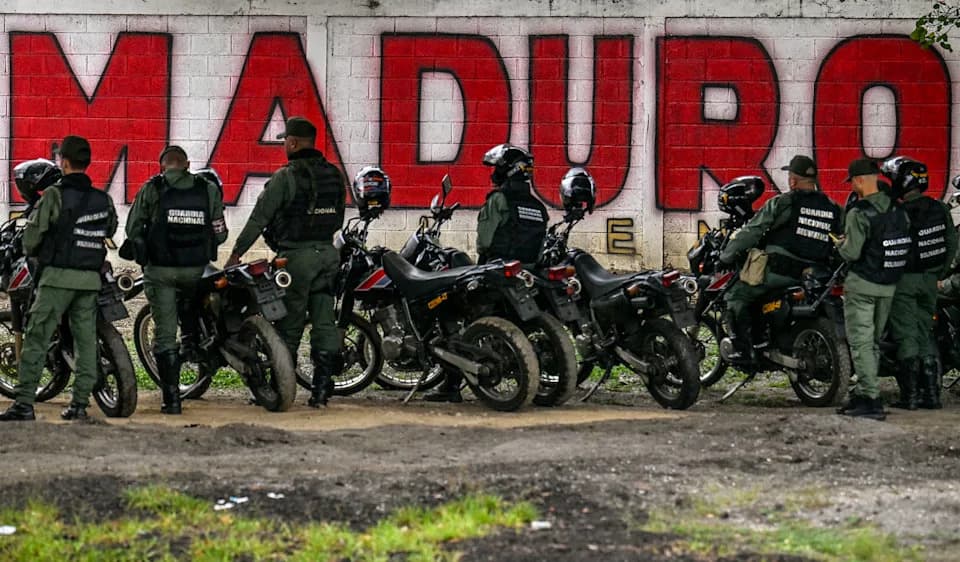
Members of the National Guard stand guard in front of a mural of Venezuela's deposed president, Nicolás Maduro, in Caracas on Saturday. (Juan Barreto / AFP via Getty Images)
By F. Brinley Bruton, reporting from Bogotá, and a Caracas-based reporter who remains unnamed for safety reasons.
One week after U.S. special forces captured long-time Venezuelan leader Nicolás Maduro, President Donald Trump posted on social media that Venezuela is now “rich and safe again,” calling the operation a success. On the ground, however, daily life and the country’s future remain uncertain: security is uneven, the political landscape is unsettled, the fate of hundreds of political prisoners is in flux, and the oil industry — long the backbone of Venezuela’s economy — faces daunting challenges.
Daily Life: Caution and Unease
At a private social club in eastern Caracas on Friday afternoon, three mothers watched their children play and debated whether to send them to school when classes resume Monday. Two decided to send their children; one said she would not risk it. All three asked that their names not be used for fear of reprisals.
As night fell, one mother suggested grabbing a bite to eat; another refused. “I live on the other side of the city; I’d better get going because the situation isn’t safe enough to be out so late,” a 38-year-old lawyer said.
Security: Forces, Colectivos and Checkpoints
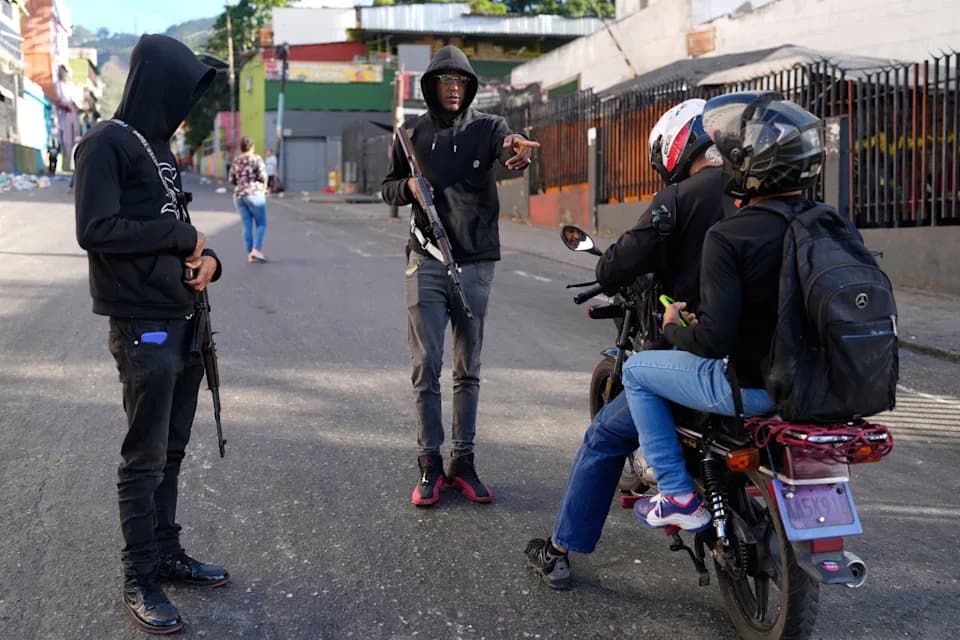
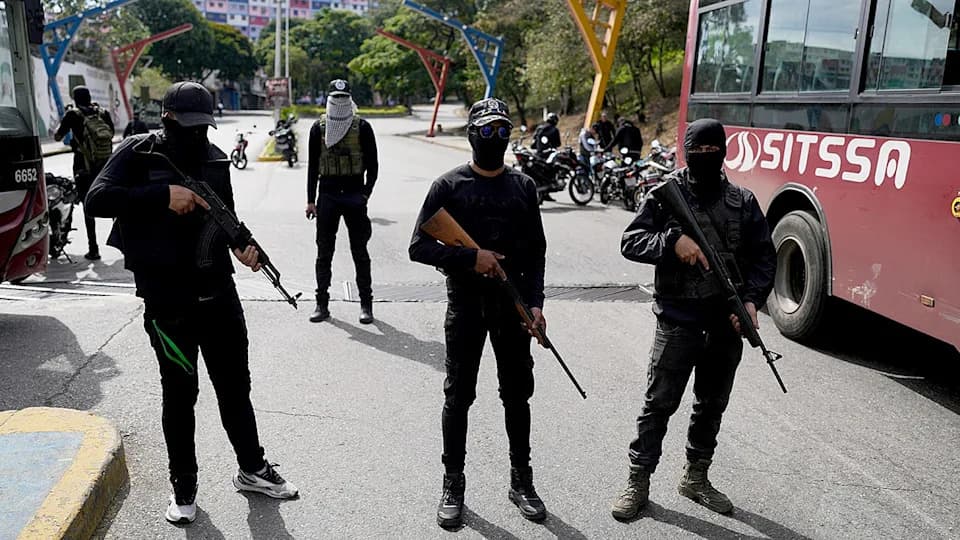
Throughout Caracas, state security forces and colectivos — armed civilian groups aligned with the regime — patrol neighborhoods. Residents report checkpoints and, in some areas, searches of phones for signs of anti-government sentiment or support for the U.S. raid that led to Maduro’s capture. The scrutiny is particularly pronounced in working-class districts such as Petare. “Here we see a bit of everything: military, police and colectivos,” a 30-year-old motorcycle taxi driver said.
Interior Minister Diosdado Cabello said the state retains “the monopoly and full control of weapons” and described the country as being at peace, adding that control of arms prevents other groups from claiming responsibility for violence.
Diplomacy, Political Prisoners and Mixed Signals
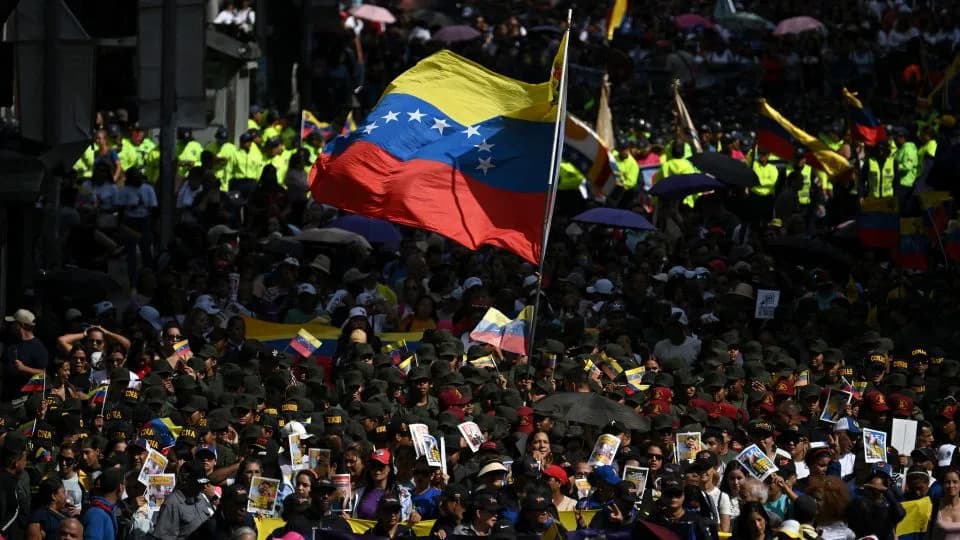
Venezuelan officials announced an “exploratory diplomatic process” with the U.S. aimed at restoring diplomatic missions and addressing what Caracas calls the “kidnapping” of Maduro and his wife, Cilia. State media highlight the achievements of the Bolivarian Revolution and broadcast demonstrations denouncing the U.S. operation.
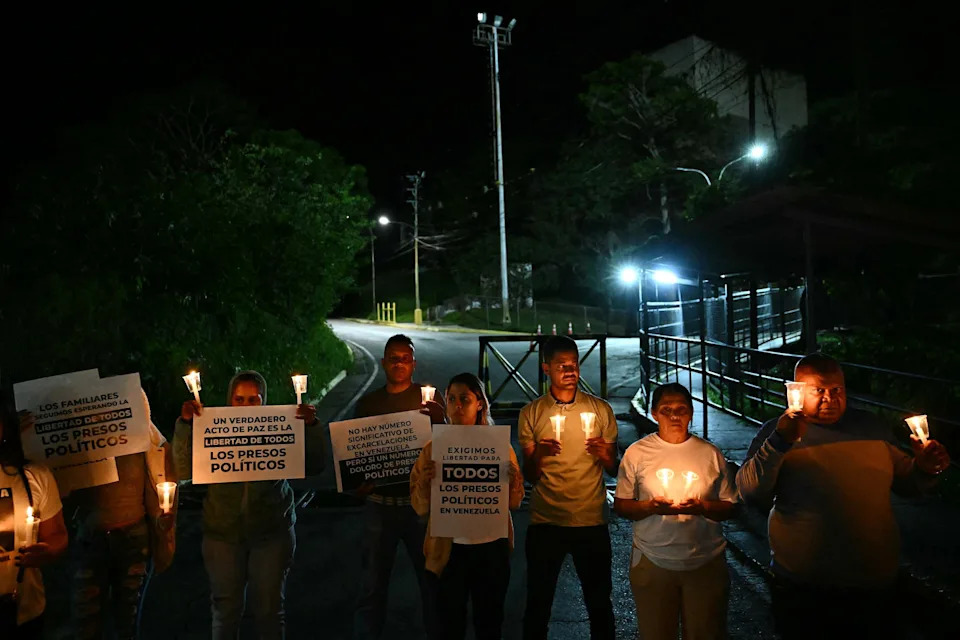
Relatives of political prisoners light candles during a vigil in demand of the release of their loved ones outside of El Rodeo I prison in Guatire, Miranda State, east of Caracas on Friday. (Ronaldo Schemidt / AFP via Getty Images)
Jorge Rodríguez, president of the National Assembly, said the government would release an “important number” of political prisoners — a move President Trump celebrated on Truth Social. Human rights organizations, however, report that fewer than 15 of roughly 800 political prisoners have been freed so far. Families of detainees live in uncertainty as they wait for formal releases.
Economic Stakes: Oil, Investment and Skepticism
Venezuela — once Latin America’s richest nation — has suffered an economic collapse over two decades. Nearly 8 million people have fled, about 90% of the population is classified as poor, and roughly half live in extreme poverty, despite the country’s vast oil reserves.
Trump has framed the operation partly as an effort to root out groups tied to the illegal drug trade and has signaled a U.S. interest in leading the revival of Venezuela’s energy sector. He told The New York Times the U.S. could remain involved “for years” to rebuild the country’s oil infrastructure and said he would help determine which companies would invest.
Executives at major oil firms reacted cautiously. Exxon Mobil CEO Darren Woods called Venezuela “uninvestable” in its current state, citing past asset seizures and the need for major policy and legal changes before companies would return in force.
What Comes Next
The U.S. State Department issued an updated travel advisory urging Americans to leave Venezuela as international flights resume and warning of armed militia roadblocks searching for evidence of U.S. ties. Venezuelan streets remain muted: many daytime businesses are open, but bars and restaurants close early and residents often prefer to be home well before nightfall.
The political and humanitarian situation remains fluid. International diplomacy, U.S. strategy, domestic politics and the long-term effort to revive Venezuela’s economy will shape how — and whether — the country moves from instability toward stability and recovery.
Help us improve.