
NASA's OSIRIS‑REx mission returned organic‑rich samples from Bennu, including nucleobases and many amino acids, but the amino acids showed a near‑equal left/right chiral mix, suggesting Earth's biological handedness likely arose locally. In a new PNAS Nexus paper, researchers present LifeTracer, a machine‑learning framework that classifies whole chemical patterns rather than single molecules to distinguish abiotic from biotic mixtures. Trained on extracts from eight meteorites and 10 terrestrial samples, LifeTracer reliably differentiated abiotic and biological origins by detecting distributional and structural differences across thousands of organic features. The study shows biosignatures are best defined as organized chemical patterns, not lone molecular markers.
Can We Detect Alien Life Without Knowing Its Chemistry? A Machine‑Learning Approach Offers New Clues

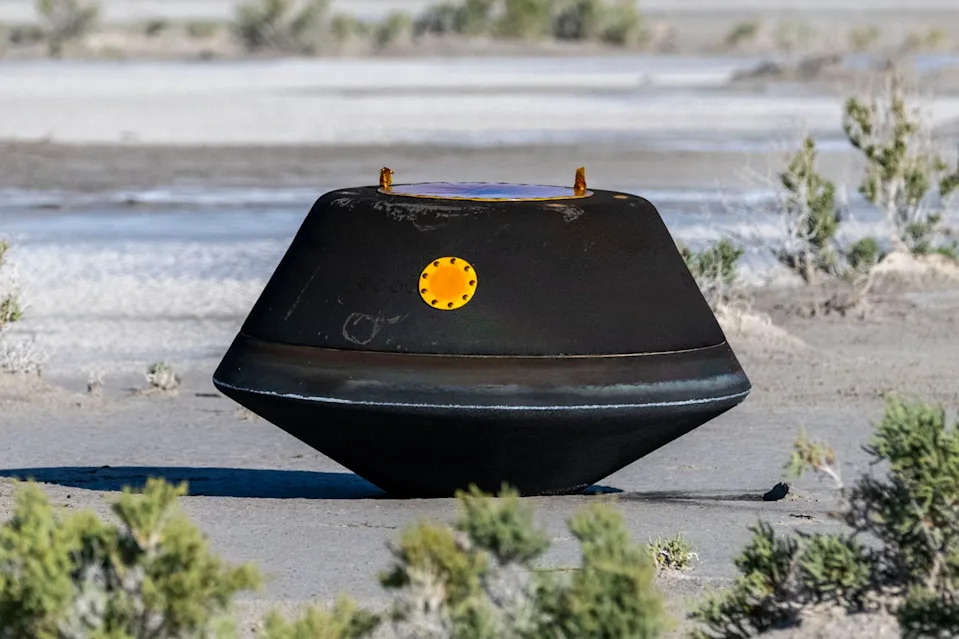
When NASA opened the sample-return canister from the OSIRIS‑REx mission in late 2023, scientists found a surprising abundance of organic chemistry in material from the asteroid Bennu. The returned dust and rocks contained many familiar building blocks of life: all five nucleobases used in DNA and RNA, 14 of the 20 amino acids found in proteins, and a broad suite of other carbon‑ and hydrogen‑rich organic molecules.
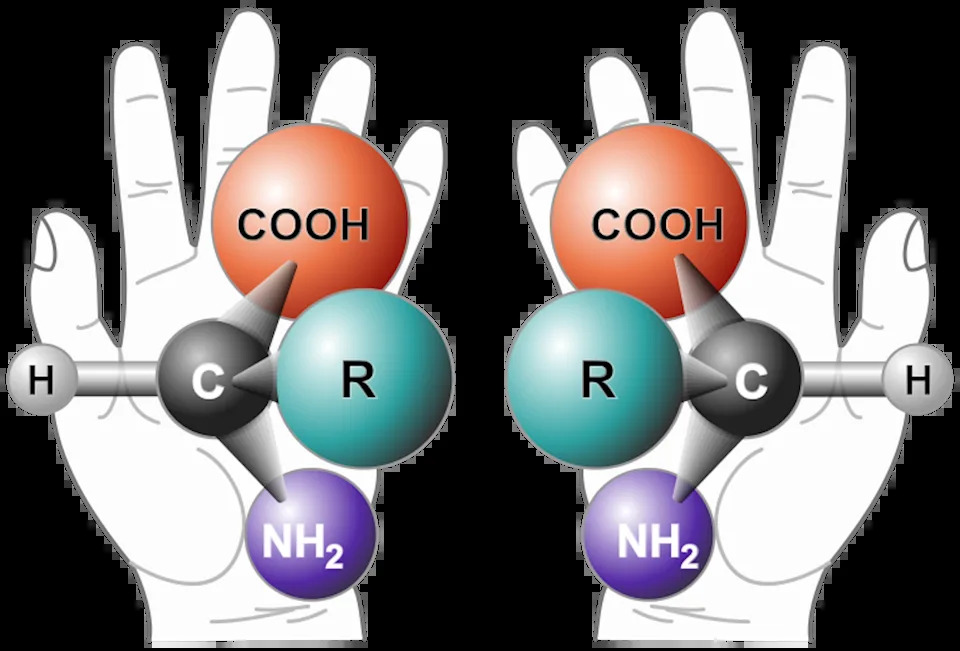
One crucial surprise: the amino acids from Bennu were nearly evenly split between left‑ and right‑handed chiral forms. Life on Earth overwhelmingly uses left‑handed amino acids, so a strong left‑handed excess in Bennu would have suggested that life's molecular handedness arrived from space. The near‑equal mix instead implies that Earth's biological handedness likely emerged after these materials reached our planet.
Why This Matters
These findings raise a fundamental challenge for astrobiology: if abiotic processes can produce complex, "lifelike" chemistry, how can we reliably distinguish true biosignatures from nonliving geochemical patterns? That question grows urgent as missions target Mars, its moons, and the ocean worlds beyond — places where returned samples could contain mixtures of biological and abiotic organics.
LifeTracer: Looking at Patterns, Not Single Molecules
In a new paper in PNAS Nexus, my colleagues and I introduce LifeTracer, a framework that uses machine learning to evaluate whether a whole chemical assemblage looks more like the product of biology or of abiotic geochemistry. Instead of searching for a single defining molecule or familiar molecular asymmetry, LifeTracer examines the full pattern of organic features detected in complex mixtures.
To train and test the approach, we assembled a dataset that sits near the boundary between life and nonlife: organics extracted from eight carbon‑rich meteorites that preserve ancient abiotic chemistry, together with 10 terrestrial soil and sediment samples that contain degraded remnants of biological molecules. Each sample yielded tens of thousands of organic features, many at low abundance and many only partially identified.
Methods in Brief
At NASA's Goddard Space Flight Center we prepared samples by crushing them, extracting organics with solvent and heat (analogous to brewing tea), and separating the mixture via two chromatographic columns. The extracts then entered a mass spectrometer and were fragmented by electron bombardment. Rather than attempting to reconstruct every molecule from fragments, LifeTracer analyzes the fragment patterns themselves.
The method represents fragments by mass and two additional chemical properties, organizing the results into a matrix that captures the chemical fingerprint of each sample. A supervised machine‑learning model was trained to discriminate meteorite (abiotic) from terrestrial (biotic) samples. Despite a modest dataset of 18 samples, the model reliably separated abiotic and biotic origins by recognizing overall pattern differences rather than single molecular markers.
Key Findings
Meteorite extracts tended to be richer in volatile compounds, consistent with chemistry favored in cold space environments. Some molecule classes, such as polycyclic aromatic hydrocarbons, appeared in both groups but with structural differences that the model could detect. A sulfur‑containing compound, 1,2,4‑trithiolane, emerged as a strong indicator of abiotic samples, while terrestrial materials showed products typical of biological processing.
What LifeTracer Is — And Is Not
LifeTracer is not a universal life detector. Rather, it is a data‑driven tool that reduces the risk of false positives by evaluating the organization of entire chemical landscapes instead of relying solely on a few Earth‑centric biosignatures. The Bennu results remind us that life‑friendly molecules may be widespread across the solar system, yet the mere presence of such chemistry does not prove biology.
To robustly identify life beyond Earth, we will need a combination of better spacecraft instruments, careful sample handling, and analytical tools — like LifeTracer — that can read the stories encoded in molecular patterns.
Author: Amirali Aghazadeh, Georgia Institute of Technology. This article is republished from The Conversation, a nonprofit independent news organization.


