Patients and families at Gaza's Nasser Hospital fear losing critical care if Israel enforces a ban on 37 aid groups, including MSF, from March 1. Israel says the organisations failed to provide detailed staff information and has accused two MSF employees of militant ties — claims MSF denies. MSF provides about 20% of Gaza's hospital beds, runs roughly 20 health centres and carried out more than 800,000 consultations in 2025; aid groups warn the ban could severely disrupt medical and humanitarian services.
Gaza Hospital Patients Fear Losing MSF Care After Israeli Move to Bar Aid Groups
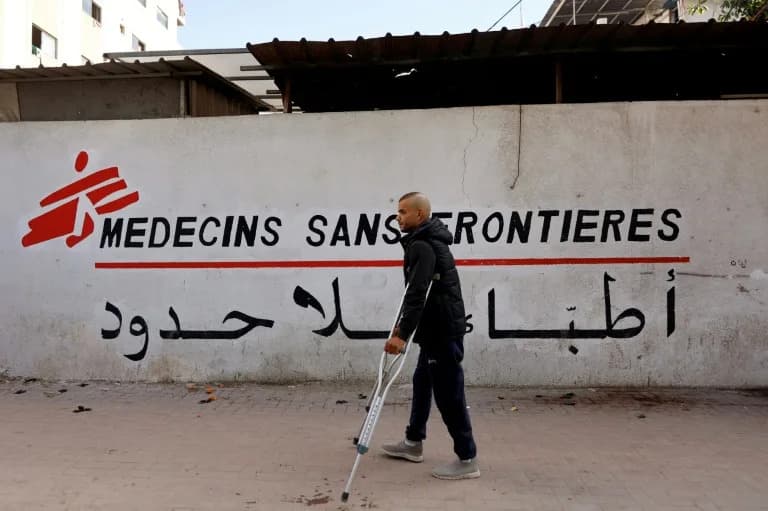
Last month, Israel announced it would prevent 37 aid organisations, including MSF, from operating in Gaza from March 1 (Omar AL-QATTAA)(Omar AL-QATTAA/AFP/AFP)
Wards at Gaza's Nasser Hospital are crowded with patients and relatives who fear they will be left without care if Doctors Without Borders (MSF) and dozens of other aid groups are barred from operating in Gaza beginning in March.
In late February, Israel announced it would prevent 37 aid organisations, including MSF, from working in Gaza from March 1, saying they failed to provide detailed information about their Palestinian staff. Israel's Ministry of Diaspora Affairs and Combating Antisemitism has also accused two MSF employees of links to militant groups Hamas and Islamic Jihad — allegations MSF strongly denies.
"They stood by us throughout the war,"said 10-year-old Adam Asfour, whose left arm is held by metal rods after he was wounded by shrapnel in a September bombing.
"When I heard it was possible they would stop providing services, it made me very sad,"he added from his bed at Nasser Hospital.
MSF currently says it provides roughly 20 percent of Gaza's hospital beds and operates about 20 health centres across the territory. In 2025 alone the organisation reported more than 800,000 medical consultations and over 10,000 deliveries. MSF personnel also distribute drinking water and other essential supplies to communities battered by prolonged conflict.
Patients, Staff Warn of Disruption
Patients and relatives interviewed at Nasser Hospital expressed the same fear: without MSF there may be nowhere left to turn for urgent, specialist or continuing care. Fayrouz Barhoum, whose 18-month-old grandson Joud is being treated for burns, pleaded for continuity of care:
"At first his condition was very serious, but then it improved considerably. The scarring on his face has largely diminished. We need continuity of care,"she said.
MSF staff at the hospital emphasised the scale of their work and the difficulty of replacing those services quickly.
"It's almost impossible to find an organisation that will come here and be able to replace all that we are doing currently in Gaza,"MSF official Claire Nicolet told AFP. Logistics manager Kelsie Meaden said international staff and supplies are already being restricted and warned,
"We will run into shortages."
Humanitarian Risks
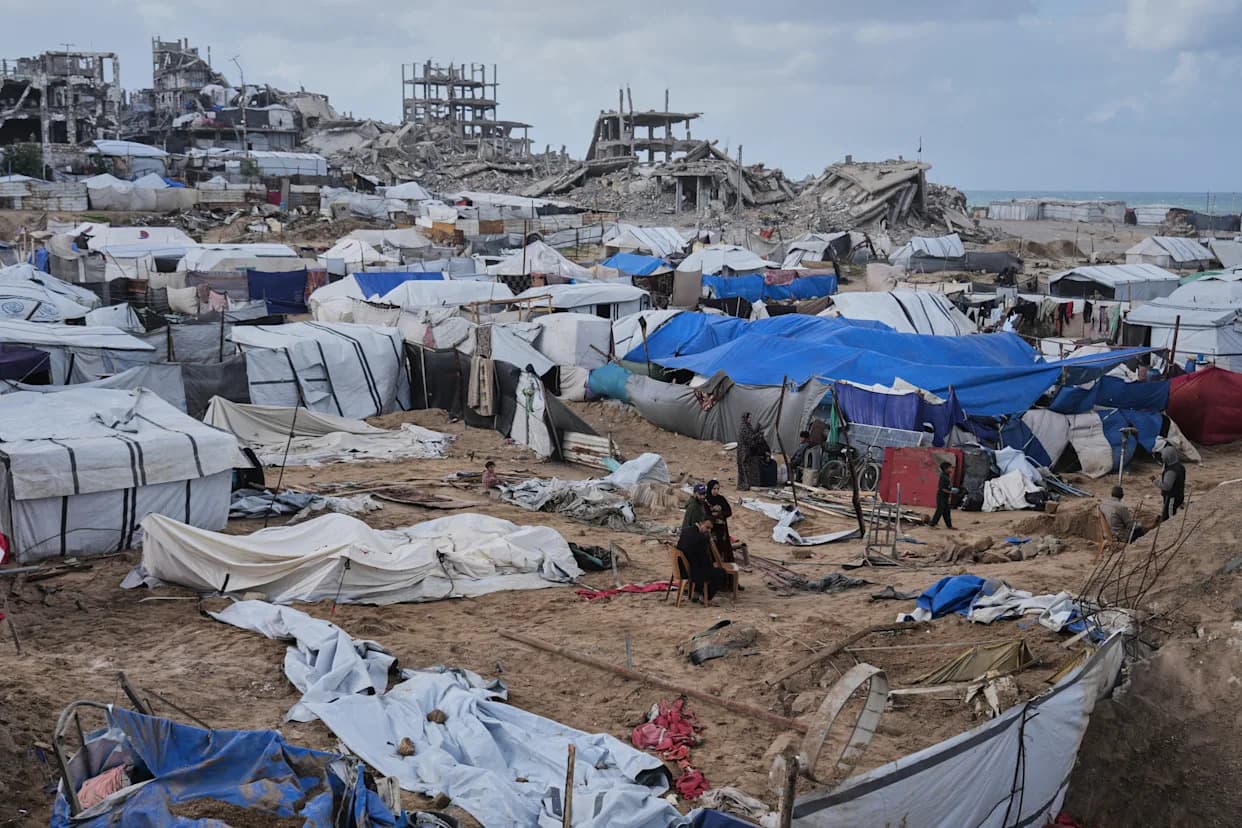
The decision sparked international criticism from aid groups and diplomats, who warned it could severely disrupt food and medical deliveries to Gaza, where supplies are already scarce after more than two years of war. Since October 2023, when Hamas's deadly attack on southern Israel precipitated the current conflict, many Gaza hospitals have been damaged or overwhelmed by casualties; electricity, water and fuel remain unreliable.
Humanitarian sources also say at least three international NGO staff whose files were rejected by Israeli authorities were prevented from entering Gaza via the Kerem Shalom crossing. Aid organisations warn that without international support, critical services — emergency care, maternal health, paediatric treatment and chronic disease management — could collapse, leaving hundreds of thousands without basic medical care.
For now, MSF says it will keep working while it can, but staff warn that mounting restrictions on personnel and supplies put essential services at serious risk.
Reporting credits: AFP
Help us improve.