India has reunited and displayed the Piprahwa gems — over 300 stones and ornaments believed to have been buried with Buddhist relics — after 127 years. Excavated in 1898 at Piprahwa, Uttar Pradesh, the finds include caskets with bone fragments identified by officials as relics of the Buddha. A planned Sotheby's auction in May 2025 was halted after India's Ministry of Culture declared the jewels inalienable heritage; the collection was subsequently purchased by Godrej Industries Group in partnership with the government and is now exhibited in New Delhi.
India Reunites and Displays Piprahwa Gems Linked to Buddha After 127 Years
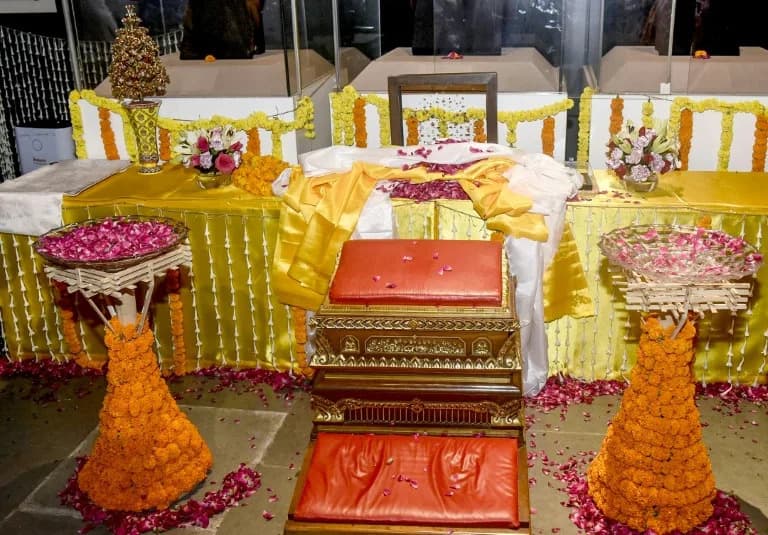
India has recovered a set of relics with ties to early Buddhism more than a century after they were removed from the country during the colonial period (-)(-/Indian Press Information Bureau (PIB)/AFP)
India has publicly unveiled the Piprahwa gems — more than 300 precious stones and ornaments believed to have been buried with relics of the Buddha — at an exhibition in New Delhi. The collection has returned to India after 127 years following their excavation during the colonial era.
Background and Discovery
The gems were first excavated in 1898 by British colonial engineer William Claxton Peppe at the stupa site in Piprahwa, Uttar Pradesh. Indian authorities say an inscription on one of the caskets discovered with the hoard, together with accompanying bone fragments, identify the contents as "relics of the Buddha." The objects are believed to date to around 200 BC.
Ownership, Auction And Repatriation
Most finds from the site were surrendered to colonial authorities and some items went to the Indian Museum in Kolkata, but Peppe retained a cache of jewels. In May 2025 Peppe's great-grandson, Chris Peppe, put that collection up for sale; Sotheby's listed the items for auction in Hong Kong with a starting bid of about $1.2 million.
The proposed sale was halted after India's Ministry of Culture issued a legal order declaring the gems the "inalienable religious and cultural heritage of India and the global Buddhist community." The jewels were later acquired by the Godrej Industries Group in partnership with the Government of India; the sale price was not disclosed.
Exhibition And Significance
Prime Minister Narendra Modi inaugurated the New Delhi exhibition, calling the occasion a "very special day for those passionate about history, culture and the ideals" of the Buddha. The display reunites the recently repatriated jewels with other treasures held in Kolkata and relics recovered in later excavations in the 1970s.
Officials and the Godrej group have described the gems as symbols of peace and shared cultural heritage. Chris Peppe said his family welcomed the decision to make the collection available for public viewing.
Ministry Of Culture: "This historic event marks the reunification of the Piprahwa gem relics of Lord Buddha, repatriated after 127 years."
Context
The Buddha, born in the region that is now Nepal and active mainly in northern India, renounced material wealth and taught principles of non-attachment; Buddhism today counts more than 500 million followers worldwide. The return of cultural items taken during the colonial era is part of broader efforts by many countries to trace and repatriate heritage objects.
What Remains Unclear: The exact purchase price paid to bring the jewels back to India has not been publicly disclosed, and some items from the 1898 excavation remain dispersed in museums and private collections around the world.
Help us improve.