Wildlife photographer Elio Della Derrera discovered an estimated 20,000 dinosaur footprints across about five kilometres of near-vertical rock in Stelvio National Park. The 210-million-year-old tracks, some up to 40 cm wide, likely belong to herds of prosauropod herbivores and show evidence of synchronized movement and possible defensive circles. Now more than 2,000 m above sea level after Alpine uplift, the fragile site will be studied with drones and remote sensing, with major fieldwork planned for 2026.
Massive Discovery: 20,000 Triassic Dinosaur Footprints on a Near-Vertical Alpine Cliff
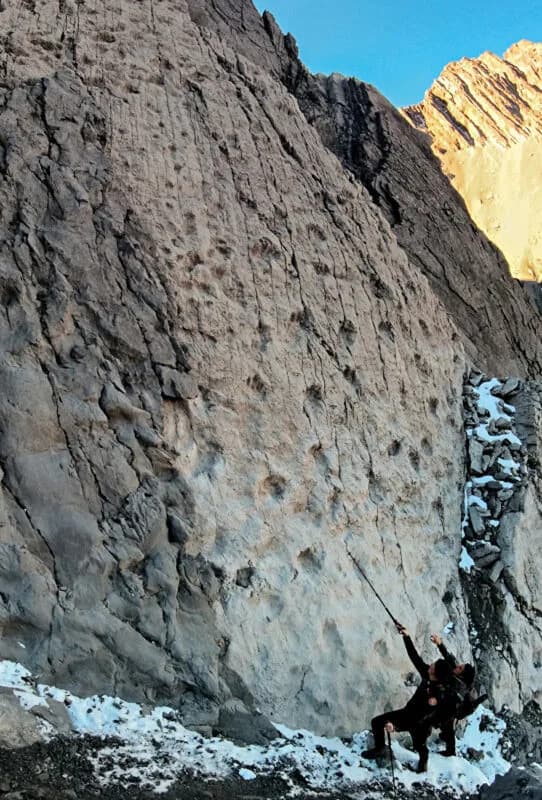
Photo: Elio Della Ferrera
Wildlife photographer Elio Della Derrera uncovered an extraordinary fossil site in northern Italy's Stelvio National Park: an estimated 20,000 dinosaur footprints strewn across roughly five kilometres of near-vertical rock. He was setting up cameras to photograph deer and vultures when he noticed the tracks carved into the cliff face.
"This is one of the largest and oldest footprint sites in Italy, and among the most spectacular I've seen in 35 years," said Cristiano Dal Sasso, a palaeontologist at Milan's Natural History Museum. Several research teams have begun detailed study of the prints, which date to about 210 million years ago.
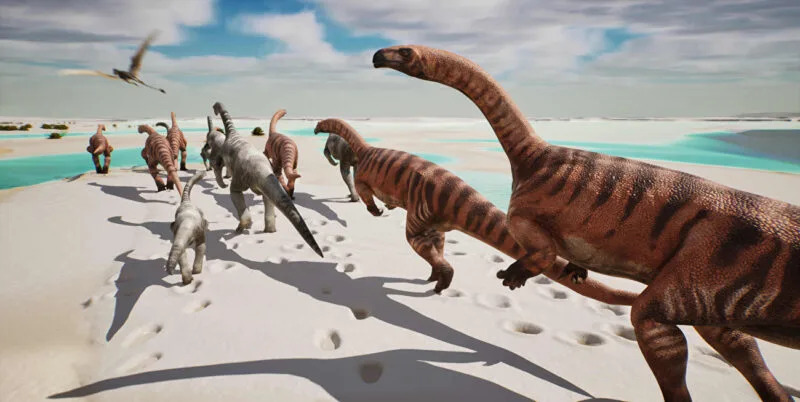
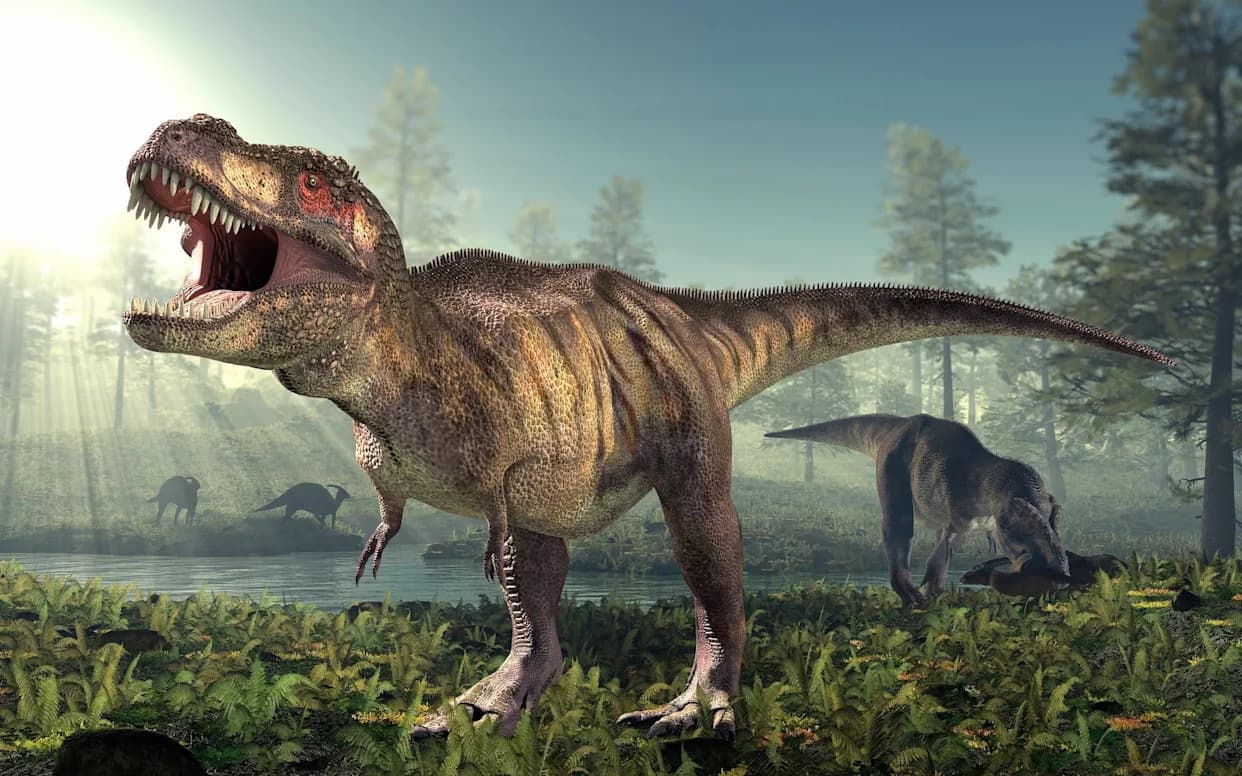
Artist's impression of a herd of prosauropods. Image: Fabio Manucci
What the Tracks Tell Us
The site ranks among the richest Triassic palaeontological discoveries in Europe. Individual prints measure up to 40 centimetres across and many preserve clear toe and claw impressions. Scientists attribute the tracks to herds of large, primarily bipedal herbivores — most likely prosauropods, long-necked dinosaurs that could exceed 10 metres in length and weigh several tonnes.
Researchers note that the number, spacing and alignment of the tracks provide strong evidence of synchronized group movement. There are also clusters of prints arranged in circular patterns, which may indicate defensive behaviour when the animals gathered together.
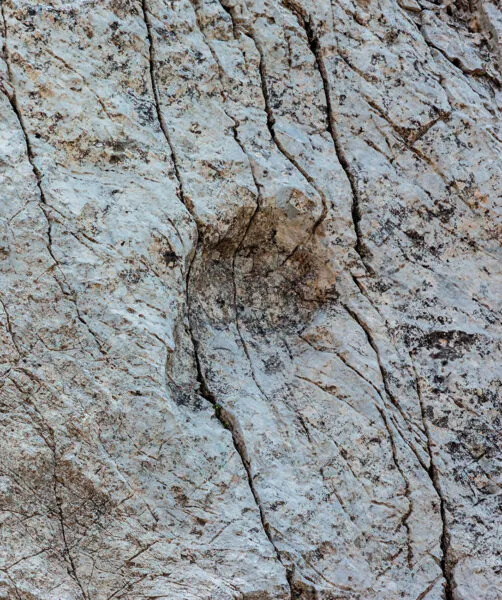
Photo: Elio Della Ferrera
From Lagoon To Alpine Cliff
When the footprints were made during the Triassic, the rock surface now exposed as a cliff would have been a warm lagoon or tidal plain. The impressions were preserved in soft sediment and later fossilised. Subsequent tectonic uplift during the formation of the Alps — as the African plate pushed north into Eurasia — raised the site to more than 2,000 metres above sea level.
Study, Access And Conservation
The cliff is largely accessible only to experienced climbers, so scientists plan to rely on drones, 3D photogrammetry, and other remote sensing methods to document and analyse the site in detail. Dal Sasso indicates that major fieldwork is expected to begin in 2026.
Alongside excitement over the discovery, experts emphasize the need for careful protection. The tracksite lies near the Swiss border and is not far from Bormio, the alpine skiing area associated with the upcoming Winter Olympics, so conservation and controlled access will be important to prevent damage to this fragile and internationally significant fossil record.
Why it matters: The site offers an exceptional window into Triassic ecosystems and social behaviour in early large herbivorous dinosaurs, and it may reshape local understanding of how these animals moved and interacted in groups nearly a quarter of a billion years ago.
Help us improve.