The US has signed a $480 million public health agreement with the Ivory Coast under the America First Global Health Strategy. The Ivorian government pledged up to $292 million in health funding by 2030. US officials say bilateral pacts will increase accountability and drive self-sufficiency, but experts warn the transactional approach and deep USAID cuts risk undermining vital services and hard-won public health gains.
US Signs $480M Health Aid Pact With Ivory Coast Under 'America First' Strategy
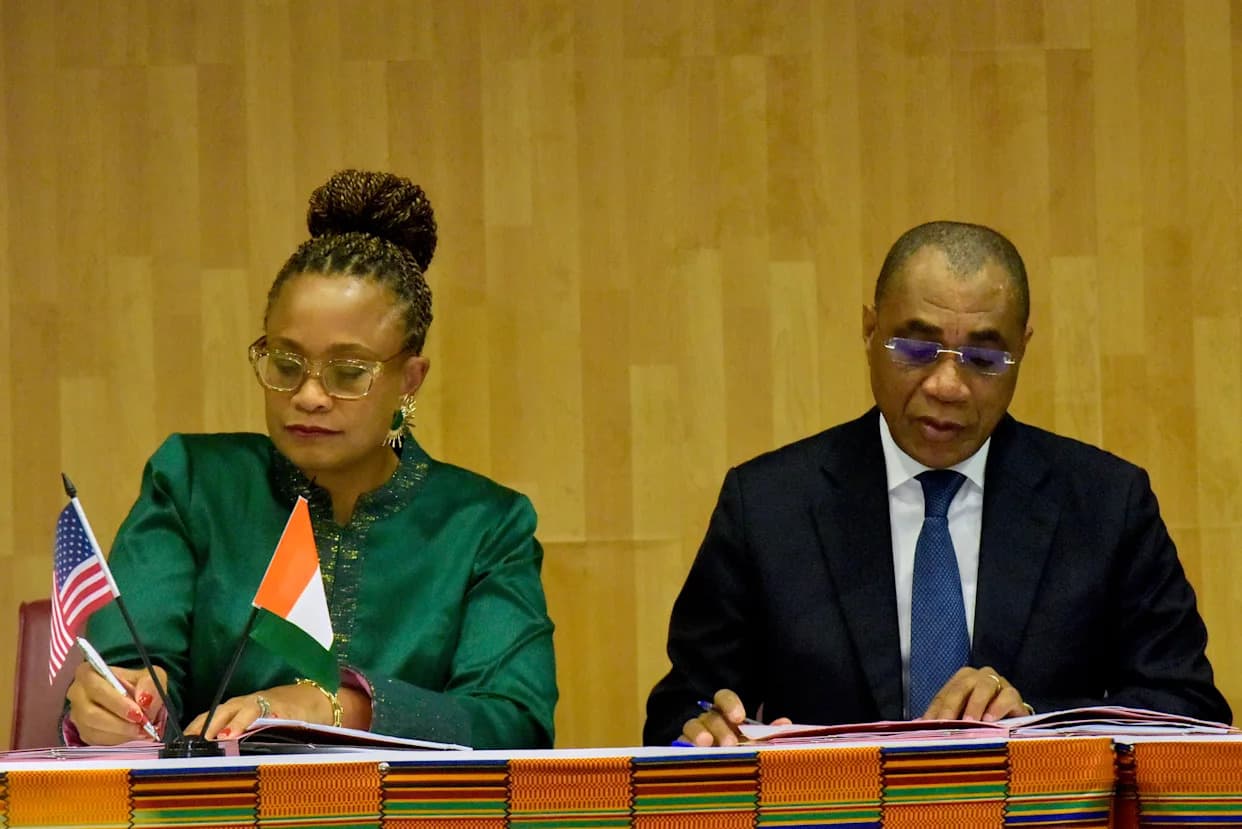
Jessica Davis Ba, US envoy to the Ivory Coast, and Adam Coulibaly, Ivorian finance minister, sign a new health assistance agreement in Abidjan, Ivory Coast [Diomande Ble Blonde/The Associated Press]
The United States has formalised a $480 million public health assistance agreement with the Ivory Coast, marking a high-profile step in the Trump administration’s America First Global Health Strategy. The pact was signed in Abidjan on Tuesday and represents the largest bilateral health arrangement announced so far under the new approach.
What the Agreement Covers
Under the terms of the deal, the US will provide $480 million in health assistance while the Ivorian government has pledged to invest up to $292 million in its health sector by 2030, Prime Minister Robert Beugre Mambe said. The administration says the strategy aims to replace traditional multilateral aid channels with direct bilateral agreements intended to increase accountability, oversight and long-term self-sufficiency.
Officials' Statements
“Today, our bilateral cooperation is entering a new phase. We are implementing the America First Global Health Strategy,” said US Ambassador to the Ivory Coast Jessica Davis Ba at the signing ceremony, adding that the approach prioritises trade, innovation and shared prosperity over older aid models.
Expert Concerns
Public health experts have raised reservations about the policy’s transactional character and the rapid move away from traditional programs administered through the US Agency for International Development (USAID). Deep cuts to USAID earlier this year disrupted health programming worldwide, with many African countries among the hardest hit.
Analysts warn these disruptions risk setbacks in HIV prevention, maternal and child health, malaria control, and early detection of emerging infectious diseases. A report from the Center for Global Development — authored by Jocilyn Estes and Janeen Madan Keller — acknowledged possible delivery benefits from the new model but cautioned that the reforms “carry tremendous risks to service delivery and hard-won public health gains.”
The report highlights several specific concerns: that priorities could be driven by short-term transactional pressures, that oversight and monitoring mechanisms are unclear, and that essential services may be jeopardised if partner governments cannot meet their commitments. The authors also questioned how the approach would work in contexts lacking credible or stable governance.
What Comes Next
The Ivory Coast agreement is one of more than a dozen bilateral pacts the administration has negotiated under the America First Global Health Strategy. Observers say careful implementation, transparent oversight, and contingency planning will be critical to prevent interruptions in lifesaving services as the new model scales up.
Bottom line: The $480 million pact highlights a major shift in US global health policy. While it promises greater bilateral accountability and investment, it also raises significant concerns among experts about oversight, stability and the potential erosion of established public health programs.
Help us improve.