Several Sahel states, including Mali and Burkina Faso, have announced reciprocal bans on US citizens after Washington expanded visa restrictions to 39 countries, citing national security. Niger and Chad have taken similar measures, while the affected list includes many African nations. These moves come amid broader US policy changes — the lapse of AGOA, cuts to foreign aid and intensifying strategic competition over African minerals — that together are heightening diplomatic and security tensions across the continent.
Why Mali and Burkina Faso Banned US Citizens — Reciprocity, Sahel Tensions and Wider Fallout
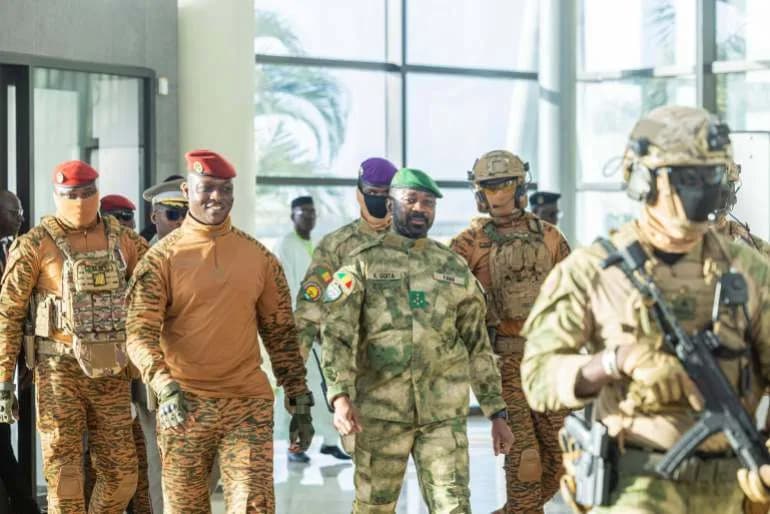
Burkina Faso President Ibrahim Traoré, second from left, walks alongside Malian President Assimi Goïta during an Alliance of Sahel States summit on security and development in Bamako, Mali, on December 23, 2025 [Handout/Mali government information centre via AP]
Mali and Burkina Faso have announced full, reciprocal visa bans on United States citizens in direct response to a recent expansion of US visa restrictions to citizens of their countries. Both West African states are currently governed by military administrations and framed their moves as measures of reciprocity.
What the Governments Said
The Malian Ministry of Foreign Affairs and International Cooperation said, in a statement, that “in accordance with the principle of reciprocity” Mali would “apply the same conditions and requirements to US nationals as those imposed on Malian citizens,” effective immediately. Burkina Faso issued a similar statement: Foreign Minister Karamoko Jean‑Marie Traoré cited reciprocity as the basis for his country’s ban.
US Policy And Criteria
The US directive issued on December 16 widened full visa prohibitions to include several additional countries. The White House said the measures were taken on “national security” grounds and cited factors such as weak screening and vetting capabilities, limited information sharing, high visa overstay rates and refusals to readmit deported nationals. The US order also noted assessments of whether a country hosts a “significant terrorist presence.”
Regional Ripple Effects
Niger and Chad — which, like Mali and Burkina Faso, are military‑led states in the Sahel — have implemented similar reciprocal measures. Niger announced a ban on US citizens the same week; Chad stopped issuing visas to US citizens on June 6 with an exemption for US officials and allowed entry only for US citizens who held visas issued before June 9. In July 2024 the three Sahel states helped create the Alliance of Sahel States to coordinate on security and trade issues.
Who Is Impacted
Research from the Council on Foreign Relations shows that citizens of 39 countries face either full or partial US entry restrictions. Countries listed as fully subject to the ban include:
- Afghanistan
- Burkina Faso
- Chad
- Equatorial Guinea
- Eritrea
- Haiti
- Iran
- Laos
- Libya
- Mali
- Myanmar
- Niger
- Republic of Congo
- Sierra Leone
- Somalia
- South Sudan
- Sudan
- Syria
- Yemen
- Holders of Palestinian Authority travel documents
A separate group of countries faces partial restrictions; many of those are in Africa.
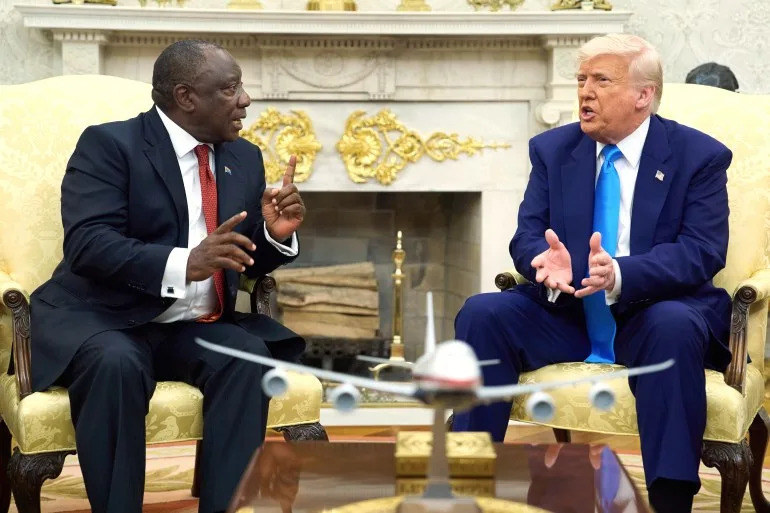
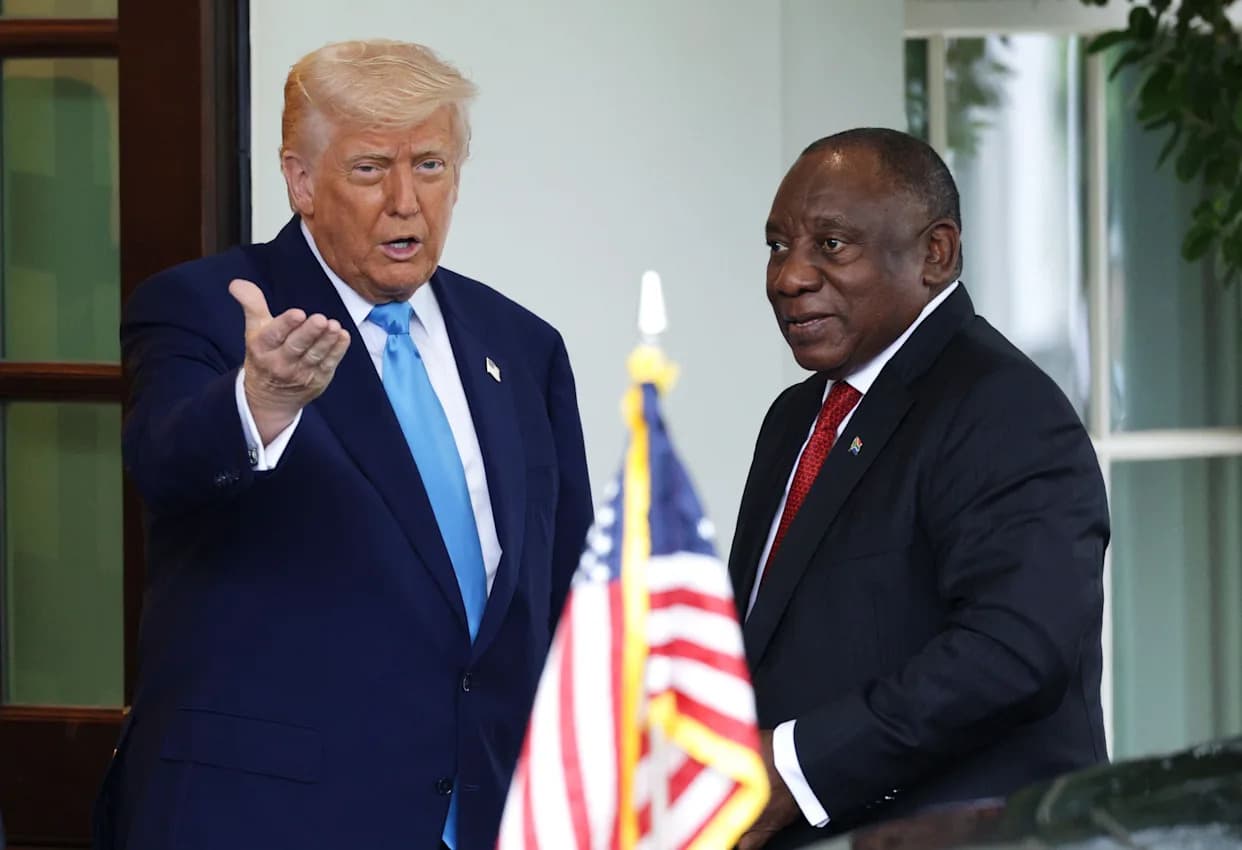
US President Donald Trump, right, meets South African President Cyril Ramaphosa in the Oval Office of the White House on May 21, 2025 [Evan Vucci/AP]
Trade, Aid And Strategic Interests
The visa measures come amid other shifts in US policy toward Africa. The African Growth and Opportunity Act (AGOA), which since 2000 granted many African exports duty‑free access to the US market, expired in September after Congress did not renew it. The lapse removed a important preferential trade mechanism that analysts say supported hundreds of thousands of jobs across the continent.
Reported cuts to US foreign aid and institutional changes — including the administration’s decision to wind down the US Agency for International Development in early 2025 and significant reductions in bilateral aid — have added pressure on public health and humanitarian programs in several African countries, according to aid groups and public‑health observers.
Washington has also signalled increased interest in securing access to critical minerals in Africa. Diplomatic involvement in disputes such as tensions between the Democratic Republic of the Congo and Rwanda has included provisions intended to give US firms priority access to certain mineral reserves, a move observers say is aimed at competing with China’s dominant role in mining and processing.
Security And Military Actions
At the same time, the US has intensified strikes against armed groups linked to ISIL and al‑Qaeda in parts of Africa. Operations have been reported in Somalia and, more recently, in northwestern Nigeria. These military actions coincide with competing narratives: US officials have described some operations as protecting vulnerable communities, while national governments and independent authorities often dispute specific characterisations or warnings.
Implications
The reciprocal visa bans reflect rising diplomatic tensions between the US and several African states and add friction to cooperation on security, migration and trade. For the Sahel, where armed violence, displacement and humanitarian need are high, the measures complicate already strained relationships and could affect crisis response, development funding and regional diplomacy.
Bottom line: The bans are part of a broader set of policy shifts — on visas, trade, aid and strategic competition over minerals — that have deepened tensions between the US and many African governments and carry potential consequences for security, humanitarian response and economic ties across the continent.
Help us improve.