India launched Kaundinya, a 20-metre handcrafted wooden ship stitched with coconut coir, on a roughly 1,400-kilometre maiden voyage from Porbandar to Muscat. Propelled by oars and two fixed square sails and crewed by 18 people including historian Sanjeev Sanyal, the expedition aims to revive ancient maritime routes and demonstrate India’s historic seafaring heritage. The crossing, expected to take about two weeks, mixes traditional shipbuilding with minimal modern equipment.
Kaundinya Sets Sail: India’s Handcrafted Wooden Ship Recreates Ancient Maritime Routes to Muscat
A wooden stitched ship inspired by a fifth-century design set sail Monday (Peter MARTELL)(Peter MARTELL/AFP/AFP)
India’s navy — known for aircraft carriers, submarines and steel warships — has added a strikingly different vessel to its fleet: a handcrafted wooden ship, Kaundinya, built from ancient designs and launched on a maiden crossing of the Indian Ocean.
A Voyage That Bridges Past And Present
Inspired by fifth-century shipbuilding, Kaundinya is about 20 metres (65 feet) long and its hull is stitched with coconut coir rope rather than nailed. Propelled by large oars and two fixed square sails that catch seasonal monsoon winds, the vessel departed Porbandar in Gujarat on a roughly 1,400-kilometre (870-mile) westward journey to Muscat, Oman. The crossing is expected to take around two weeks.
"This voyage reconnects the past with the present," Vice Admiral Krishna Swaminathan said as he waved the ship off, describing the expedition as both a cultural revival and a statement of India’s historic role as a maritime bridge across the Indian Ocean.
Craftsmanship, Crew And Purpose
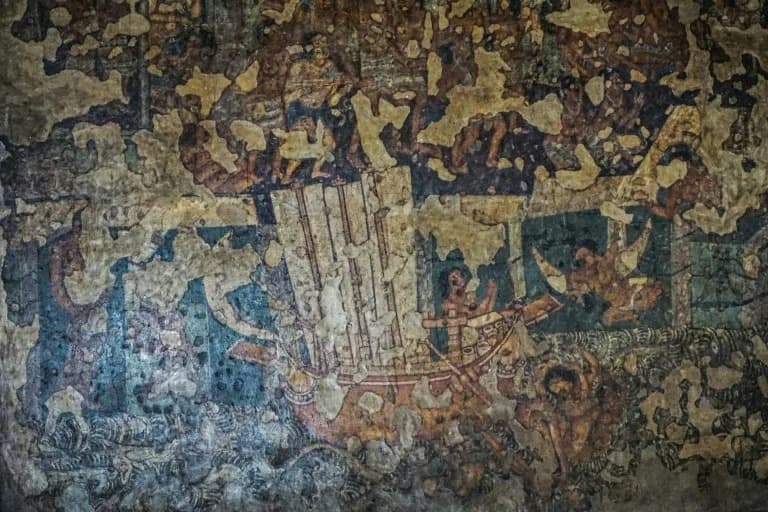
The 18-member crew includes historian Sanjeev Sanyal, who conceived the project and worked with traditional shipwrights using ancient texts, paintings and coin imagery to recreate the design. Life aboard is deliberately basic: there are no cabins, crew sleep in hammocks and the only modern power aboard is a small battery for a radio transponder and navigation lights because timber hulls show up poorly on radar.
The stitched construction allows the hull to flex in heavy seas — a traditional technique that builders say helps the vessel ride waves rather than resist them rigidly.
History, Strategy And Soft Power
The voyage evokes an era when Indian mariners traded widely, from the Roman Empire to the Middle East, East Africa and parts of Southeast and East Asia. Project leaders frame the expedition as a cultural revival and a soft-power initiative that highlights India’s long maritime connections — a narrative that also has resonance amid modern geopolitical alignments in the Indian Ocean region.
"The monsoon winds that guided old trading ships between our ports also carried a shared belief that prosperity grows when we remain connected, open and cooperative," Oman’s ambassador to India, Issa Saleh Alshibani, said in remarks marking the departure.
Kaundinya’s crossing is both an experiment in living maritime history and a practical test of traditional shipbuilding knowledge. Organisers say the voyage will help revive ancient seafaring techniques while strengthening cultural ties across the Indian Ocean.
Help us improve.