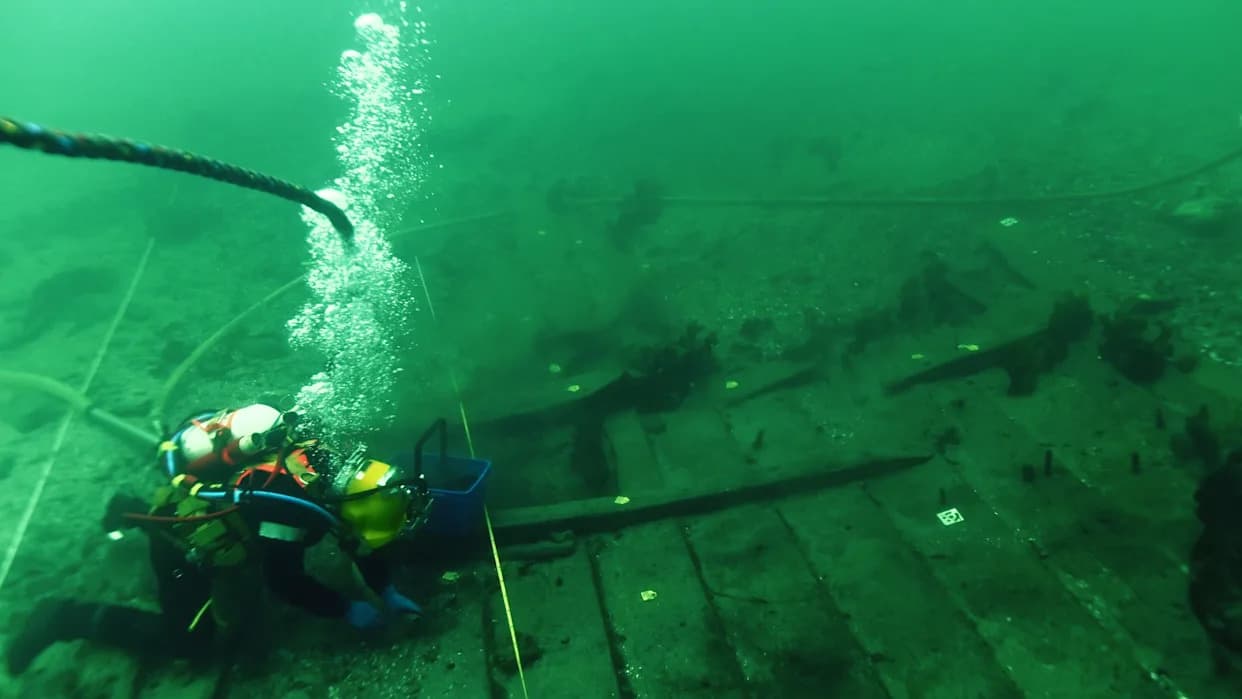
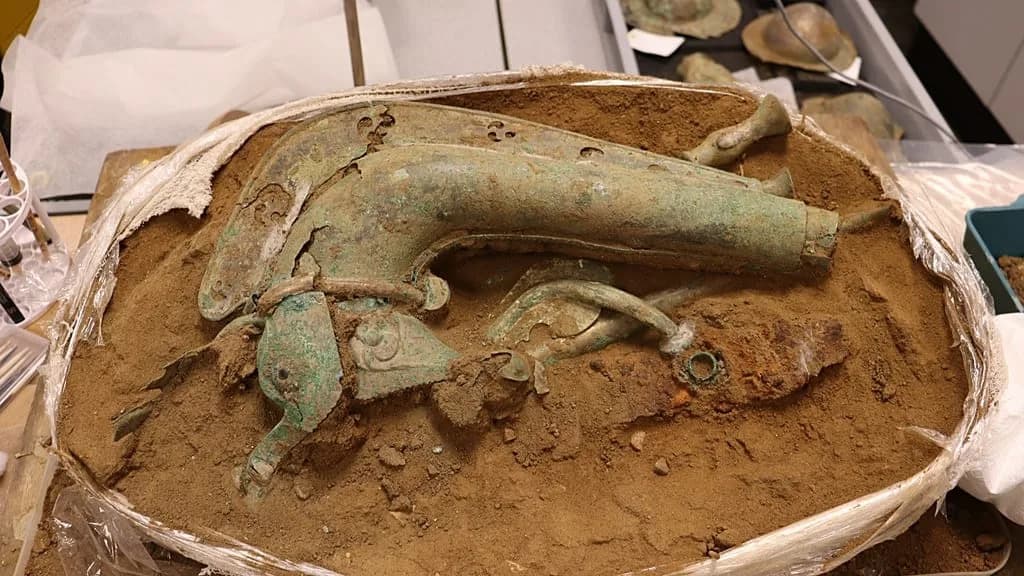
Svaelget 2, a nearly 92‑foot medieval cog discovered off Copenhagen, is the largest example of its kind and dates to about 1410. Excavation revealed an estimated 300‑ton cargo capacity and the first clear archaeological evidence of a timber‑built stern castle on a cog. Analysis shows planking from Pomerania and frames from the Netherlands, pointing to cross‑regional timber trade and specialized shipbuilding. The remarkably preserved wreck — found under more than 42 feet of water — also yielded rigging fragments, a brick galley and personal items, though the ship's commercial cargo is unknown.
Svaelget 2 — The Largest Medieval Cog Ever Found: A 92‑Foot 'Super Ship' Unearthed Off Copenhagen
Archaeologists Found a 9-Story-Long Viking ShipJuan Maria Coy Vergara - Getty Images
Maritime archaeologists working in the strait between Denmark and Sweden have uncovered the largest known medieval cog — a workinghorse cargo vessel that could reshape our understanding of 15th‑century northern European trade. Named Svaelget 2 for the channel where it lay, the ship dates to around 1410 and was revealed during seabed surveys carried out ahead of construction for a new Copenhagen district.
At nearly 92 feet (28 meters) long, 30 feet (9 meters) wide and 19 feet (6 meters) tall, Svaelget 2 has an estimated carrying capacity of roughly 300 tons. Buried beneath sand and silt at a depth of more than 42 feet (about 13 meters) for some 600 years, the hull was remarkably well preserved when excavators exposed it.
Why This Discovery Matters
Researchers describe Svaelget 2 as a true 'super ship' of the Middle Ages: a highly efficient cargo vessel that required comparatively few crew members even when heavily laden. Its size and capacity provide direct, tangible evidence that maritime logistics in the 15th century supported large‑scale transport of everyday commodities — salt, timber, bricks and foodstuffs — not only luxury goods.
"It is the largest cog we know of, and it gives us a unique opportunity to understand both the construction and life on board the biggest trading ships of the Middle Ages," said Otto Uldum, maritime archaeologist and excavation leader from Denmark's Viking Ship Museum.
Construction, Materials and Origins
Material analysis shows the ship's planks were cut from Pomeranian oak (present‑day Poland), while the ribs and frames used timber from the Netherlands. This mix suggests that heavy planking was imported from Pomerania and that the actual construction — or at least the shipwright expertise to assemble such a large cog — likely occurred in the Netherlands, a center for large cog production in the medieval North Sea world.
Unprecedented Finds Aboard
Svaelget 2 has yielded several exceptional discoveries. For the first time on a cog, investigators recovered fragments of rigging, illuminating how sails and masts were controlled on these large merchant vessels. The team also found archaeological evidence of a timber‑built stern castle — a raised defensive structure where crew could take shelter — a feature only rarely preserved and never before documented so clearly on a cog.
Inside the wreck, archaeologists uncovered a brick‑built galley with roughly 200 bricks and 15 tiles, indicating cooking over open fire, plus personal and household items: bronze cooking pots, tableware, ceramic bowls, painted wooden dishes, shoes, combs and rosary beads. These finds offer a vivid window into daily life aboard a medieval trading ship.
What Remains Unknown
Despite the rich material culture recovered, investigators have no clear evidence of the ship's commercial cargo. The merchant hold appears to have been breached or exposed during the wrecking or burial process, allowing any bulk goods to disperse into the water. Still, the vessel's structure, equipment and crew possessions make Svaelget 2 a unique resource for studying medieval trade networks, shipbuilding techniques and seafaring life.
Next steps: Conservators and maritime archaeologists will continue detailed recording, wood analyses and conservation of recovered materials. Findings from Svaelget 2 are expected to inform museum displays and academic studies, and to change how historians reconstruct commerce and shipbuilding across the Baltic and North Sea in the 15th century.
Help us improve.