
The Trump administration’s new 33‑page National Security Strategy reframes China chiefly as an economic competitor, downplaying ideological and human‑rights criticisms that featured in earlier NSS documents. Taiwan receives greater emphasis for its semiconductor production and strategic location, although some phrasing is softer and more ambiguous. Analysts say the change may preserve negotiating space ahead of high‑level talks with Beijing while reflecting concerns about U.S. economic interdependence with China.
Why Trump’s New National Security Strategy Reframes China — And What It Means

US President Donald Trump shakes hands with Chinese leader Xi Jinping as they hold a bilateral meeting on the sidelines of the Asia-Pacific Economic Cooperation summit at Gimhae International Airport, South Korea, on October 30, 2025. - Evelyn Hockstein/Reuters
When the White House released its new National Security Strategy (NSS), observers noticed a clear shift in tone: China is framed primarily as an economic competitor rather than an existential geopolitical rival. The 33‑page document mentions Beijing only late in the text and devotes a single section to U.S.–China relations, signaling a narrower, commerce‑centered approach.
What’s Different
The new NSS emphasizes economics as the central stake in U.S.–China ties, pledging to “rebalance America’s economic relationship with China” and to prioritize reciprocity and American economic independence. Language that in prior strategies focused on ideological rivalry, human‑rights abuses, and a broad great‑power contest is noticeably reduced or absent.
Notable Omissions
- The document omits sustained references to China’s strategic ambitions and ideological competition that appeared in the 2017 NSS and the Biden administration’s 2022 NSS.
- Human‑rights complaints that previously called out Xinjiang, Tibet, and Hong Kong receive little to no emphasis.
- Several regional flashpoints cited in earlier strategies — for example, Myanmar and North Korea — are downplayed or not mentioned.
Where Taiwan Fits In
One exception to the narrower framing is Taiwan, which receives expanded discussion. The NSS highlights Taiwan’s semiconductor industry and its strategic position near the Second Island Chain, linking maritime security and trade flows to U.S. economic and security interests. The text calls deterring conflict over Taiwan a priority and urges allies to maintain military overmatch to protect vital sea lanes.
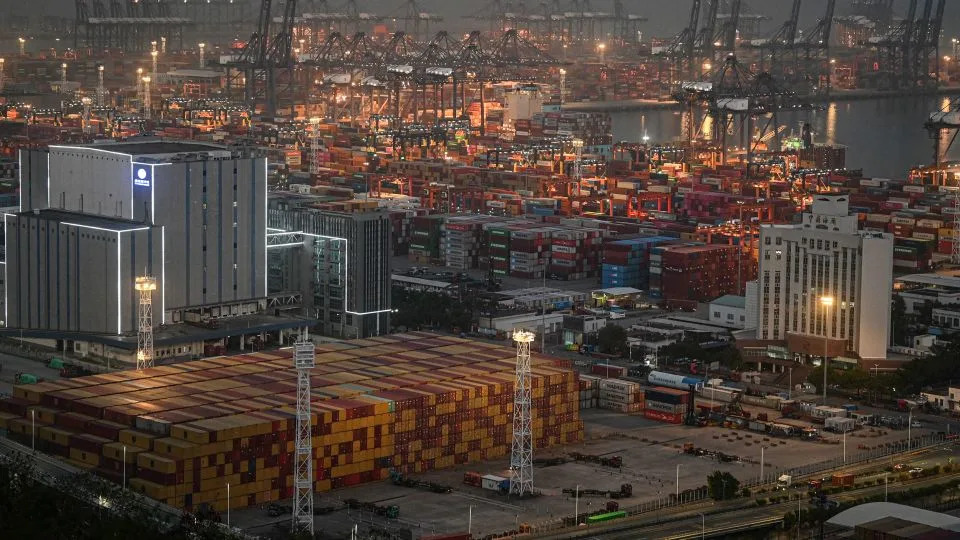
Shipping containers and gantry cranes at the Yantian port at night in Shenzhen, China, on April 14, 2025. - Jade Gao/AFP/Getty Images
At the same time, some wording is softer than in past documents: the NSS states the U.S. “does not support any unilateral change to the status quo in the Taiwan Strait,” a slightly different formulation from earlier phrasing that said the U.S. would “oppose” unilateral change.
Responses And Interpretations
Responses have been mixed. Beijing’s Foreign Ministry offered a muted reaction, stressing mutual respect, peaceful coexistence and a willingness to pursue cooperation while safeguarding China’s sovereignty and development interests. Some Chinese analysts warned that softer language may be tactical, not a retreat.
U.S. experts see multiple possible motives: a desire to preserve negotiating room ahead of an anticipated meeting between President Trump and Chinese leader Xi Jinping; the influence of a different set of advisers in the current administration; and a recognition of deep economic interdependence after recent trade tensions.
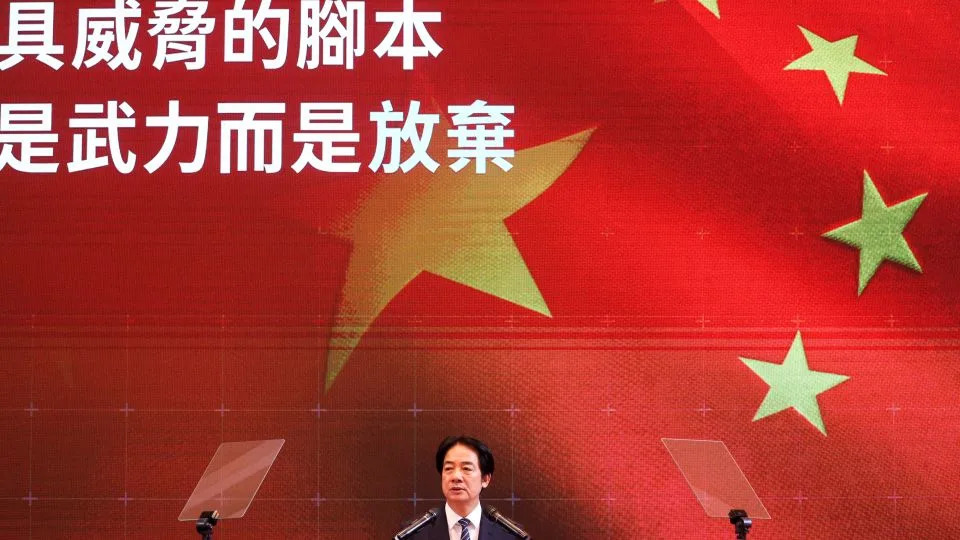
Taiwan's President Lai Ching-te holds a news conference on protecting national security at the Presidential Office Building in Taipei on November 26, 2025. - I-Hwa Cheng/AFP/Getty Images
“China is seen much more as an economic competitor,” said David Sacks of the Council on Foreign Relations. “This document doesn’t set up an existential competition with China.”
Implications
The NSS signals a tactical recalibration: prioritizing economic instruments and rivalry while limiting ideological confrontation in public strategy documents. That approach could ease diplomatic friction in the near term and create space for talks, but it may also introduce ambiguity about U.S. commitments on human rights and security guarantees — particularly for partners such as Taiwan.
Ultimately, how the NSS translates into policy will depend on follow‑through: trade measures, alliance building, defense spending priorities, and how the administration balances deterrence with engagement in the lead‑up to high‑level meetings with Beijing.
Read on for specific takeaways and the key passages shaping this new approach.


