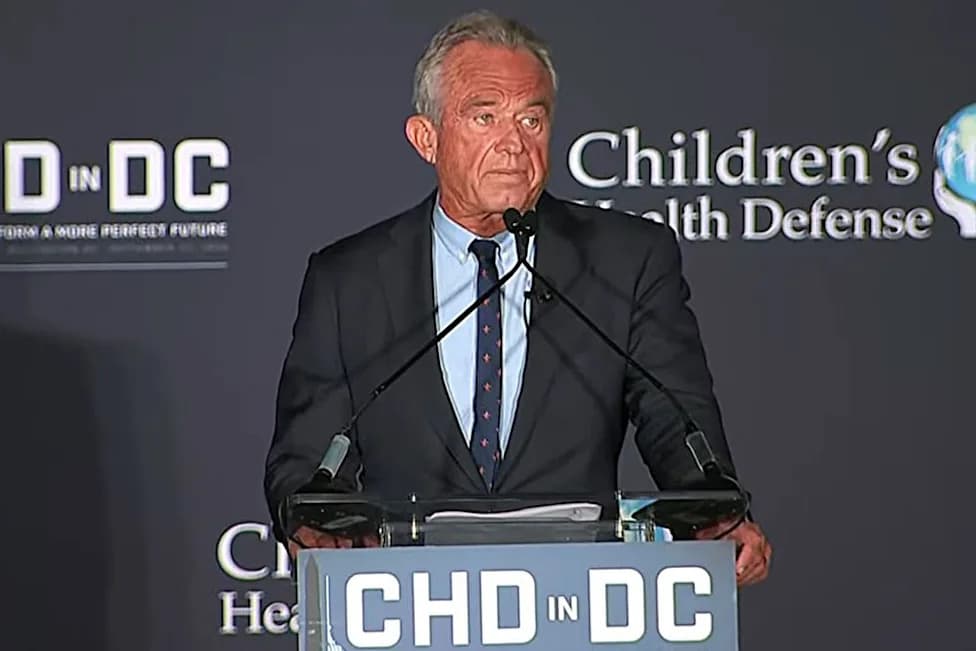
HHS Secretary Robert F. Kennedy Jr. said he is coordinating a federal effort to phase out government-funded animal testing, with a focus on non-human primates. He cited commitments from agency leaders but offered few operational details. Scientists warn that alternatives such as AI and organ-on-chip technologies are promising yet not ready to fully replace primate models for certain critical research. Major logistical challenges remain, including sanctuary capacity, transport costs, and the fate of animals infected with dangerous pathogens.
RFK Jr. Pledges Federal Push to End Government-Funded Animal Testing, Focuses on Primate Research

A view of primates in cages in a research facility n Yemassee, South Carolina, on Nov. 8, 2024. / Credit: Peter Zay/Anadolu via Getty Images
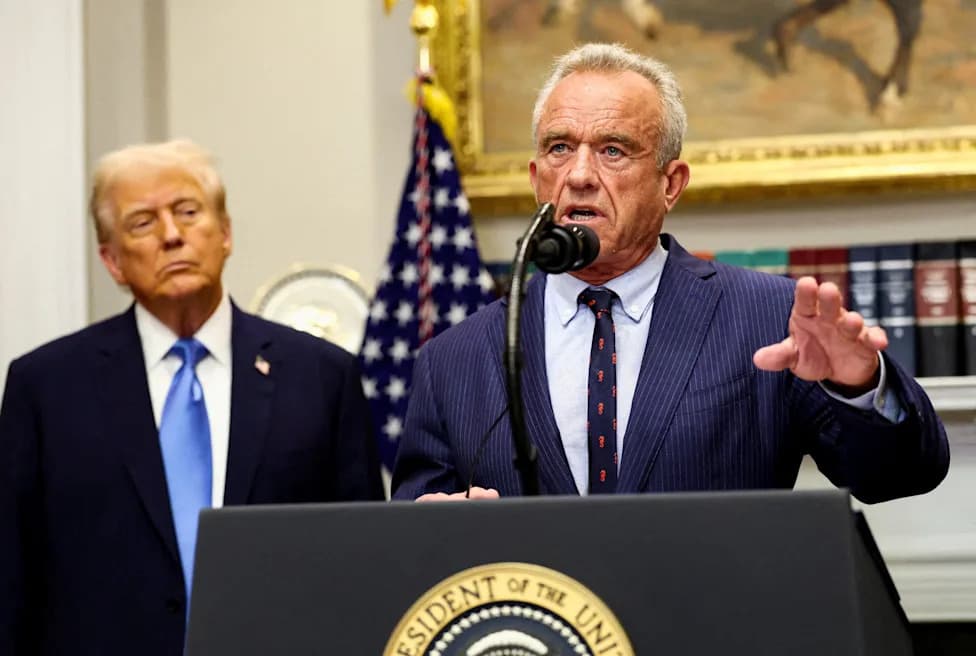
Health and Human Services Secretary Robert F. Kennedy Jr. said this weekend he is coordinating across federal agencies to wind down government-funded animal testing, with a particular emphasis on phasing out research on non-human primates.
Agency Coordination and a High-Stakes Promise
In an interview with Lara Trump on Fox News, Kennedy said, “All the major agency heads are committed to ending animal experimentation,” singling out research conducted by the Centers for Disease Control and Prevention (CDC) and the National Institutes of Health (NIH).
Scope of Primate Research
Kennedy noted there are more than 100,000 monkeys housed in U.S. primate research facilities and said that roughly 20,000 more are imported each year. “We are trying to put an end to that,” he said, describing a government-wide effort to phase out federally funded live-animal studies.
Recent Developments and Reporting
Earlier this year, an investigation by CBS News and the South Carolina Post & Courier documented efforts to cancel nearly $28 million in federal grants tied to research that relied on animal models. That reporting found that as agencies consider phasing out live-primate studies, validated alternatives are not yet fully ready for broad adoption.
Against this backdrop, the CDC was instructed last month to phase out its monkey research, a directive first reported in the journal Science. An HHS spokesperson told CBS News that the administration is shifting priorities toward animal welfare and human-based research.
Why Primate Research Matters, According to Scientists
Primate studies have played a significant role in biomedical advances for decades. Federal guidance often requires testing in non-human primates before certain pharmaceuticals proceed to human clinical trials. Proponents point to contributions from primate research in the development of treatments and vaccines, including work related to pain medications, COVID-19 vaccines and metabolic therapies.
Deborah Fuller, director of the NIH-funded Washington National Primate Research Center, emphasized the scientific importance of primates for some questions: “The majority of the biomedical interventions that we have today went through a non-human primate at some point. Shutting down a non-human primate research program, you’re actually shooting yourself in the foot.” She noted that roughly 200 primates are currently involved in CDC studies on HIV and other infectious diseases because non-human primates are the only animal models that reliably recapitulate human HIV infection for those investigations.
Pushback From Animal-Welfare Advocates—and Supporters
Animal-rights organizations, including the White Coat Waste Project, applauded Kennedy’s statement. Justin Goodman, the group’s senior vice president for advocacy and public policy, called the pledge “unprecedented,” arguing that modern alternatives make many live-animal experiments unnecessary. The organization has worked with administration officials to reduce grant programs that rely on animal testing.
Practical Challenges and Unanswered Questions
Despite the political commitment, officials have provided few operational details about how a phaseout would be carried out. Key questions remain: What will happen to the more than 100,000 primates in research facilities? How will animals requiring ongoing medical monitoring be cared for? Where will sanctuary capacity be found, and who will pay for transport and lifelong care?
Sally Thompson-Iritani, an associate professor at the University of Washington who helps oversee the university’s animal care program, said, “We need to make sure we have space somewhere that can take care of these animals for the rest of their lives. And we currently don't have an infrastructure that supports that.”
Logistics are daunting: transporting thousands of animals could cost millions, sanctuaries with appropriate medical capacity are limited, and animals carrying dangerous pathogens (for example, Ebola) cannot safely be relocated and would likely require humane euthanasia.
Alternatives: Progress, But Not Yet a Full Replacement
Kennedy and some agency guidance point to alternatives such as artificial intelligence, organ-on-chip systems, and advanced computer models as promising paths forward. The FDA and NIH issued guidance this spring encouraging the use of alternative technologies when appropriate.
However, researchers developing these tools caution they are not yet capable of fully replacing primate models for every question. Paul Locke, who serves on the board of Johns Hopkins’ Center for Alternatives to Animal Testing, summarized the dilemma: “I want to see us get out of the business of using animals in research. The question is when. When can we do that and reach the double goal of having better science and virtually no animals? The answer is not tomorrow.”
What Comes Next
Kennedy’s announcement marks a high-profile shift in federal rhetoric and policy direction, but considerable planning, funding, and cross-agency coordination will be needed to translate the pledge into practice. Stakeholders across science, animal welfare, and public health will be watching for concrete timelines, transition plans for animals, and investment in validated alternative methods.
Bottom Line: The HHS commitment signals a potential turning point in U.S. research policy—but major scientific, logistical, ethical, and financial hurdles must be resolved before a full phaseout of federally funded primate testing can begin.
Help us improve.