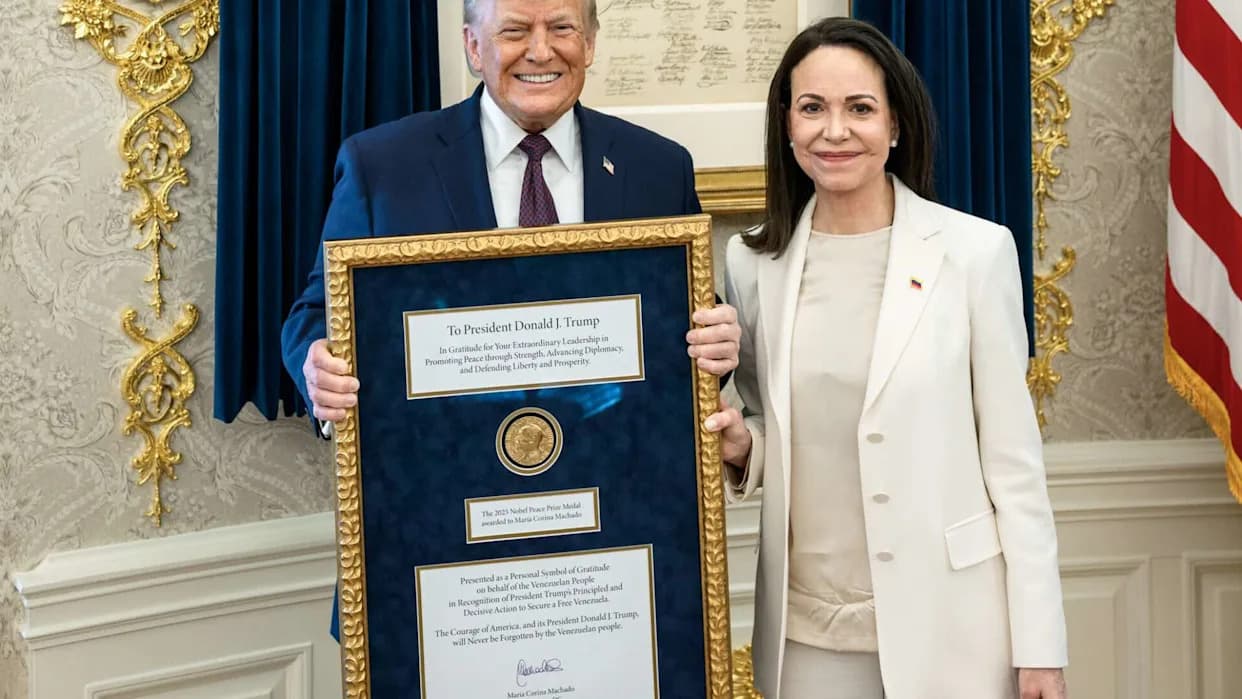
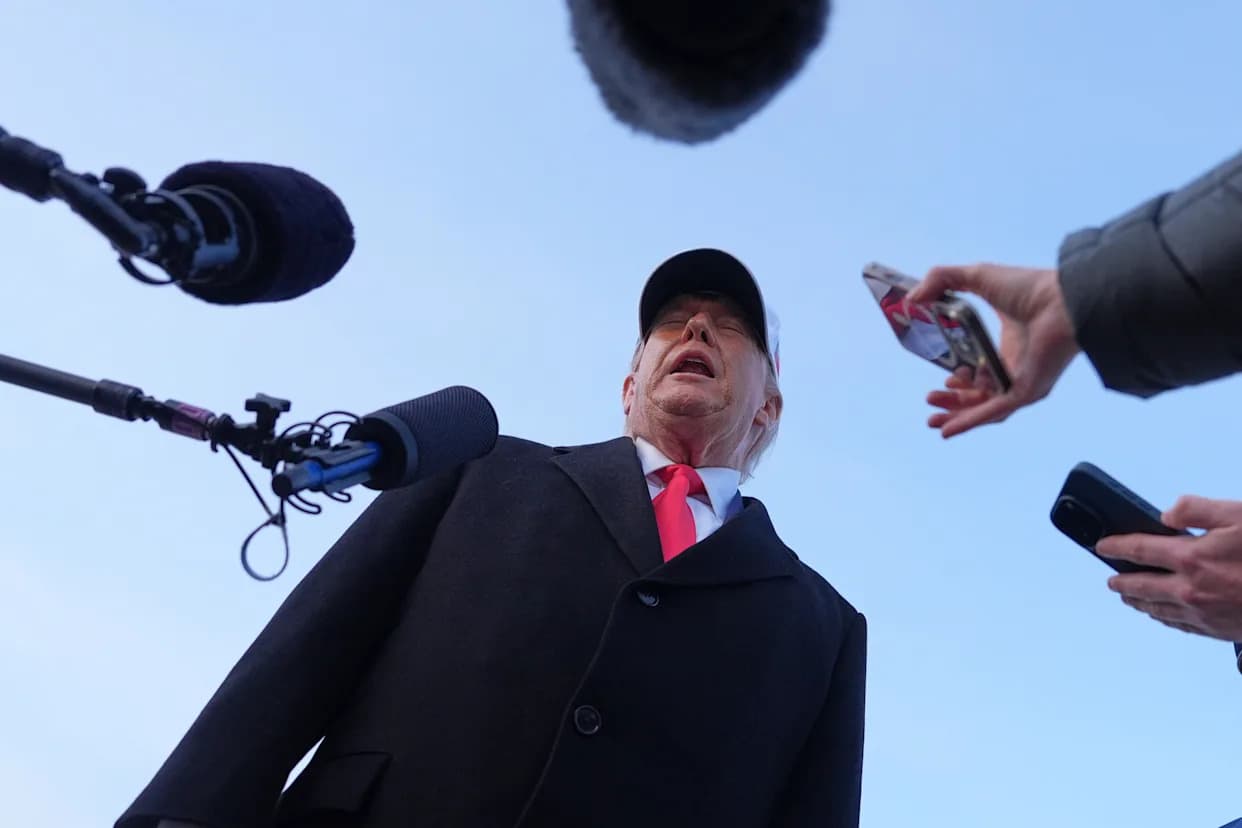
Polaris National Security released a report cataloguing 100 foreign-policy actions it credits to President Trump since his January return. Highlights include Operation Southern Spear off Venezuela, a $50 million reward for information on Nicolás Maduro, an October Gaza ceasefire with hostage returns and reconstruction plans, and June strikes on sites U.S. officials described as Iranian nuclear facilities. The report also cites NATO commitments on defense spending and an Armenia–Azerbaijan declaration on Nagorno-Karabakh; analysts praise some moves while warning about diplomatic risks.
Polaris Lists 100 Trump Foreign-Policy 'Wins' Since Return — From Cartel Crackdowns to Ceasefires

Policy group praises Trump’s 100 global wins since taking office, from cartel crackdowns to peace deals
Polaris National Security on Wednesday published a report cataloguing what the group describes as 100 foreign-policy achievements credited to President Donald Trump since his January return to the White House. The advocacy-oriented analysis, titled "100 Trump Foreign Policy Wins From 2025 the Media Wants You to Miss," organizes actions chronologically and argues the administration prioritized deterrence, greater burden-sharing among allies and direct engagement with rivals.
Overview
The report frames the past year as a swift return to a more assertive U.S. posture abroad. It highlights operations and diplomatic initiatives across multiple theaters — the Western Hemisphere, the Middle East, Europe and the Caucasus — and ties many moves to the 2025 National Security Strategy.
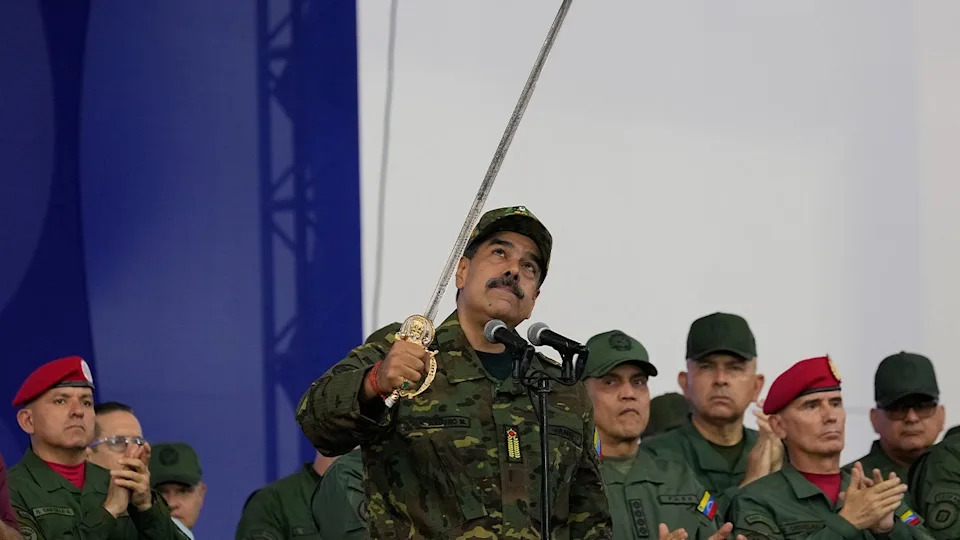
Venezuelan leader Nicolás Maduro brandishes a sword during an event at the military academy in Caracas, Venezuela, Tuesday, Nov. 25, 2025.
Western Hemisphere: Operation Southern Spear and Venezuela
Polaris emphasizes an expanded counter-narcotics campaign off Venezuela’s coast, dubbed Operation Southern Spear, which reportedly included airstrikes on maritime vessels linked by U.S. officials to criminal groups such as Tren de Aragua and the National Liberation Army. The administration also raised the reward for information leading to the arrest of Venezuelan President Nicolás Maduro to $50 million, citing allegations of central involvement in narcotics trafficking; Venezuela rejects those charges. Polaris places these steps within a broader hemispheric reorientation in U.S. policy.
Gaza Ceasefire and Diplomatic Initiatives
A major section of the report focuses on the October Gaza ceasefire. Polaris calls it a pivotal diplomatic breakthrough involving the United States, Israel and Hamas, saying it secured an immediate halt to hostilities and the return of surviving hostages while noting one remains unaccounted for. The document outlines proposals for prisoner exchanges, Gaza demilitarization, an international stabilization force, transitional governance and large-scale reconstruction. Polaris also highlights a November U.N. Security Council resolution on Gaza that passed 13–0, with Russia and China abstaining.
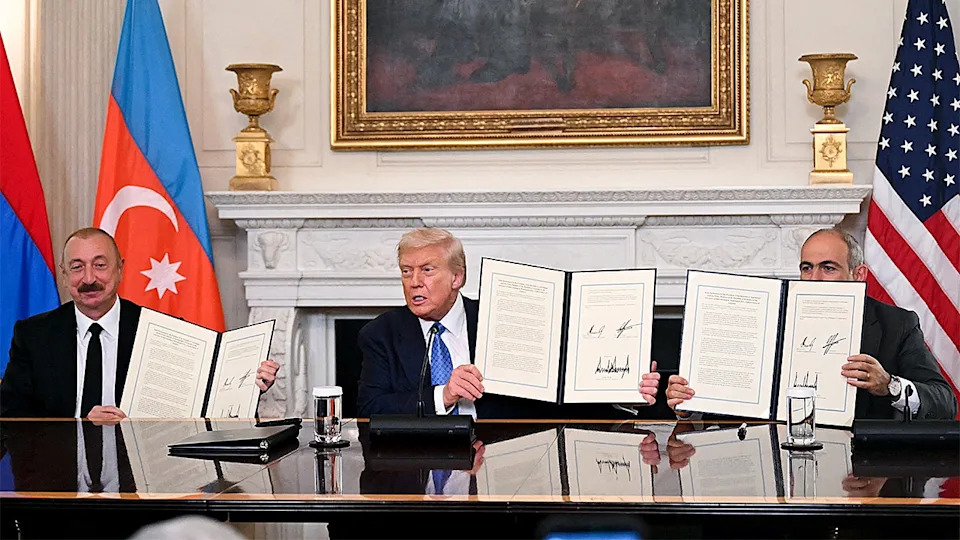
President Donald Trump (C), Azerbaijani President Ilham Aliyev (L) and Armenian Prime Minister Nikol Pashinyan display the agreement they signed in the State Dining Room of the White House in Washington, D.C., on Aug. 8, 2025. Trump said Friday that Armenia and Azerbaijan were committed to a permanent peace as he hosted a White House summit with the leaders of the two South Caucasus nations, which have fought for decades.
Military Action and Countering Iran
The report cites U.S. military strikes in June on sites described by officials as Iranian nuclear facilities, carried out with long-range B-2 bombers and bunker-buster munitions. Polaris frames the strikes as evidence of U.S. resolve to prevent a nuclear-armed Iran; Iranian officials continue to deny pursuing a military nuclear program.
Alliances and Regional Agreements
Polaris applauds commitments at the NATO summit in The Hague, where leaders agreed to a path toward average defense spending targets up to 5% of GDP by 2035, which the report says reflects sustained U.S. pressure for fairer burden-sharing. The analysis also notes an August White House declaration signed by Armenia and Azerbaijan aimed at ending the Nagorno-Karabakh conflict, with provisions for border security, transit routes and economic cooperation.
Critiques and Caveats
The report includes commentary from outside analysts. Nathan Sales, a former State Department counterterrorism coordinator, is quoted as saying the administration views regional diplomacy chiefly through the lens of countering Tehran. Other critics urge caution: foreign policy analyst Lisa Daftari praised several priorities — strong support for Israel, action against cartels and momentum behind the Abraham Accords — but warned that diplomatic outreach to leaders in Syria, Turkey and Saudi Arabia could risk concessions that erode U.S. leverage. Polaris also documents contentious decisions such as the administration’s prohibition on U.S. taxpayer funding for UNRWA, noting UNRWA’s denials and U.S. national security concerns.
Conclusion
The Polaris report offers a strongly positive assessment of the administration’s first year back in office while acknowledging analysts who urge closer scrutiny of certain diplomatic choices and long-term consequences. The document is an advocacy piece that reflects the authors’ interpretations; many of the report’s claims are framed around official U.S. positions and remain disputed by the states and organizations involved.
Help us improve.