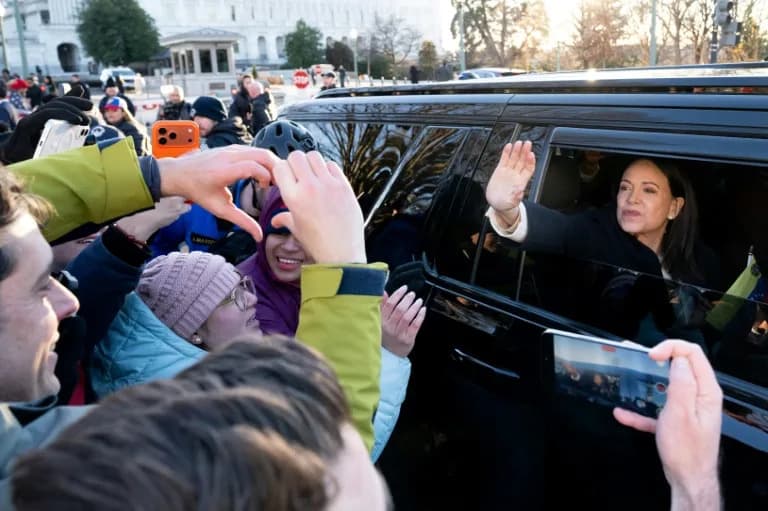
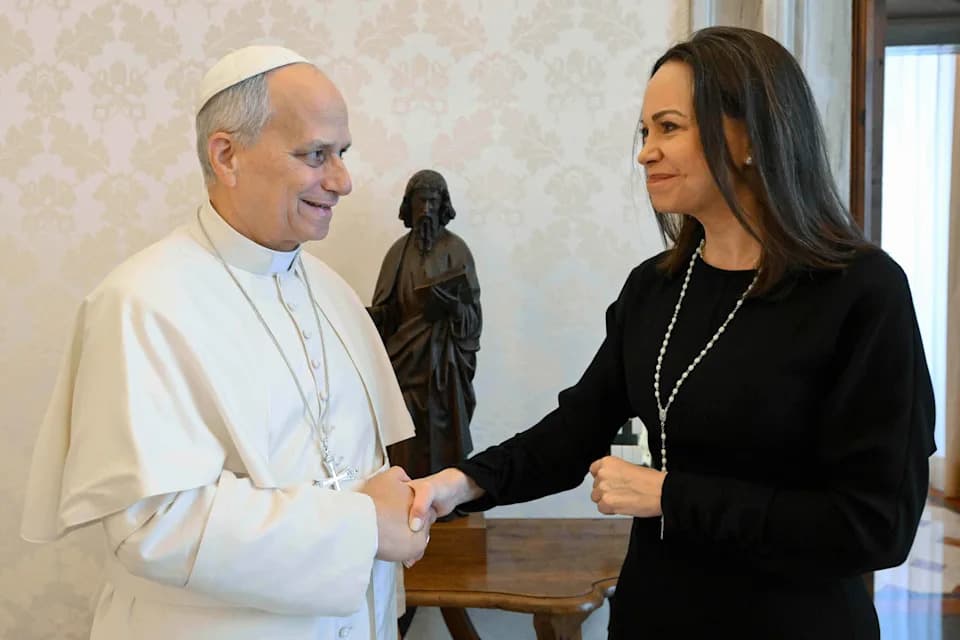
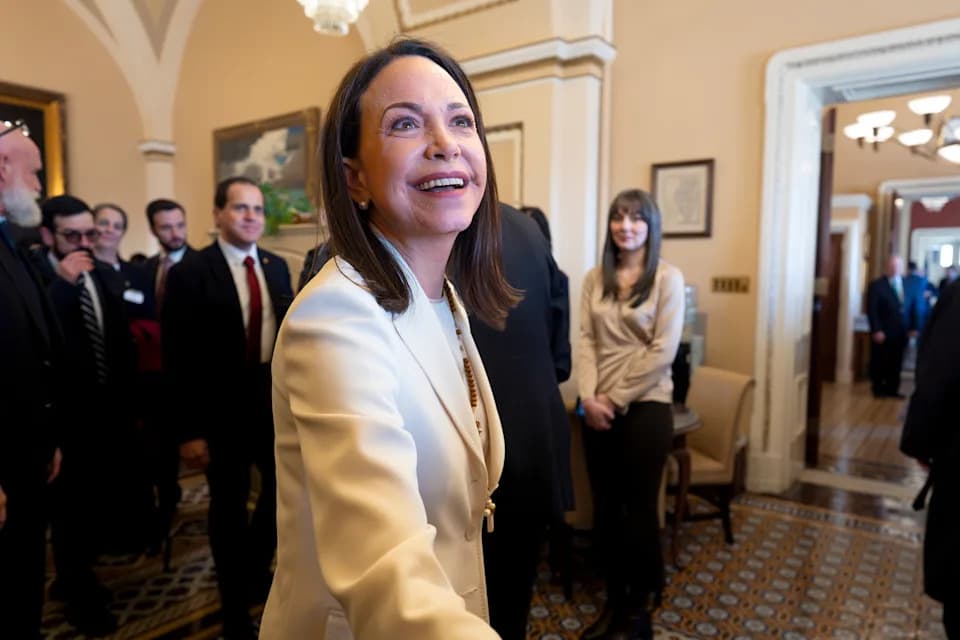
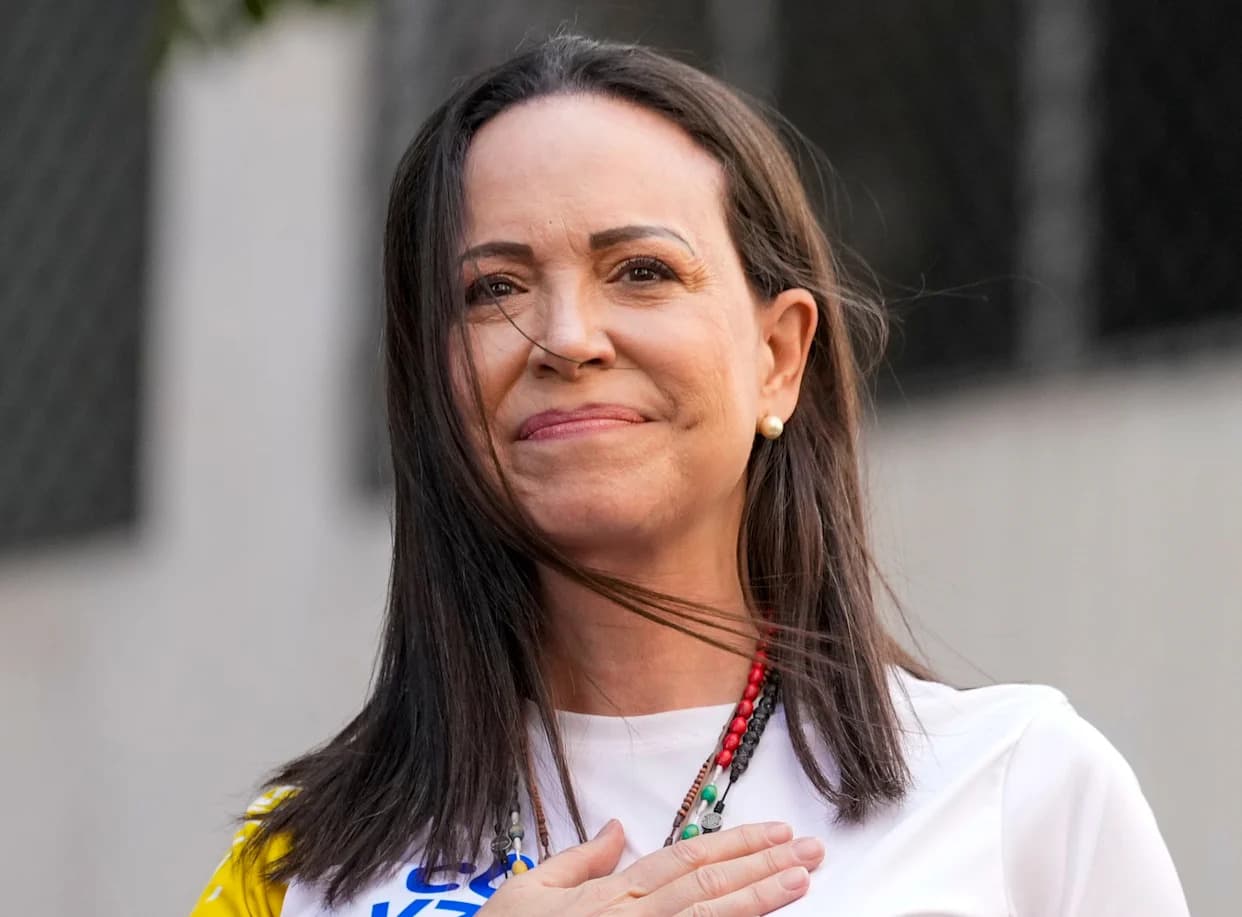
María Corina Machado, Venezuela’s opposition leader and recent Nobel laureate, handed her medal to President Donald Trump in a tactical move to gain influence during a fragile political transition. The Norwegian Nobel Committee clarified that prizes are not transferable, but Machado’s gesture appears calculated. The piece also highlights separate reports: about 50,000 Starlink terminals reportedly active in Iran, a Palantir mapping tool for ICE that scores potential deportation targets, and a Substack essay arguing some activist tactics aim to provoke law-enforcement responses for media impact.
Machado Hands Nobel To Trump — A Tactical Gambit Amid Venezuela’s Uncertainty
Currying Favor
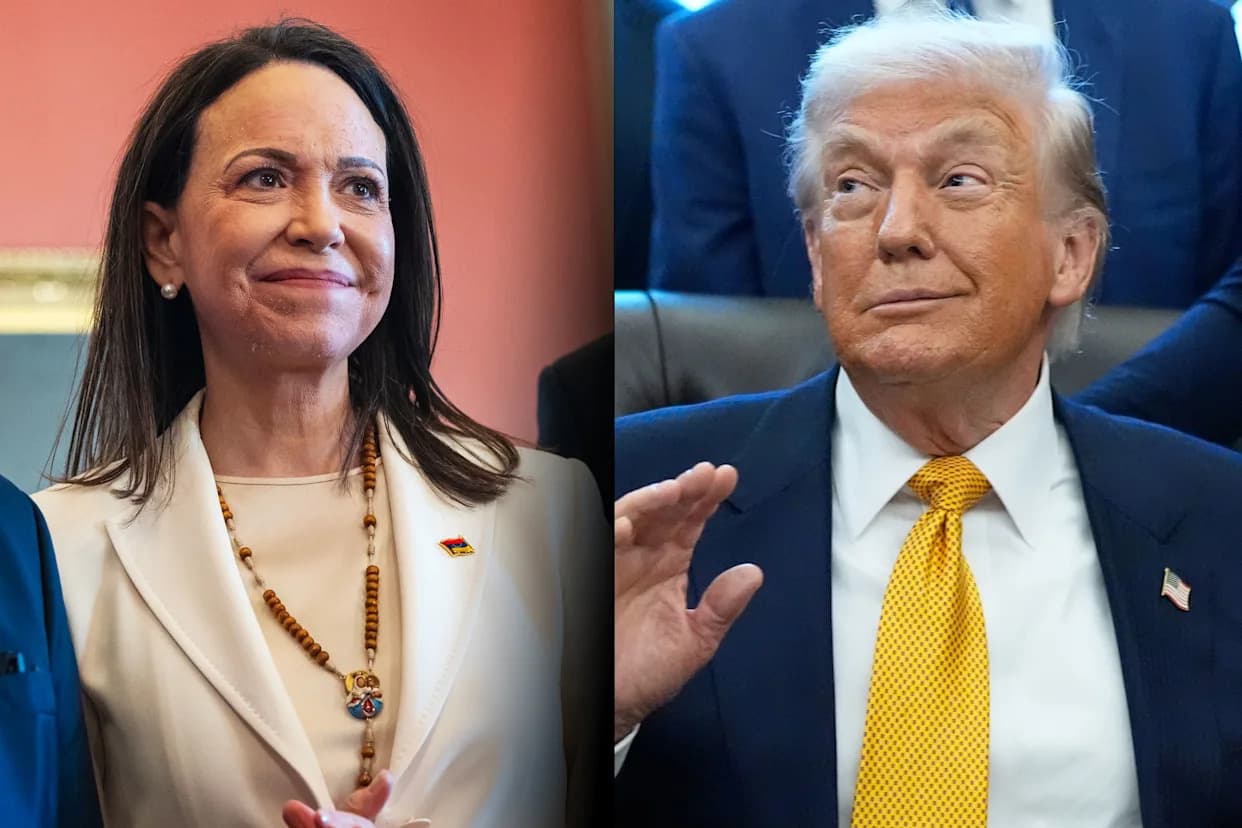
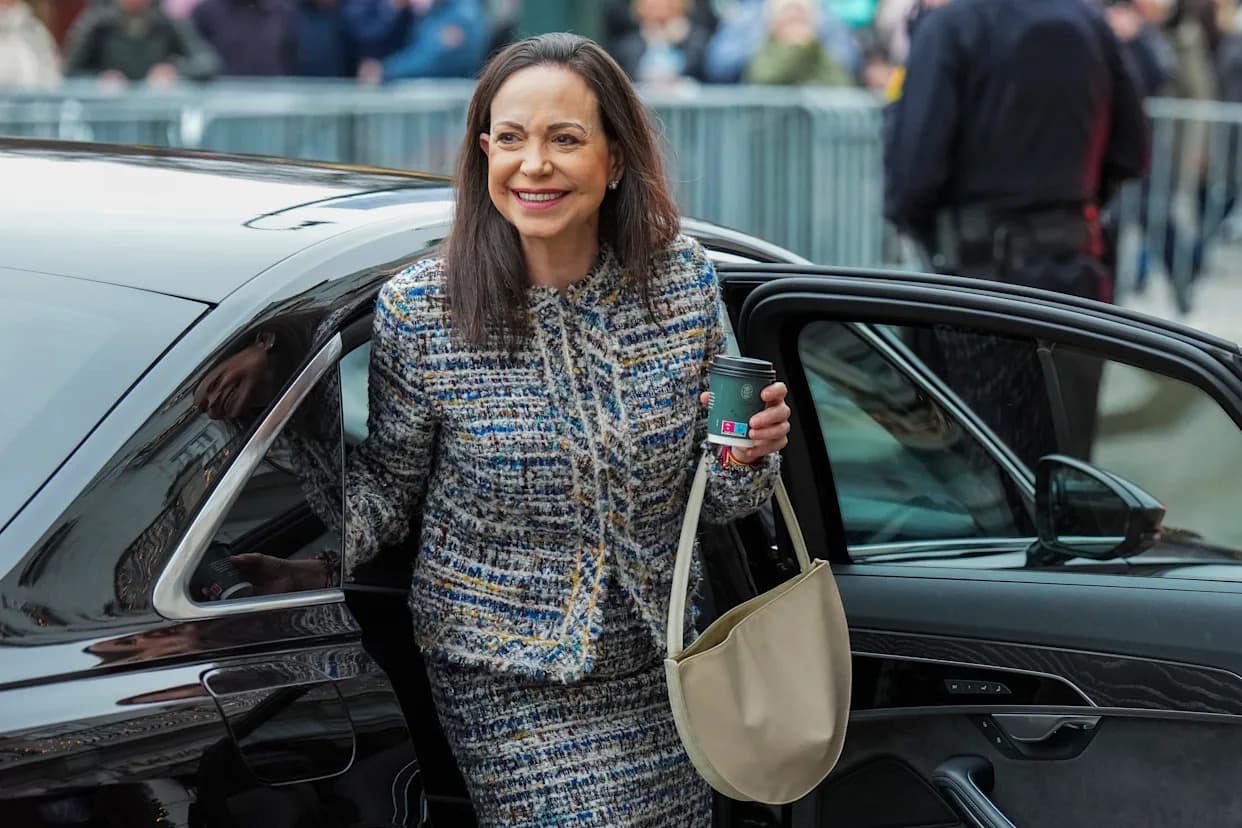
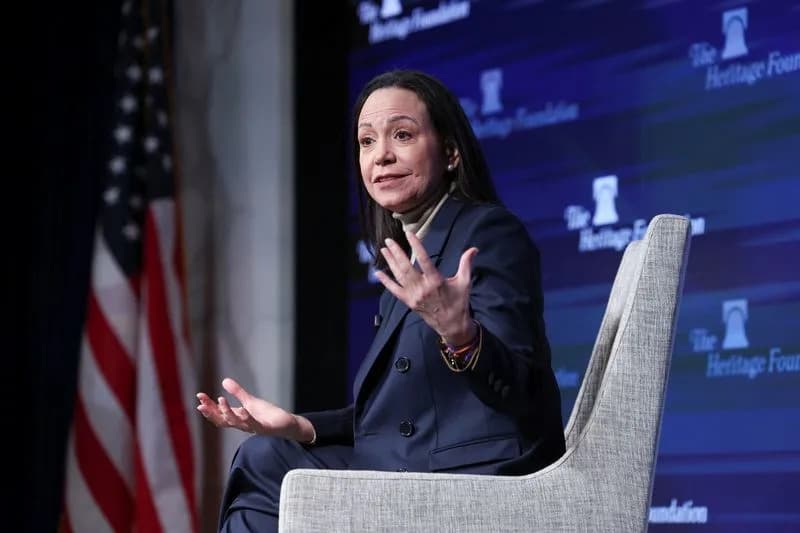
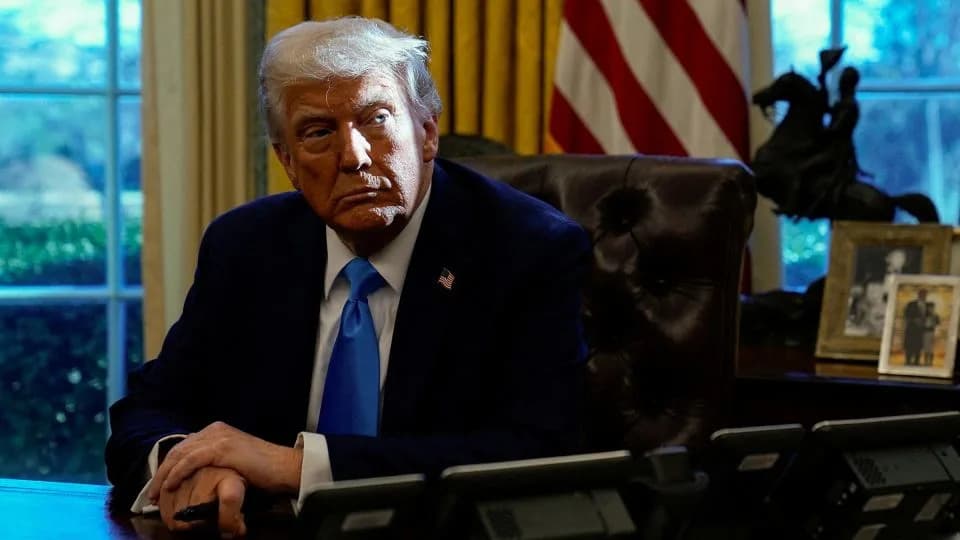
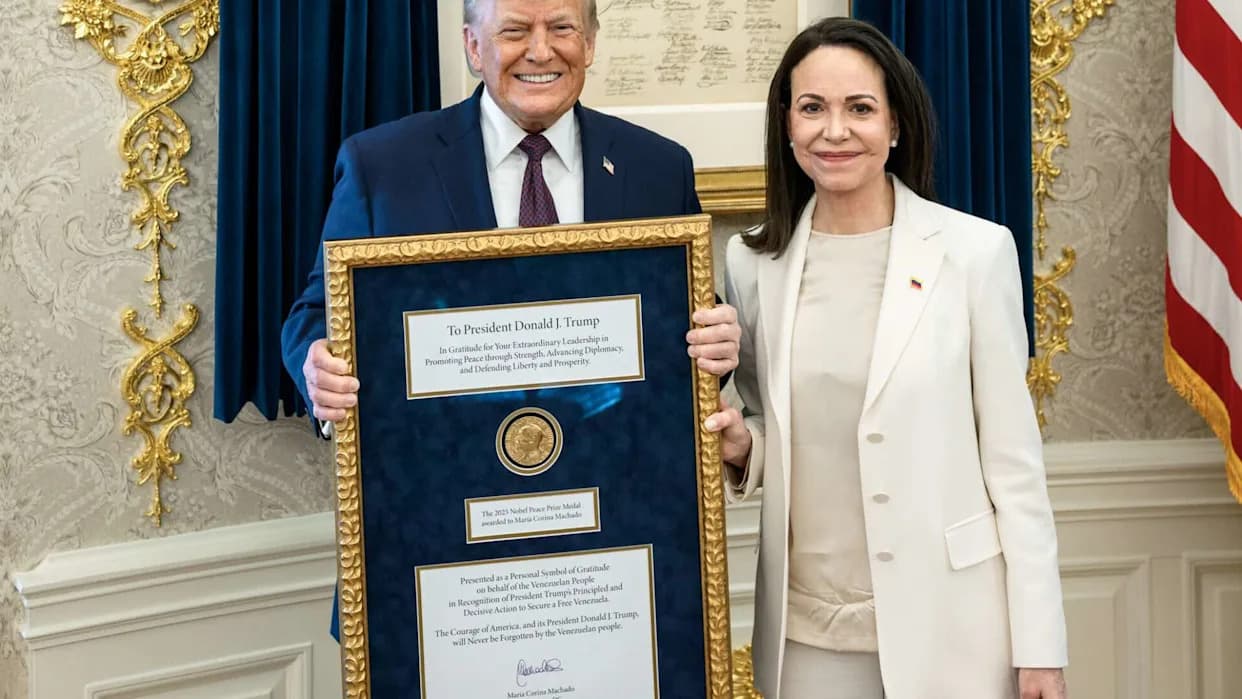
María Corina Machado, Venezuela’s opposition leader and recent Nobel Peace Prize laureate, presented her medal to President Donald Trump during a White House meeting yesterday in what observers called a deliberate attempt to gain influence during Venezuela’s fragile transition.
The Norwegian Nobel Committee quickly reminded the public that Nobel prizes are personal honors and not transferable, but Machado’s gesture appears aimed at cultivating leverage with a U.S. president she hopes will back a transition to competent governance in Caracas.
What Trump Said
"She is a wonderful woman who has been through so much. María presented me with her Nobel Peace Prize for the work I have done," Trump wrote on social media, calling the exchange "a wonderful gesture of mutual respect."
The episode fits a recurring theme in Trump’s public narrative: he frequently takes credit for international diplomatic wins and high-profile outcomes. In a September address to the U.N. General Assembly he complained that "it's too bad I had to do these things instead of the United Nations doing them," and criticized the U.N. as often issuing statements without follow-through.
Venezuela: Claims and Uncertainty
Trump’s list of claimed diplomatic achievements—compiled by The Times—includes several bilateral mediation efforts and high-stakes interventions. He has also asserted that Nicolás Maduro was deposed and exiled to Brooklyn and suggested U.S. influence in Venezuela will be sustained for the foreseeable future. Those claims remain politically charged and uncertain in practice: Maduro’s replacement, Delcy Rodríguez, is viewed by many as a longtime regime figure, and the wider outcome for Venezuelan governance is unclear.
Observers also note the administration has authorized repeated maritime strikes linked to regime-change efforts in Venezuelan waters, operations whose legality has been questioned because of limited public evidence and the absence of explicit congressional approval. Officials have characterized targeted vessels as tied to narcotics trafficking but have not publicly produced conclusive proof for lawmakers.
Other Notable Developments
Separate reporting highlights several parallel international and domestic trends:
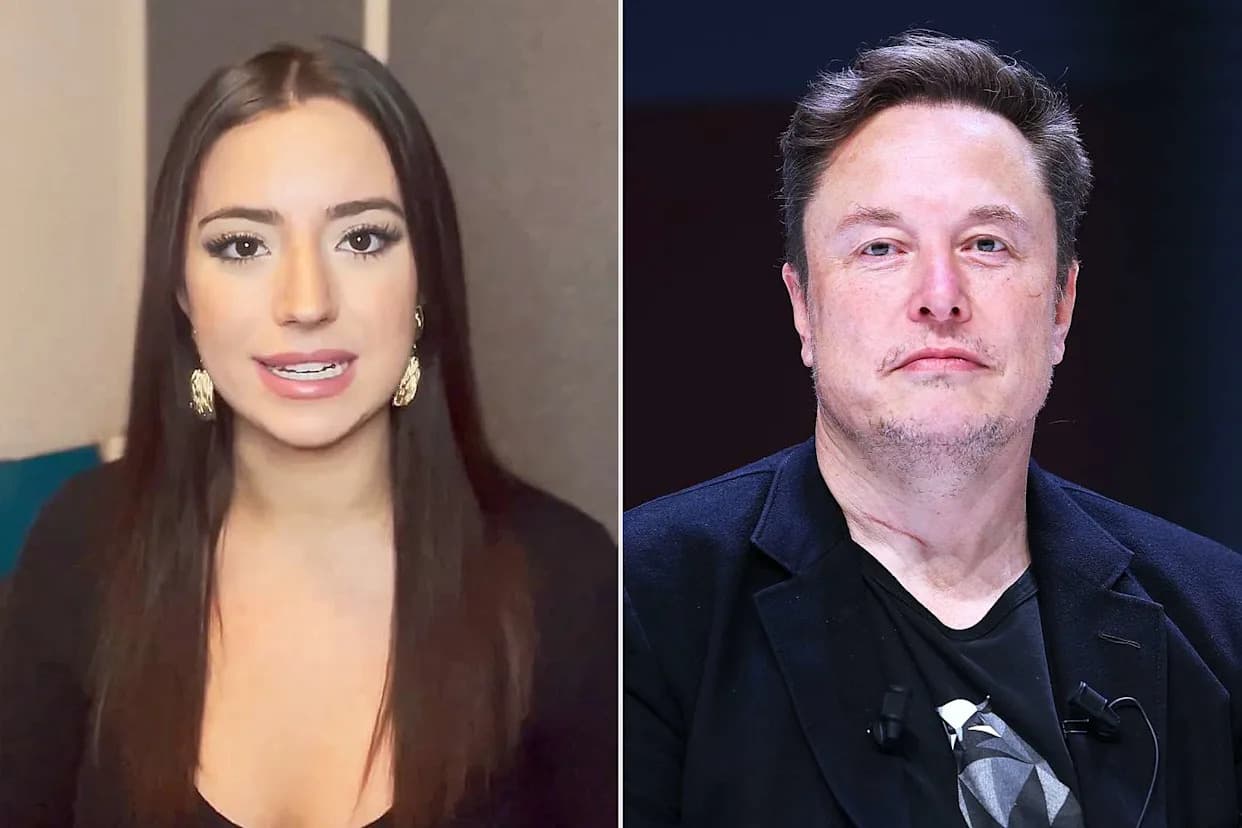
- Starlink in Iran: The New York Times reports activists and civil-society groups have been covertly distributing Starlink terminals into Iran since 2022, aided by a U.S. sanctions exemption. Digital activists estimate roughly 50,000 terminals are now operating in Iran despite local bans on unlicensed services.
- Palantir and ICE: 404 Media reports that Palantir is building a mapping tool for Immigration and Customs Enforcement (ICE) that plots potential deportation targets, opens dossiers on individuals, and assigns a "confidence score" for addresses—raising questions about algorithmic decision-making and civil liberties.
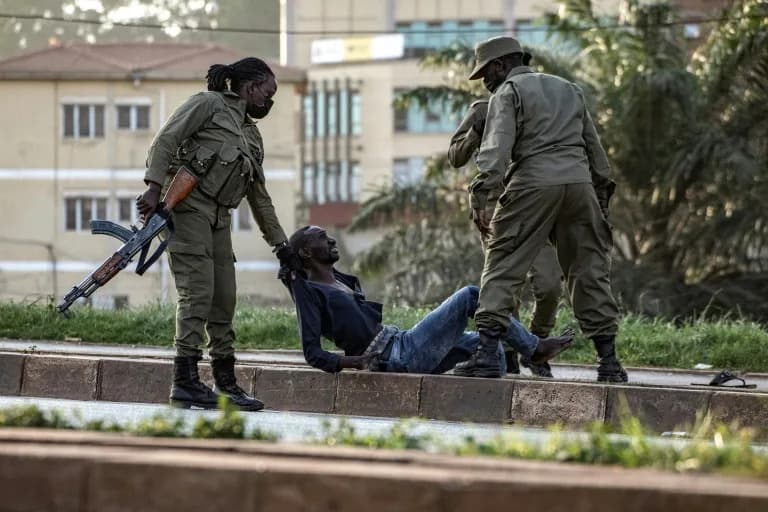
- Activist Tactics: A Substack essay titled "Stochastic Martyrdom" argues that some activist networks train and organize participants to use interference tactics that intentionally provoke law-enforcement responses to generate media-friendly victims and political leverage.
Why This Matters
Machado’s theatrical gift to Trump is best read as a calculated bid for influence during a volatile moment in Venezuelan politics. Whether it yields tangible U.S. support or long-term improvements in Venezuelan governance is uncertain. The episode also underscores broader trends: the politicization of high-profile awards, the growing role of digital communications in authoritarian contexts, and concerns about surveillance and enforcement tools that rely on private-sector technology.
Help us improve.