Archaeologists have documented a massive submerged stone wall off the Île de Sein in Brittany that dates to around 5,000 B.C. The roughly 120‑metre structure is built from large granite monoliths and reinforced with stones, and may have served as a fish trap or coastal dam. Detected by radar in 2017 and inspected after 2022, it is the largest underwater construction discovered in France and may help explain the Breton legend of the sunken city of Ys. The find highlights advanced Neolithic engineering and the cultural impact of rapid sea‑level rise on coastal communities.
5,000‑Year‑Old Undersea Wall Off Brittany May Explain Legendary 'Sunken City'

SAMM, 2023 / Yves Fouquet et al., International Journal of Nautical Archaeology (2025)
Off the western edge of the Île de Sein in Brittany, researchers have documented a large submerged stone wall dating to around 5,000 B.C. The find — visible again when seaweed cover and tides allowed inspection — may help explain the long‑standing Breton legend of a sunken city.
What Was Found
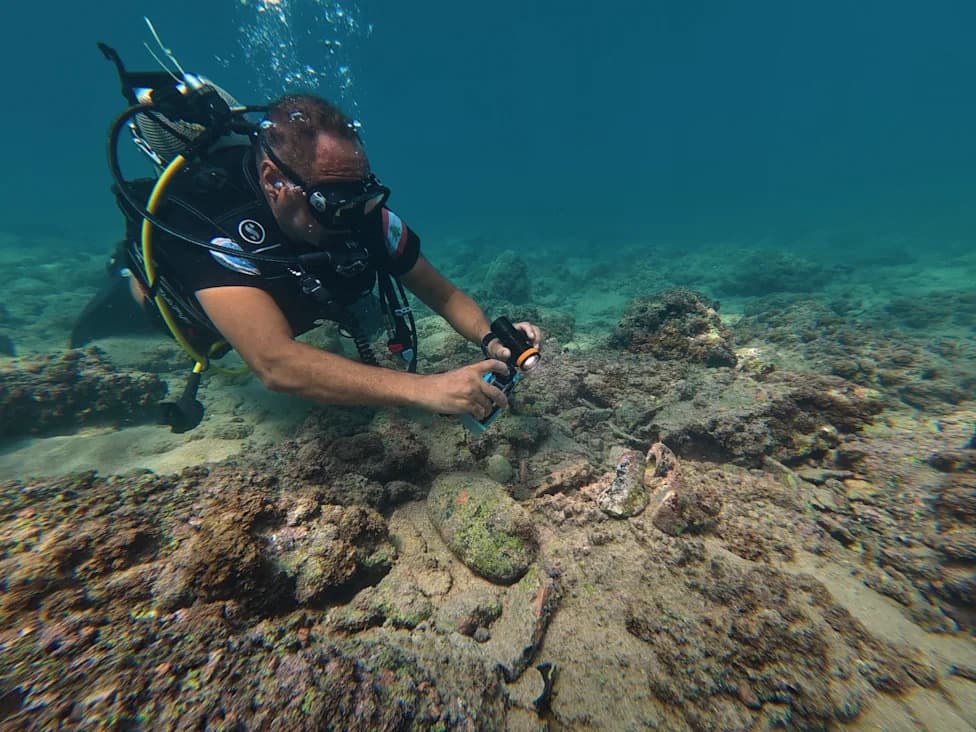
Field teams documented a linear structure roughly 120 metres (about 394 feet) long, about 20 metres (65 feet) wide and 2 metres (6.5 feet) high that spans the mouth of an underwater valley between high and low tide marks. Built on bedrock from massive granite slabs or "monoliths" and reinforced with additional stone, it is the largest submerged construction currently known in France.
How It Was Discovered
Local geologist Yves Fouquet first detected the feature in 2017 using advanced radar depth mapping. He told Le Monde he observed "a 120‑metre line blocking off an undersea valley" that appeared artificial. Further fieldwork was delayed until 2022, when reduced seaweed allowed divers and archaeologists to inspect and document the structure in situ.
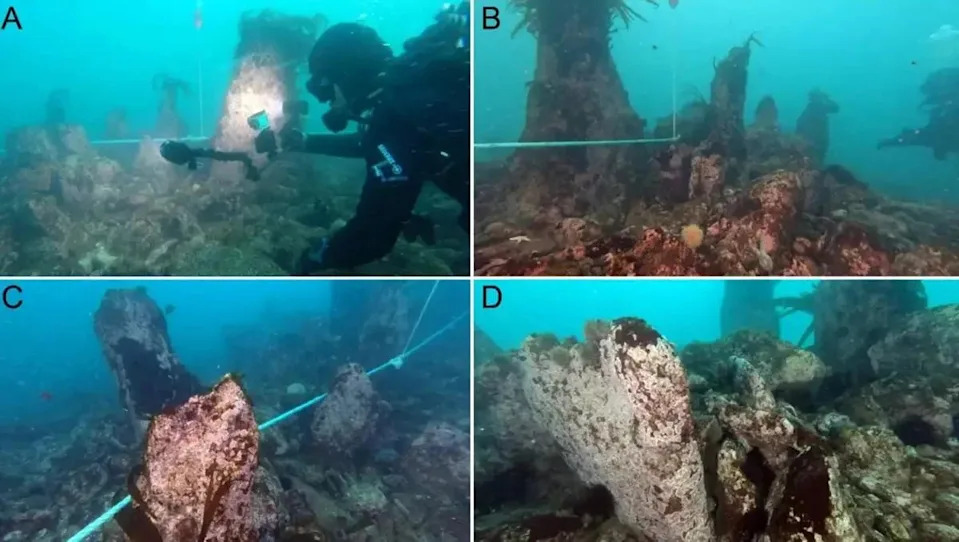
SAMM, 2023 / Yves Fouquet et al., International Journal of Nautical Archaeology (2025)
Function and Dating
The study published in the International Journal of Nautical Archaeology dates the construction to roughly 5,000 B.C. Researchers propose two primary functions: a large-scale fish trap (with monoliths supporting nets or frames of sticks and branches) or a coastal barrier/dam built to protect against rising waters. The authors note the engineering required to extract, move and erect multi‑ton blocks indicates "technical skills and social organization" comparable to Neolithic megalithic projects in the region.
"It was built by a very structured society of hunter‑gatherers, of a kind that became sedentary when resources permitted. That or it was made by one of the Neolithic populations that arrived here around 5,000 BC," archaeologist Yvan Pailler told the BBC.
Connection To Local Myth
Researchers point to a regional memory of the city of Ys, a legendary Breton settlement said to have been swallowed by the sea. The study suggests that rapid post‑Neolithic sea‑level rise and the subsequent abandonment of fishing installations, protective works and habitation sites could have preserved a powerful communal memory that later became myth.
Significance
The discovery opens new avenues for underwater archaeology and for understanding coastal social organization in prehistoric Europe. It demonstrates sophisticated coastal engineering earlier than might be presumed for the region and underscores how environmental change can leave lasting cultural impressions.
Sources: International Journal of Nautical Archaeology; statements reported by BBC, AFP (via CBS) and Le Monde. Initial reporting on the international press followed publication of the study; the find has also been covered in the popular press, including Men's Journal.
Help us improve.