Archaeologists with the Wisconsin Historical Society uncovered a dugout canoe in Lake Mendota dated to about 5,200 years ago — roughly 700 years older than Egypt’s Great Pyramid. The vessel is the oldest of 16 dugouts found at the site during excavations that began in 2021, highlighting early and sophisticated watercraft use in the region. The site is culturally important to the Ho‑Chunk Nation, and researchers say the discovery will prompt renewed study of North American prehistory.
Prehistoric Dugout in Wisconsin Dated to 5,200 Years — Could Rewrite Parts of North American Prehistory
Tamara Thompsen/Wisconsin Historical Society
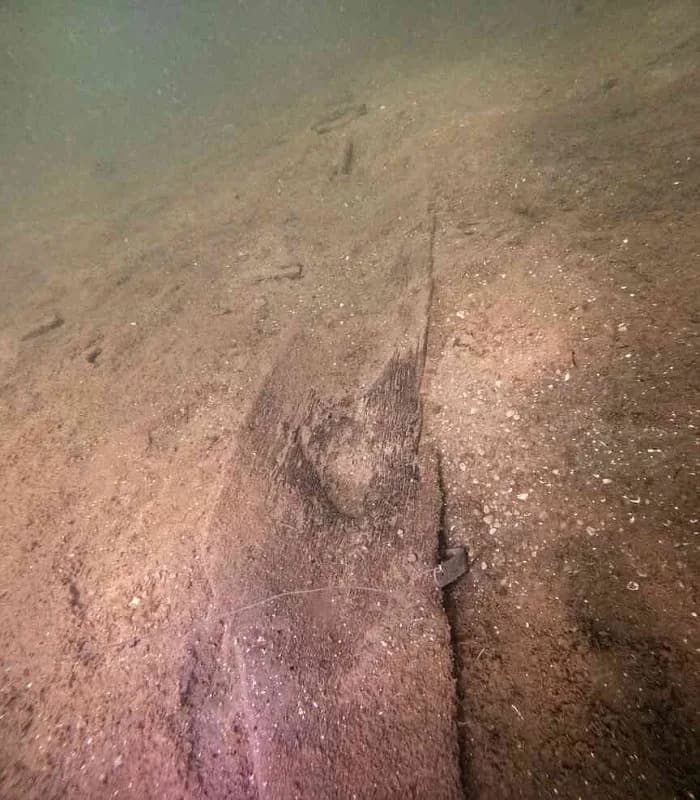
Archaeologists from the Wisconsin Historical Society (WHS) have recovered a prehistoric dugout canoe from Lake Mendota that has been dated to roughly 5,200 years ago — about 700 years older than Egypt’s Great Pyramid of Giza. The find is the oldest of 16 dugout boats identified at the site during excavations that began in 2021, and it offers new evidence of sophisticated watercraft use in this region of North America during the era when the earliest pyramids were being built in Egypt.
What Was Found
Teams working in the Mendota shoreline area have documented a cluster of dugout canoes approximately 30 feet below the lake surface. The most recently dated vessel — the oldest from this site — was carved from red oak. In total, investigators have identified 16 dugout boats at the location, including a 14-foot canoe dated to about 3,000 years ago. Several of the boats were found overturned with stones deliberately placed on them.
Why the Discovery Matters
While the phrase “older than the pyramids” grabs headlines, archaeologists emphasize that the importance of the discovery lies in what it reveals about regional technology, watercraft use and long-term human occupation. A securely dated 5,200-year-old dugout shows that people in the Lake Mendota area were crafting substantial wooden boats for movement, fishing or other activities far earlier than previously documented in many parts of the continent.
Cultural Context
The site has deep cultural ties to the Ho-Chunk Nation. WHS archaeologists note that Paleo‑Indian ancestors associated with the broader region have been present for up to 12,000 years, and the area’s springs and shoreline have important ceremonial and cultural meanings for the Ho-Chunk.
“One of its springs, with its white clay bottom, is viewed as a portal to the spirit world,” said Amy Rosebrough, a Wisconsin Historical Society archaeologist.
“The canoes remind us how long our people have lived in this region and how deeply connected we remain to these waters and lands,” said Bill Quackenbush, the Ho‑Chunk’s tribal preservation officer.
Excavation Details and Interpretation
Excavations at Lake Mendota began in 2021 and have been carried out by WHS teams in consultation with tribal representatives. Many of the later canoes were fashioned from hardwoods such as red and white oak. Archaeologists suggest the rocks placed on overturned boats may have been used intentionally to keep timbers submerged and reduce seasonal warping during freeze‑thaw cycles.
Researchers caution against simplistic comparisons with monumental Old World constructions; instead, they recommend that the find prompt careful reexamination of local and regional chronologies for boat-building, transportation and lakeshore use in prehistoric North America. Reporting on the discovery has appeared in outlets including GB News and Men’s Journal.
Help us improve.