During an ADC ArcheoProjecten dig at Raadhuisplein in Heerlen, archaeologists discovered a roughly 2,000-year-old tomb containing cremated remains and grave goods. An Italian terra sigillata bowl inscribed with FLAC identified the deceased as Flaccus, suggesting a Roman soldier. The burial is dated to around the turn of the era (circa 1 BCE–1 CE) and is the oldest named Roman grave found in Heerlen. The artifacts will be conserved and displayed at the Roman Museum of Heerlen.
2,000-Year-Old Roman Tomb at Heerlen’s Town Hall Square Reveals Soldier Named 'Flaccus'

Roman Soldier Flaccus Found 2,000 Years LaterComezora - Getty Images
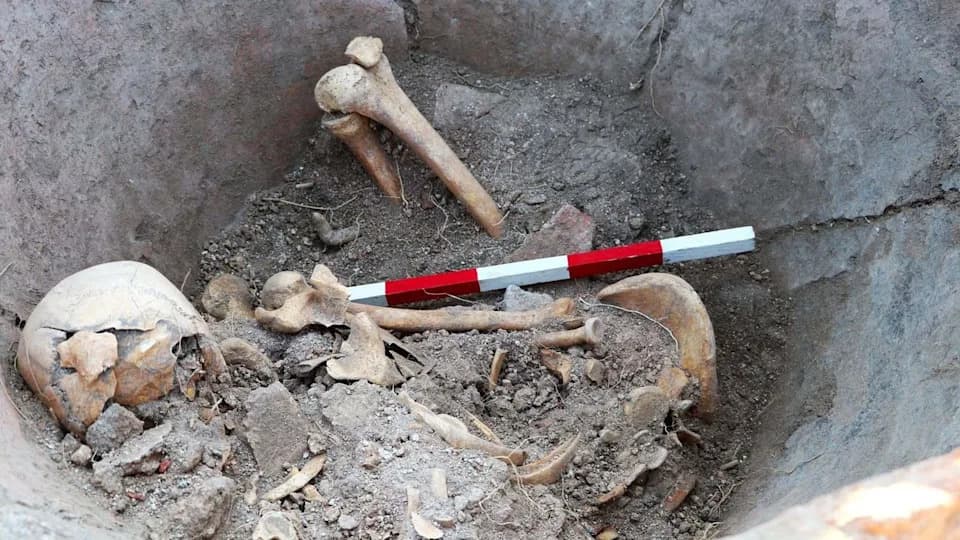
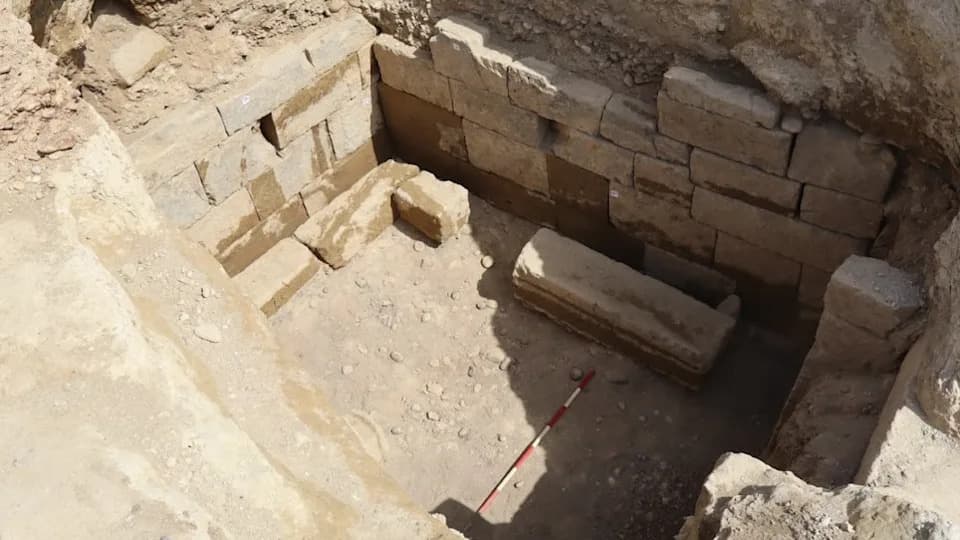
Archaeologists excavating Raadhuisplein (Town Hall Square) in Heerlen, southeastern Netherlands, have uncovered a roughly 2,000-year-old tomb containing the cremated remains of a Roman-era soldier. The discovery was made during an ADC ArcheoProjecten excavation when a feature first mistaken for a cellar proved to be a burial chamber filled with grave goods.
What initially looked like a storage space turned out to hold numerous bronze fragments, pottery, several terra sigillata bowls and plates, and—crucially—cremated human remains. These finds prompted the team to reclassify the feature as an ancient tomb rather than a cellar.
How the Soldier Was Identified
One terra sigillata bowl, produced in Italy, bore the engraved abbreviation FLAC, a known nickname for the name Flaccus. Alongside the pottery the team recovered a personal bronze skin scraper and four distinct plates. The combination of Italian-made tableware and the name inscription strongly suggests the burial belonged to a Roman soldier.
Dating and Historical Context
Researchers date the tomb to around the turn of the era (circa 1 BCE–1 CE), making it the oldest Roman grave found so far in Heerlen and the first from this period in the region to include a named individual. The burial provides some of the earliest concrete evidence for Roman habitation at the site of the settlement then known as Coriovallum.
Raadhuisplein lies near the historic Roman route Via Belgica and other Roman thoroughfares that linked the area to broader parts of the Empire. Archaeological work elsewhere in Heerlen has previously uncovered large public baths built between about 50 and 70 A.D.; those baths, discovered in 1940, remain among the largest visible Roman ruins in the Netherlands.
“Evidence was found of Roman habitation in the time of Emperor Augustus,” said Jordy Clemens, Heerlen’s council member for culture and heritage, emphasizing the find’s significance for local and national history.
The objects recovered from the tomb will be conserved and eventually go on display at the Roman Museum of Heerlen. Conservators and researchers hope the finds will shed new light on early Roman military presence and daily life in this frontier settlement.
Help us improve.