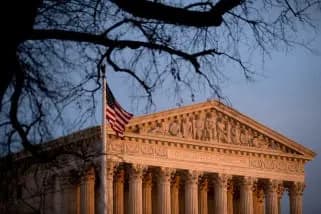
NRSC v. FEC asks the Supreme Court to invalidate a 1974 coordination limit designed to stop parties from funneling very large donations to candidates. The case—pursued by Republican committees and figures with backing from Jones Day—could let megadonors route near seven-figure amounts through party structures such as joint fundraising committees. Critics warn overturning the rule would greatly increase the risk of quid‑pro‑quo influence and further amplify wealthy donors’ sway over elections.
Supreme Court Set To Hear NRSC v. FEC — A Challenge To Nixon-Era Ban On Party Money‑Laundering

Supreme Court Set To Hear NRSC v. FEC
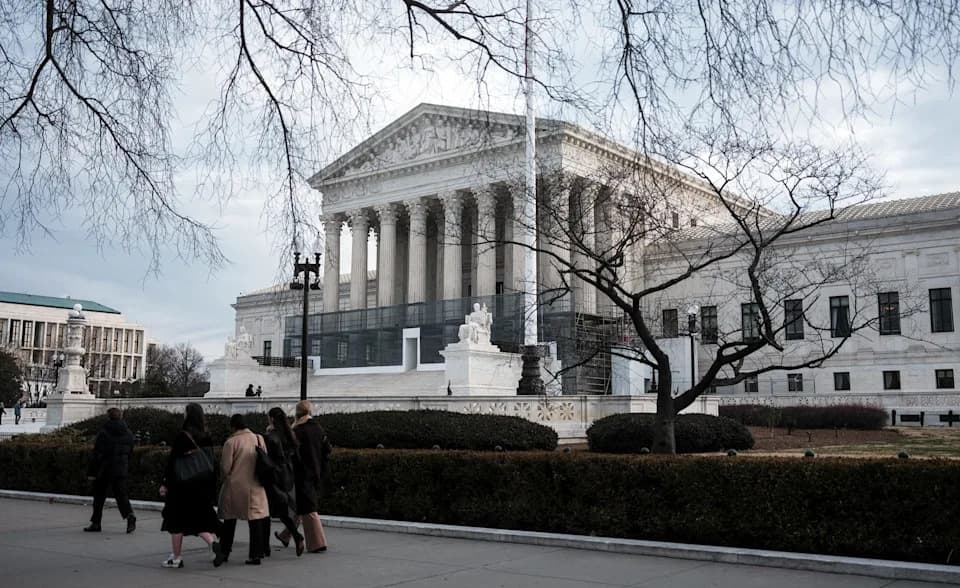
NRSC v. FEC asks the Court to overturn a Nixon-era safeguard that prevents political parties from serving as conduits for large, coordinated donations to candidates. The case—brought by Republican committees and prominent GOP figures and backed by lawyers from the Trump-aligned firm Jones Day—could allow megadonors to funnel near seven-figure amounts to candidates through party vehicles such as joint fundraising committees (JFCs).
How The Rule Came To Be
The restriction dates to reforms enacted after Watergate. That scandal included a little-known episode in which dairy companies funneled roughly $2 million through Republican Party committees to benefit President Richard Nixon’s reelection effort in exchange for favorable milk price supports. In response to that kind of party-mediated quid pro quo, Congress in 1974 capped how much parties could spend in coordination with candidates to reduce the risk that parties would be used as laundering intermediaries.
What NRSC v. FEC Challenges
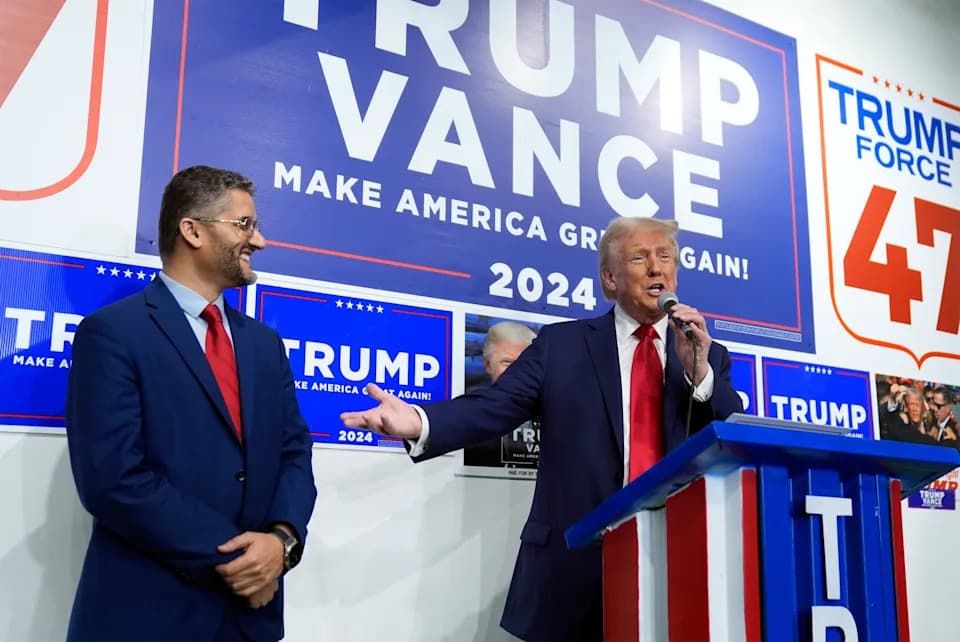
Plaintiffs—including the Republican senatorial and congressional campaign committees and individuals such as Vice President J.D. Vance and former Rep. Steve Chabot—ask the Supreme Court to strike down the coordination limit. They argue it violates the First Amendment by restricting coordinated political spending. The case was organized by Republican-aligned lawyers, including Noel Francisco of Jones Day.
Procedural Oddities
The litigation raises procedural questions: the Federal Election Commission has been hamstrung by a lack of quorum and has largely declined to enforce this rule, and the Justice Department declined to defend it, calling the statute unconstitutional. Democrats, represented by Marc Elias, intervened to defend the law. Observers have also noted uncertainty over whether some individual plaintiffs have present, concrete injuries—the typical basis for standing—yet the Court has sometimes moved past such issues in politically charged cases.
Why The Rule Matters
The coordination ceiling prevents donors from sidestepping direct contribution limits by routing very large sums through parties. Current direct limits (for 2026) include $3,500 per election to a candidate, $5,000 to PACs, $10,000 to state and local parties, and $44,300 to national parties (with higher limits for conventions, recounts, and headquarters). By contrast, coordination limits for party spending in coordination with candidates range—adjusted for inflation—from roughly $127,200 up to several million dollars for Senate contests, and commonly about $63,600 for many House races.
If the coordination rule falls, donors could effectively deliver much larger sums to a candidate by using JFCs and transfers among party committees. That raises the risk that wealthy contributors will gain disproportionate access, influence, or expectations of returns—a modern echo of the Watergate and Abramoff-era scandals.
Legal And Political Context
This challenge arrives after a series of Supreme Court decisions that expanded political spending rights, including Citizens United (2010) and McCutcheon v. FEC (2014). Those rulings removed or reduced limits on corporate expenditures and aggregate individual contributions, enabling mechanisms like joint fundraising committees to accept very large checks. Supporters of the coordination rule argue it is a narrowly tailored, anti-corruption measure. Critics of the rule claim it restricts protected political speech.
“Most Americans believe large contributions create corruption,” said Daniel I. Weiner of the Brennan Center, arguing that courts treat campaign-finance rules as theoretical puzzles divorced from campaign realities.
What's At Stake
The Supreme Court’s decision could either preserve a long-standing tool to limit party-mediated corruption or remove one of the last guardrails against concentrated political influence. The stakes include not only campaign finance mechanics but also public confidence that elected officials answer to voters rather than major funders.
Bottom line: NRSC v. FEC is more than a technical First Amendment dispute. It is a consequential test of how much latitude wealthy donors and political parties will have to coordinate with candidates—and whether Congress’s post-Watergate reforms remain an effective bulwark against party-driven money laundering.
Help us improve.