U.S. District Judge Eleanor L. Ross refused to let Brad Raffensperger’s PAC raise unlimited funds during his gubernatorial campaign, while signaling the 2021 law that lets certain leadership committees solicit unlimited donations may be unconstitutional. Raffensperger’s PAC argued the law treats him unfairly compared with Lt. Gov. Burt Jones, whose leadership committee has accepted large contributions and personal loans. Raffensperger has appealed; related legal disputes involving other GOP contenders continue.
Judge Keeps Fundraising Caps On Raffensperger, Flags Georgia Law As Likely Unconstitutional
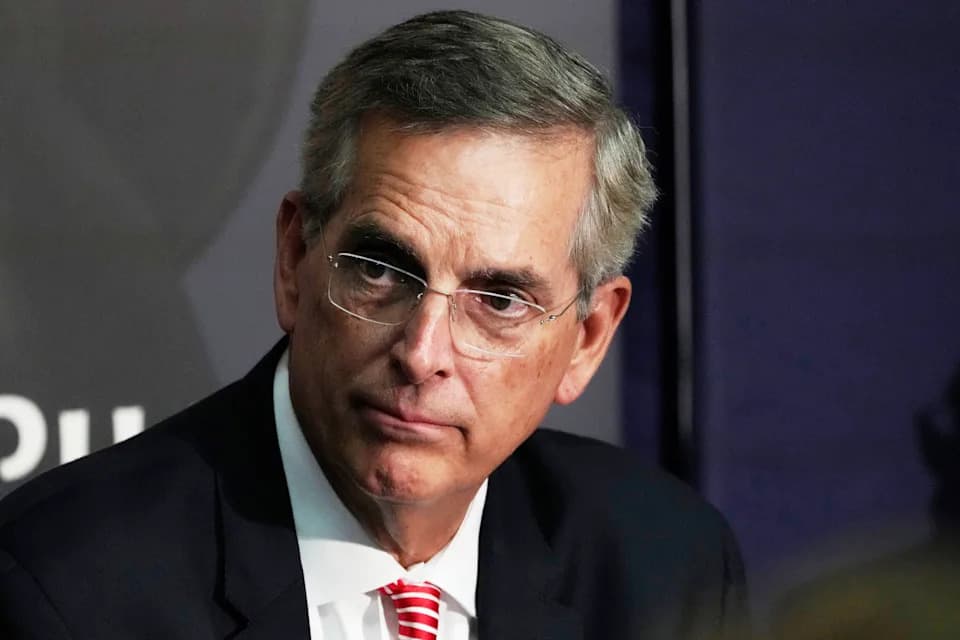
FILE - Georgia Secretary of State Brad Raffensperger participates in an election forum, Sept. 19, 2024, in Ann Arbor, Mich. (AP Photo/Carlos Osorio, File)(ASSOCIATED PRESS)
A federal judge has, for now, denied Georgia Secretary of State Brad Raffensperger’s request to let his independent political action committee raise unlimited funds for his bid in the Republican gubernatorial primary, preserving campaign contribution limits that some critics say favor particular officeholders.
Judge’s Ruling
U.S. District Judge Eleanor L. Ross wrote that Raffensperger’s lawyers—representing his PAC, Safe Affordable Georgia—had not met the legal standard required for an immediate waiver of contribution limits during the ongoing campaign. At the same time, Ross acknowledged that the 2021 statute creating so-called leadership committees, which can solicit unlimited contributions, appears likely to be unconstitutional.
What Raffensperger’s Team Argued
Safe Affordable Georgia sued in December, saying the current regime violates Raffensperger’s First Amendment rights because it treats him differently from Lt. Gov. Burt Jones, whose leadership committee can accept unlimited donations under the 2021 law. The PAC asked the court to permit it to receive unlimited contributions while the case proceeds. Raffensperger has appealed Ross’s decision.
State’s Response and Concerns
An attorney for the state warned that exempting Raffensperger would invite similar requests from other candidates and could open the door to undisclosed "dark money," undermining Georgia’s ability to regulate campaign finance. "Such a move totally upends the way Georgia can regulate campaign finance," the state lawyer said, adding there would be "no end to where the total number of committees could end up under this regime."
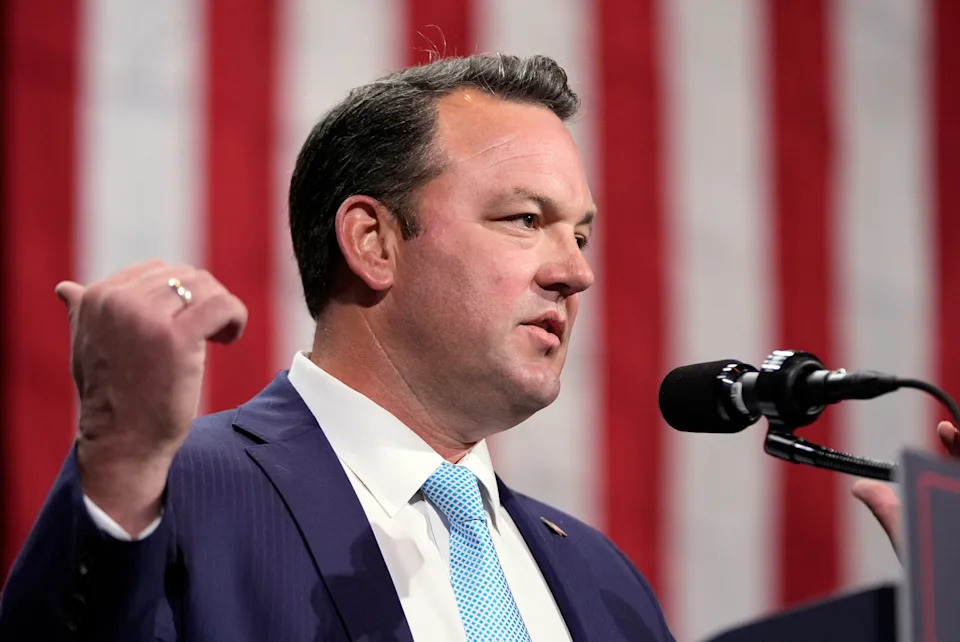
FILE - Georgia Lt. Gov. Burt Jones speaks about Republican presidential nominee former President Donald Trump at a campaign event at the Cobb Energy Performing Arts Centre, Oct. 15, 2024, in Atlanta. (AP Photo/Alex Brandon, File)(ASSOCIATED PRESS)
Leadership Committees And The Controversy
The 2021 law permits leadership committees—chaired by the governor, lieutenant governor, party nominees for those offices or legislative leaders—to raise money year-round for various election-related activities. Critics say that structure creates a built-in advantage for certain officeholders and candidates.
“Hardworking Georgians deserve elections where the rules are the same for everyone, no matter what title or office you hold,” Safe Affordable Georgia said in a statement. “That’s what the Constitution requires, and that’s why we’ll keep fighting in court to do what’s in the best interest of Georgia voters.”
Money Already Flowing
Court filings show that Jones’ leadership committee received $100,000 from four donors and roughly 60 contributions of $10,000 or more. By contrast, Georgia candidate committees are capped at $8,400 per donor. The Georgia Ethics Commission in December issued an opinion allowing Jones to loan up to $10 million to his leadership committee; Jones disclosed loans of $7.5 million and $2.5 million to the WBJ Leadership Committee after announcing his campaign.
Related Legal Challenges
Attorney General Chris Carr, another Republican candidate for governor, previously sued to block Jones from using his leadership committee but a judge dismissed that suit in August, saying Carr should have already challenged the law’s constitutionality. Like Raffensperger’s backers, Carr’s supporters have set up an independent committee that cannot coordinate with his campaign.
The case highlights ongoing tensions in Georgia over campaign finance rules, the role of leadership committees, and how courts will balance anti-corruption goals against equal-treatment claims under the First Amendment.
Help us improve.