The retreat of perennial ice in Norway's Aurlandsfjellet has revealed a 1,500‑year‑old wooden reindeer trap built from hundreds of logs, along with antlers, iron spearheads and wooden arrows. Markings on the antlers indicate organised, large‑scale hunting and provide fresh evidence about early Iron Age practices. Rapid ice encasement preserved the site until recent warming exposed it; researchers are documenting the finds while warning that melting ice both reveals and threatens cultural heritage.
Melting Ice Uncovers 1,500‑Year‑Old Wooden Reindeer Trap in Norway — New Insights into Early Iron Age Hunting
Researchers in Norway's Aurlandsfjellet mountains have uncovered a remarkably well‑preserved wooden mass‑capture reindeer trap dating to about 1,500 years ago. The installation, built from hundreds of logs arranged to funnel animals, emerged as perennial ice and snow retreated during recent warming.
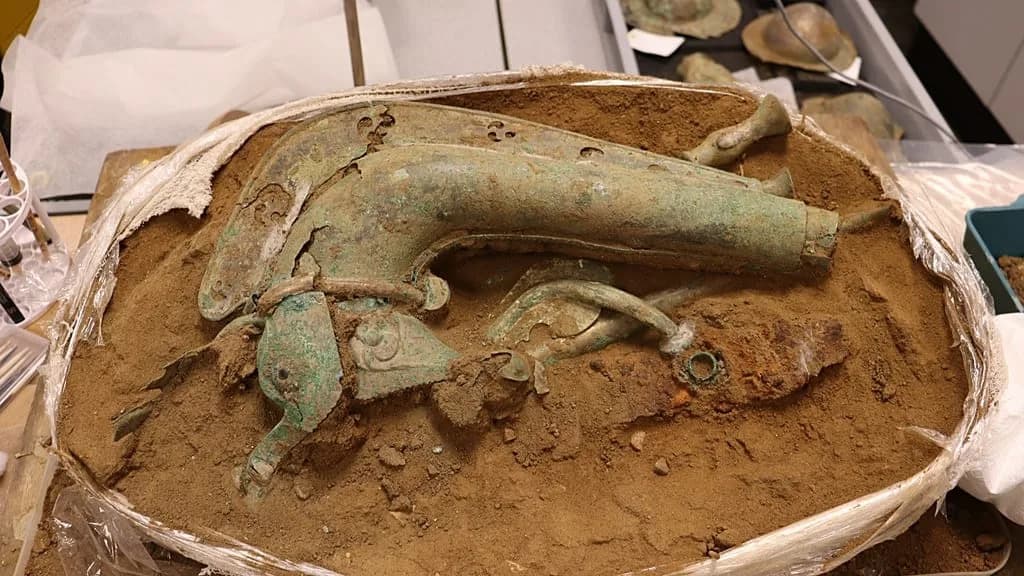
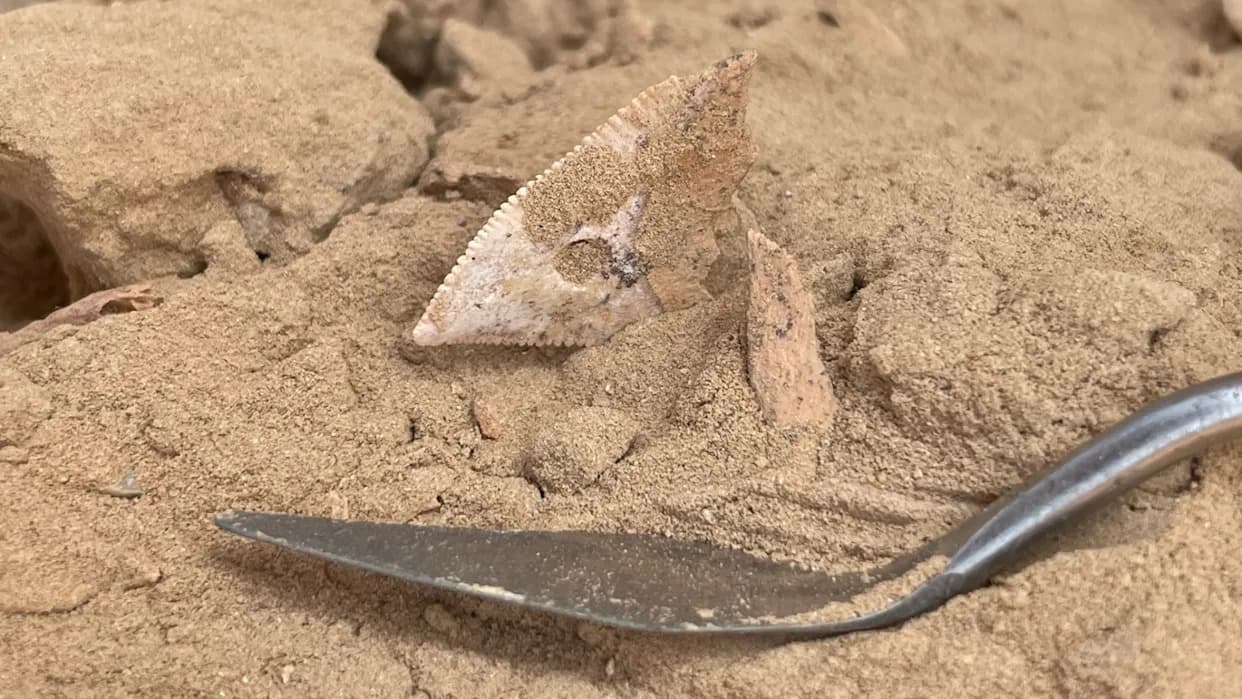
Excavation teams recovered associated artifacts including reindeer antlers, iron spearheads and wooden arrows. Markings on the antlers indicate organised, large‑scale hunting and offer a rare look at hunting practices and social organisation in the early Iron Age.
This is the first time a mass‑capture facility made of wood has been revealed from the ice in Norway, and the facility is probably also unique in a European context.
Archaeologist Øystein Skår said the finds make it clear the structure was used for mass hunting and noted that the antler markings provide more detailed evidence about how hunting was organised. Cold conditions appear to have rapidly encased the trap in snow and ice soon after its last use, preserving organic materials that normally decay.
Over centuries the installation became entombed in accumulating snow and ice until recent climate warming caused the glacier and perennial snowpack to retreat, revealing the logs and artifacts for the first time in roughly 1,500 years.
Scientists emphasise that the discovery is both a scientific boon and a warning: the same warming that exposes lost cultural heritage also accelerates the disappearance of ice and snow that preserve such sites. Ice and snow reflect a large portion of incoming sunlight (high albedo), and as they shrink due to greenhouse‑gas warming, more solar energy is absorbed, creating a feedback loop that drives further warming.
The discovery opens up completely new interpretations and understandings of how these facilities functioned in practice. It also provides insight into the significance of reindeer hunting in a larger societal context in the early Iron Age.
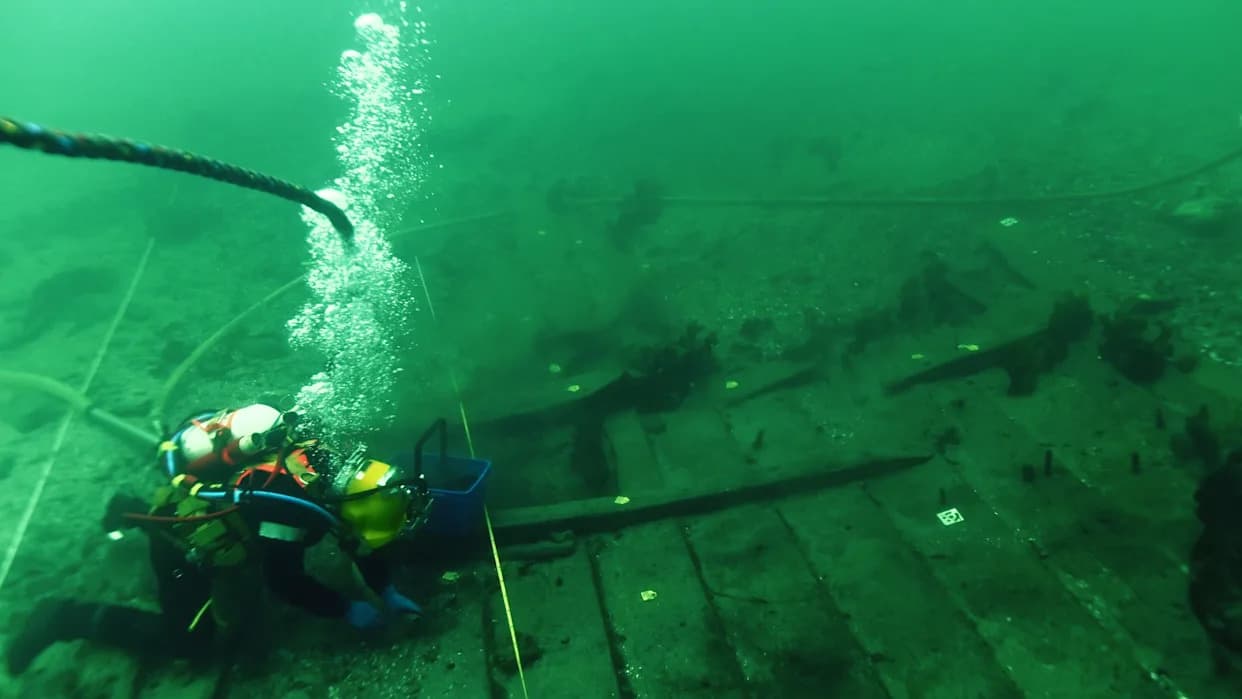
Teams are working quickly to document and analyse the site and its finds while materials are still exposed. Archaeologists hope the remains will clarify how the trap operated, how hunts were organised, and what role reindeer hunting played in regional societies.
At the same time, researchers call for accelerated efforts to limit further ice loss, including reductions in carbon pollution and broader adoption of renewable energy and net‑zero policies, so that other archaeological sites are not irrevocably lost.
Help us improve.