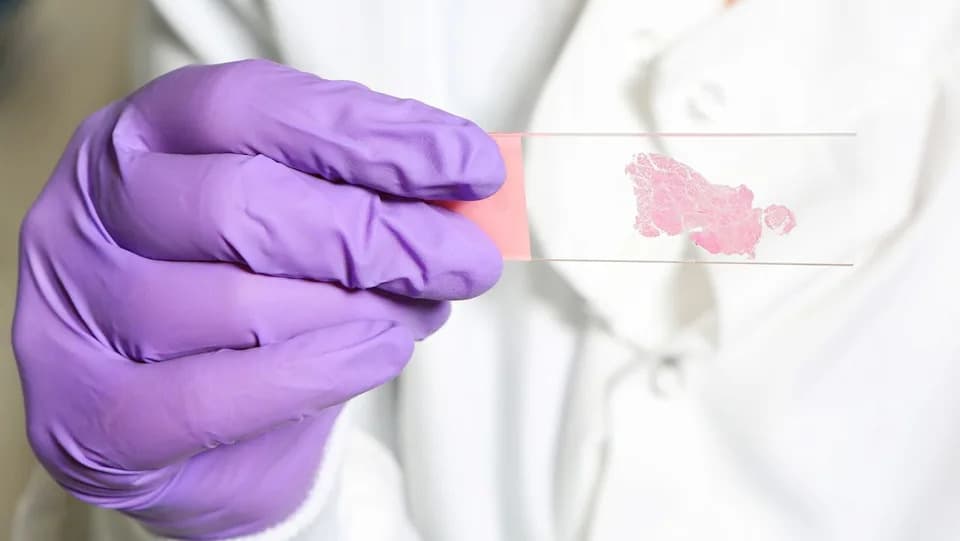
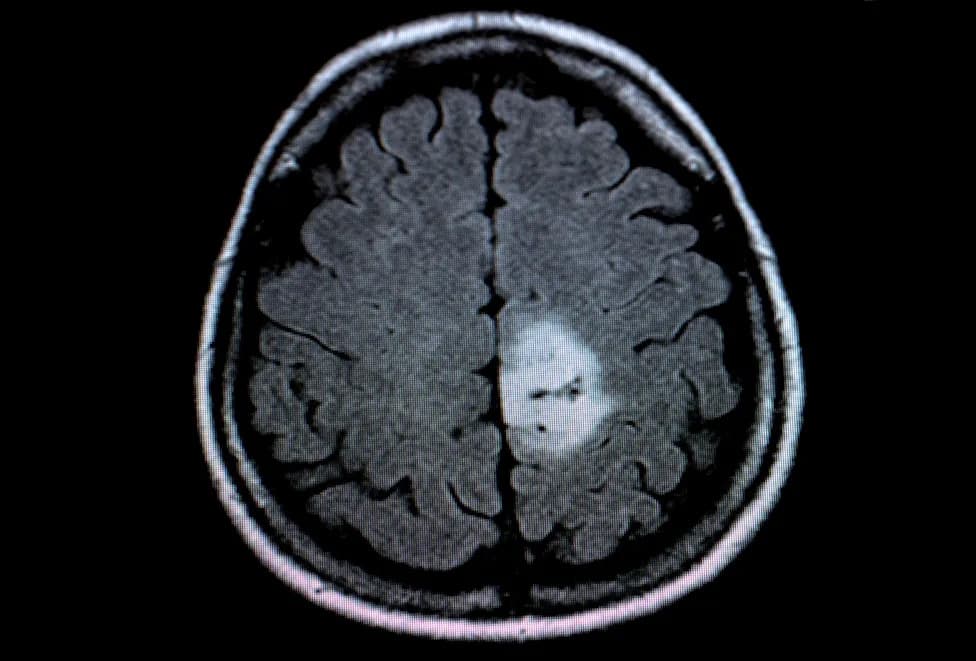
University of Illinois engineers built a prototype imaging system that helps surgeons detect residual cancer cells during operations. The device pairs a handheld optical probe with a robotic arm and will be mounted on an OR-ready cart for clinical studies. Backed by ARPA-H funding, the long-running project is moving from lab demonstrations toward clinical evaluation.
University of Illinois Develops Imaging Tool to Reduce Cancer Re-Operations

Similar Articles

UCLA Engineers Off‑the‑Shelf CAR‑NKT Cells That Hunt and Destroy Pancreatic Tumors in Mice
UCLA researchers engineered off‑the‑shelf CAR‑modified invariant NKT cells from donated stem cells that penetrated solid panc...

Orléans Lab Pioneers mRNA + Ultrasound 'Bunker-Buster' Strategy Against Pancreatic Cancer
Researchers at INSERM's ART laboratory in Orléans are developing mRNA-based approaches to treat aggressive cancers, especiall...

MAGIC: AI System Uncovers the Earliest Chromosomal Errors That Can Trigger Cancer
EMBL researchers developed MAGIC, an AI-powered platform that combines microscopy, machine learning and laser tagging to iden...

Tiny Implants, Big Gains: How Microchips Are Restoring Sight and Rewiring Medicine
Microchips implanted in the eye and brain are starting to restore lost senses and enable thought-driven control of devices. A...
Grain-of-Salt 3D Micro‑Printer Could Print Living Tissue Inside the Body
Researchers at the University of Stuttgart, led by Dr. Andrea Toulouse, are developing a light‑driven 3D micro‑printer small enough to travel through optical fibers and print ...

New Light-Based Cancer Therapy Uses Tin Nanoflakes to Heat and Kill Tumour Cells
Researchers at UT Austin and the University of Porto describe a non-invasive near-infrared photothermal therapy that uses tin...
Robots Rebuild Pompeii: AI and Twin‑Armed Machines Piece Together Ancient Frescoes
The RePAIR project is testing a twin‑armed robotic system in Pompeii to help reassemble fragmented Roman frescoes. Launched in 2021 and coordinated by Ca' Foscari University, ...

Engineered ‘Bacteria Pill’ Rapidly Detects Gut Bleeding — A Potential Noninvasive Alternative to Colonoscopy
Researchers describe MagGel-BS, a prototype “bacteria pill” that houses engineered E. coli in hydrogel microcapsules with mag...

Goodbye to Finger Pricks: MIT’s Light-Based Glucose Monitor Shrinks Toward Watch Size
MIT researchers report progress on a noninvasive, light-based glucose monitor that could replace finger pricks and implanted ...

Inside the Labs Unraveling Autoimmune Disease: How Scientists Hunt Rogue Immune Cells
Leading labs at the NIH and Johns Hopkins are using advanced imaging and molecular tools to pinpoint what triggers autoimmune...

Two FDA-Approved Cancer Drugs, Combined, Reduce a Key Alzheimer’s Protein in Mice — 1.4M Health Records Helped Point the Way
UCSF researchers used gene-expression screening and 1.4 million anonymized health records to repurpose existing drugs for Alz...
Nanotech Remodels Chemo Drug to Target Leukemia — ~20,000× Potency Gain in Mice, Human Trials Planned
Researchers at Northwestern University embedded 5-fluorouracil (5FU) into spherical nucleic acids, converting the drug from a linear to a globular form that improved solubilit...

Reprogramming the Immune System: New Frontiers in Treating Autoimmune Diseases
Scientists are shifting from suppressing the immune system to reprogramming it —using CAR-T, regulatory T cells, T cell-engag...

Congress Directs VA to Expand AI Tools to Help Prevent Veteran Suicides
Congress has directed the VA to expand use of AI and machine learning to better identify veterans at risk of suicide, as part...

MIT’s Injectable Microscopic 'Bioelectronic' Implants Can Swim Through Blood and Self‑Attach to the Brain
MIT engineers have developed microscopic wireless 'bioelectronic' devices that can be injected, travel through the bloodstrea...

UTHealth Grows Lab 'Mini Brains' from Skin Cells to Uncover Causes of Schizophrenia
UTHealth researchers convert forearm skin into stem cells and then into pea‑sized brain organoids to study schizophrenia. The...

Nearly 40% of Reviewed Animal Stroke Papers Contain Duplicated Images — Researchers Warn of Possible Fraud
A review of animal stroke studies found duplicated images in about 40% of examined papers, a red flag for possible fraud. The...

Rice‑Grain Wireless Brain Implant Records Neural Activity for Over a Year
Cornell researchers developed MOTE, a microscale, untethered optoelectronic electrode about 300 μm × 70 μm that records neura...

After 12 Surgeries, Teen's Recurring Vocal Cord Tumors Stop After Immunotherapy — Papzimeos Later FDA-Approved
Savanna Branham developed persistent hoarseness at 13 and was diagnosed with recurrent respiratory papillomatosis (RRP), a ra...

Meet Smart Grapple — The Autonomous Robot Retrieving Trash from the Seabed
The Technical University of Munich developed the Smart Grapple, an autonomous underwater robot that uses AI vision and sonar ...