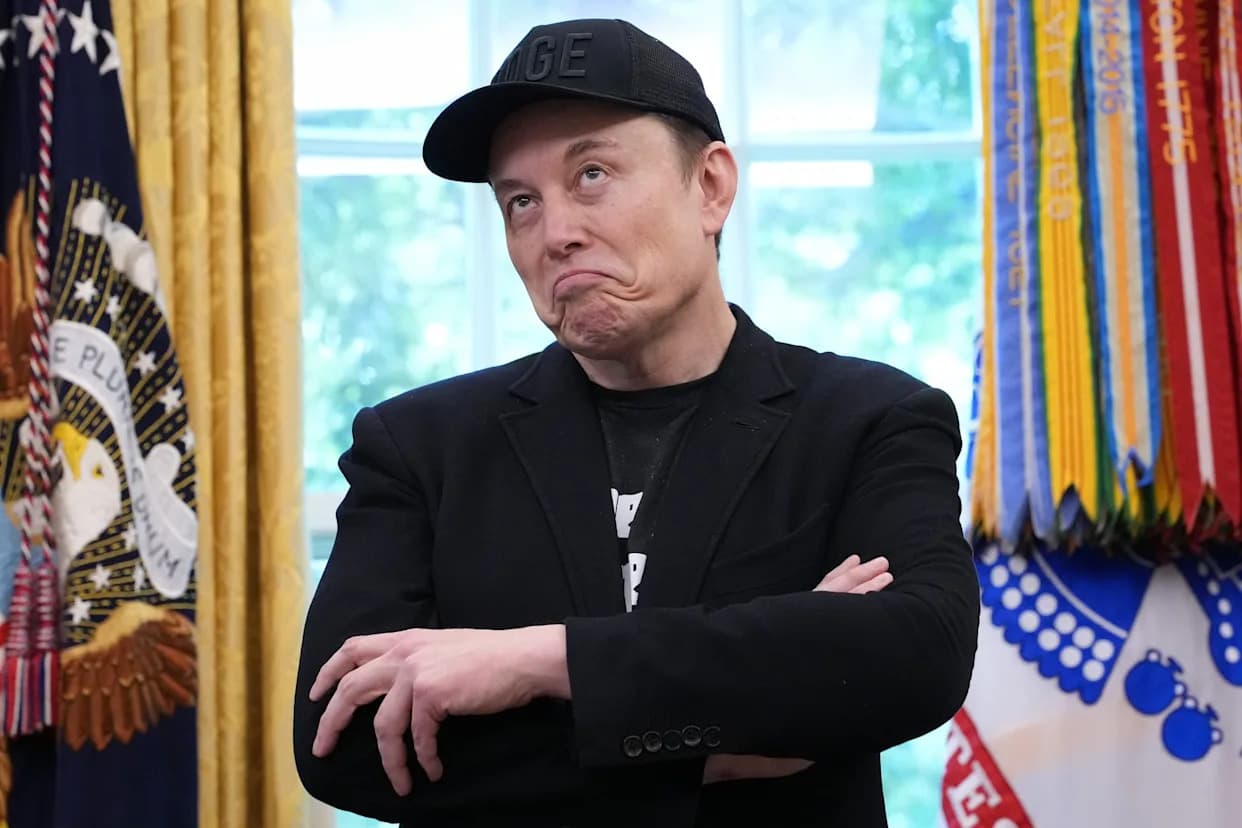
Elon Musk told investor and podcaster Nikhil Kamath that artificial intelligence and robotics are poised to reshape work and society so quickly and profoundly that many current skills — even technical ones — could become redundant within a generation.
Describing the shift as rapid and sweeping, Musk warned that automation is arriving at an unprecedented pace. “AI and robotics is a supersonic tsunami. This is really going to be the most radical change that we've ever seen,” he said, predicting that in under two decades “working will be optional. Working at all will be optional.”
“My prediction is, in less than 20 years, working will be optional. Working at all will be optional.” — Elon Musk
Musk also noted that his children, who are technologically proficient, acknowledge how quickly their skills could be overtaken by AI — yet they still want to attend college for the social experience and broad exposure it provides.
College as social and intellectual exposure
Although Musk has previously questioned the practical value of formal degrees, he expressed a more nuanced view in this conversation. He said he does not believe college is strictly necessary but emphasized its value as a social environment where young people can learn from peers and explore a range of subjects. “If you want to go to college for social reasons, I think that's a reason to go — to be around people your own age in a learning environment,” he said.
What experts recommend
Academics and industry observers argue that the rise of AI means higher education and workplaces must adapt, not abandon, human learning. Steven Mintz, a history professor, has suggested that AI has exposed weaknesses in how some universities teach, underscoring the need for reinvention. Philosophers and educators warn that overreliance on AI can erode foundational skills and leave junior workers dependent on digital tools.
Experts advising younger workers stress that the smartest response is to strengthen capabilities that AI cannot easily replicate: critical thinking, leadership, supervision, creativity and entrepreneurship. James Ransom, a research fellow, recommends that Gen Z focus less on job titles and more on the specific tasks those roles require — then learn to supervise and scale AI tools effectively. Investor Mark Cuban believes students who learn to use AI critically will become sharper thinkers and stronger leaders. Finance professionals also urge building practical skills like entrepreneurship and financial literacy as entry-level roles evolve.
Takeaway
Musk foresees a future in which machines can perform an increasing range of tasks, potentially reducing the need for many traditional job skills. But he and other experts emphasize that education — formal or self-directed — should prioritize social development, supervisory ability, creativity and the judgment that machines cannot fully replicate.