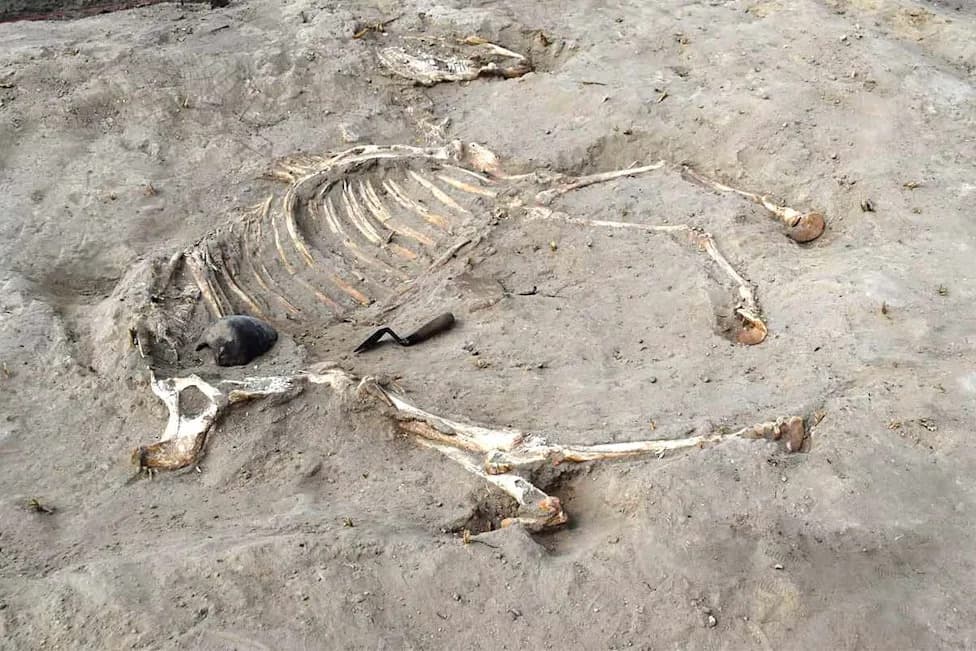
A 2018 survey in Sudan's Bayuda Desert uncovered a modest Kerma‑period grave (2050–1750 B.C.) that contained a medium ceramic jug filled with charred plant and wood fragments, animal bones, insect remains and coprolites. Researchers interpret these as residues of a funerary feast and burning. The assemblage — including acacia wood, legumes and cereal grains — also suggests the region was once more humid. This is the first Kerma burial showing such ritual evidence; further research is needed to place the find in regional context.
4,000‑Year‑Old Sudan Burial Reveals Mysterious Funeral Ritual in the Kingdom of Kerma

Archaeologists working in northeast Sudan have uncovered the first clear evidence of an unusual funerary practice in the Kingdom of Kerma dating to roughly 4,000 years ago. The discovery — a modest grave found during a 2018 survey in the Bayuda Desert — preserves charred remains that researchers interpret as residues of a funeral feast and associated burning.
The burial, published Nov. 13 in the journal Azania, has been radiometrically dated to between 2050 and 1750 B.C., placing the interment within the Kerma cultural horizon. The grave contained the skeleton of a middle‑aged man, two ceramic vessels positioned near his head, and 82 small blue‑glazed disc beads around his neck.
Most grave goods appear modest, suggesting the individual was not of elite rank. However, one medium‑sized ceramic jug held an extraordinary assemblage: charred botanical and wood fragments, animal bone pieces, insect remains and coprolites (fossilized feces). Specialists interpret these materials as the burned remnants of food and fuel from funeral activities.
"We do not know of a similar case," said study co‑author Henryk Paner of the Polish Center of Mediterranean Archaeology at the University of Warsaw, describing the find as unusual and mysterious because its ritual meaning remains unclear.
Laboratory analysis identified most of the burned wood as acacia. Among the charred botanicals were two legumes (likely a lentil and a bean), cereal grains and a few weevils that probably arrived with the plant foodstuffs. The vessel itself shows no signs of having been exposed to direct heat, which suggests the charred fragments were burned elsewhere and later deposited into the jug. The animal bone fragments are best read as leftovers from a funerary meal; some of those remains appear to have been thrown into a fire before being gathered into the pot.
A second vessel found in the tomb was empty and placed upside down near the body.
Broader implications
Beyond ritual interpretation, the botanical remains offer valuable environmental evidence. The presence of legumes, cereal grains and acacia indicates a more humid, savanna‑like landscape in the Bayuda region when the individual was buried — a contrast with the open desert conditions of today. The authors emphasize that even modest, isolated burials can yield important data for reconstructing past climates, diets and cultural practices.
The researchers note this is the first Kerma burial to preserve such clear evidence of a funerary practice involving charred feast remains. The absence of comparable finds could reflect complex patterns of cultural contact, localized ritual behavior, or gaps in archaeological sampling. Additional fieldwork and comparative studies across northeast Africa will be essential to understand the movement of goods, ritual ideas and social practices in this period.
Source: Study authors and Henryk Paner (Polish Center of Mediterranean Archaeology).
Help us improve.