A fossil study of 183 vertebrae from at least 32 snakes shows anacondas reached their present large size about 12.4 million years ago and have not grown larger since. Researchers estimated Miocene anacondas measured around 4–5 m, matching modern specimens, and confirmed this with ancestral state reconstruction. The authors suggest a semi-aquatic lifestyle and generalist diet helped anacondas survive climatic cooling that wiped out other South American megafauna.
Ancient anacondas reached modern size 12.4 million years ago — and never grew larger

New fossil evidence indicates that anacondas (genus Eunectes) attained the large body size we see today about 12.4 million years ago and have not exceeded it since.
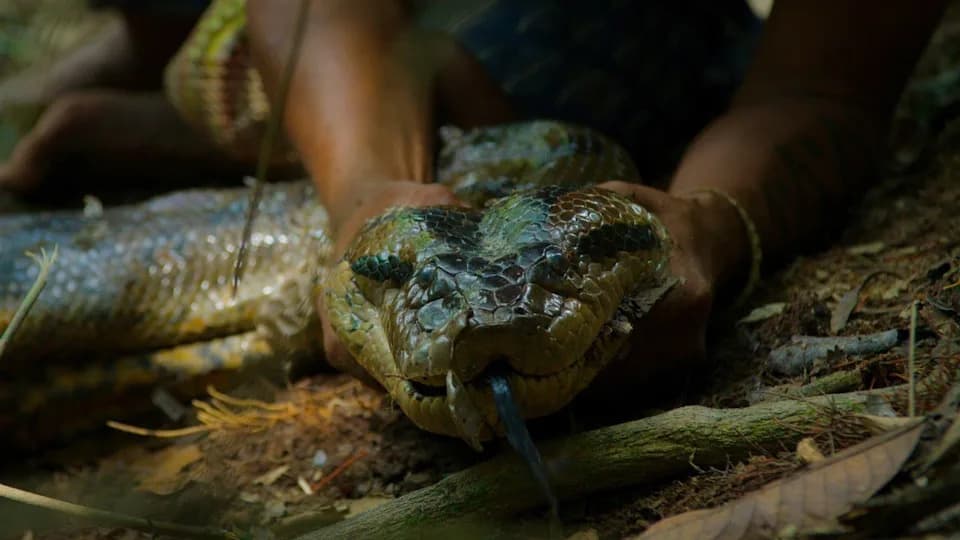
Modern green anacondas are among the world’s largest snakes, commonly measuring 4–5 m, with exceptional individuals approaching 7 m. A team led by researchers at the University of Cambridge examined 183 fossilised vertebrae recovered from Falcón State, Venezuela, representing at least 32 individual snakes. From those remains they estimated Miocene anacondas measured roughly 4–5 m in length — essentially the same scale as living Amazonian anacondas.
"By measuring the fossils, we found that anacondas evolved a large body size shortly after they appeared in tropical South America around 12.4 million years ago, and their size hasn’t changed since," said Andrés Alfonso-Rojas, the study's lead author and a PhD student at the University of Cambridge.
The authors validated their fossil-based size estimates using ancestral state reconstruction, a second, independent method that uses a phylogenetic tree of snakes (including living relatives such as tree boas and rainbow boas) to infer ancestral body lengths. Both approaches converged on the same result: anacondas were already ~4–5 m when they first appear in the Miocene fossil record.
This outcome runs counter to the expectation that cold-blooded animals necessarily reach their largest sizes during Earth’s warmest intervals. The team found no evidence for substantially larger anacondas (for example, 7–8 m individuals) in the Miocene, despite warmer global temperatures at that time.
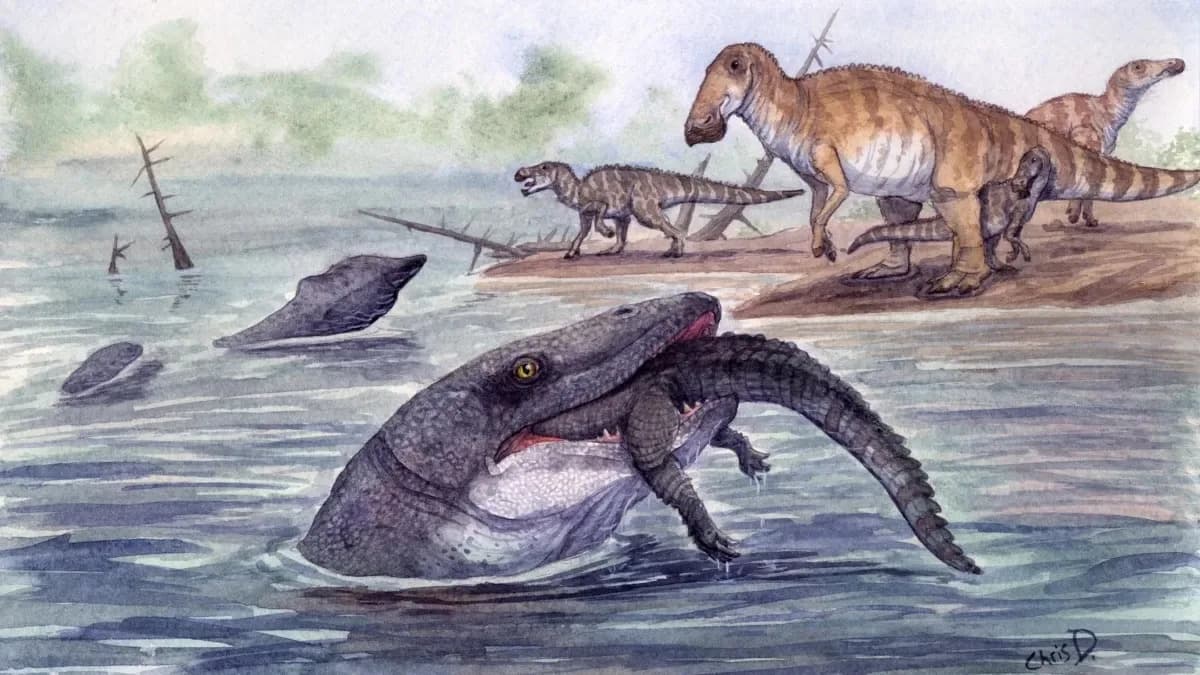
Instead of a higher historical size ceiling, the remarkable takeaway is anacondas' resilience. The researchers argue that a semi-aquatic lifestyle and a broad, generalist diet helped Eunectes survive climatic cooling and habitat contraction that eliminated many other Miocene giants. Northern South America’s Miocene wetlands — once home to enormous creatures such as the 12 m caiman Purussaurus and the 3.2 m freshwater turtle Stupendemys — retained enough swamp habitat and prey (for example, capybaras and fish) for anacondas to persist at large sizes.
The study was published in the Journal of Vertebrate Paleontology on December 1.
Help us improve.