President Trump encouraged state officials to redraw U.S. House districts, prompting a rare wave of mid‑decade map changes that could affect which party controls the House. Early counts show Republicans identifying nine potentially winnable seats and Democrats six, a net advantage of three for the GOP, but many maps are tied up in courts or referendums. Key states with enacted or proposed changes include Texas, California, Ohio and North Carolina, each facing distinct legal and timing challenges. The outcomes of litigation and voter actions will determine which maps stand for 2026.
Gerrymandering Surge After Trump Push Could Reshape the 2026 House Map

President Donald Trump urged state officials to redraw U.S. House districts, setting off an uncommon wave of mid‑decade map changes as Republicans and Democrats jostle to improve their odds ahead of the 2026 elections. Small shifts in a handful of districts could decide control of the House: Democrats need a net gain of three seats to flip the chamber and blunt the president’s agenda.
The early tally of enacted and proposed maps shows Republicans identifying nine potentially more winnable seats and Democrats identifying six — a net advantage of three seats for the GOP. Many of the new maps are already subject to litigation, referendums or legislative hurdles, so outcomes remain uncertain.
Key states and deadlines
Texas
Current map: 13 Democrats, 25 Republicans.
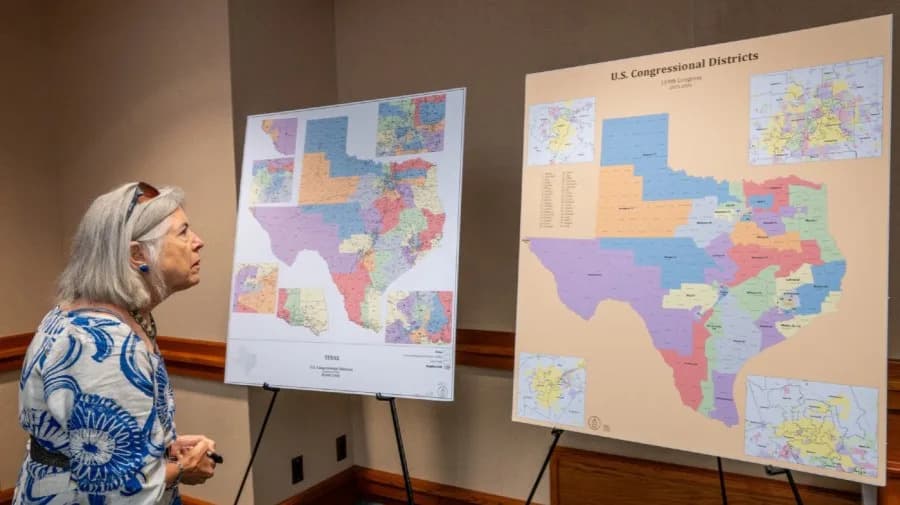
New map: Republican Gov. Greg Abbott signed a revised House map into law on Aug. 29 that state Republicans say could flip five seats.
Challenges: The U.S. Supreme Court is weighing whether the map can be used after a federal panel on Nov. 18 blocked it, finding evidence of racial gerrymandering.
Candidate deadline: Dec. 8.
California
Current map: 43 Democrats, 9 Republicans.
New map: Voters approved revised House districts on Nov. 4, drawn by the Democratic‑led Legislature and projected to improve Democrats’ chances by about five seats.
Challenges: The U.S. Department of Justice has joined a Republican lawsuit alleging race was impermissibly used to favor Hispanic voters in some districts.
Candidate deadline: March 6.
Missouri
Current map: 2 Democrats, 6 Republicans.
New map: Republican Gov. Mike Kehoe signed a revised House map into law on Sept. 28 that could help Republicans gain an additional seat.
Challenges: Opponents face a Dec. 11 deadline to submit petition signatures to force a statewide referendum; multiple lawsuits also challenge the map.
Candidate deadline: March 31.
North Carolina
Current map: 4 Democrats, 10 Republicans.
New map: The Republican‑led General Assembly approved revised districts on Oct. 22 that they say could flip one seat to the GOP.
Challenges: A federal court panel on Nov. 26 denied a request to block those revised districts from being used in 2026.
Candidate deadline: Dec. 19.
Ohio
Current map: 5 Democrats, 10 Republicans.
New map: A bipartisan panel, primarily composed of Republicans, approved new House districts on Oct. 31 that could improve Republican chances to win two more seats.
Challenges: None currently; the state constitution required new districts because the prior map lacked bipartisan support.
Candidate deadline: Feb. 4.
Utah
Current map: 0 Democrats, 4 Republicans.
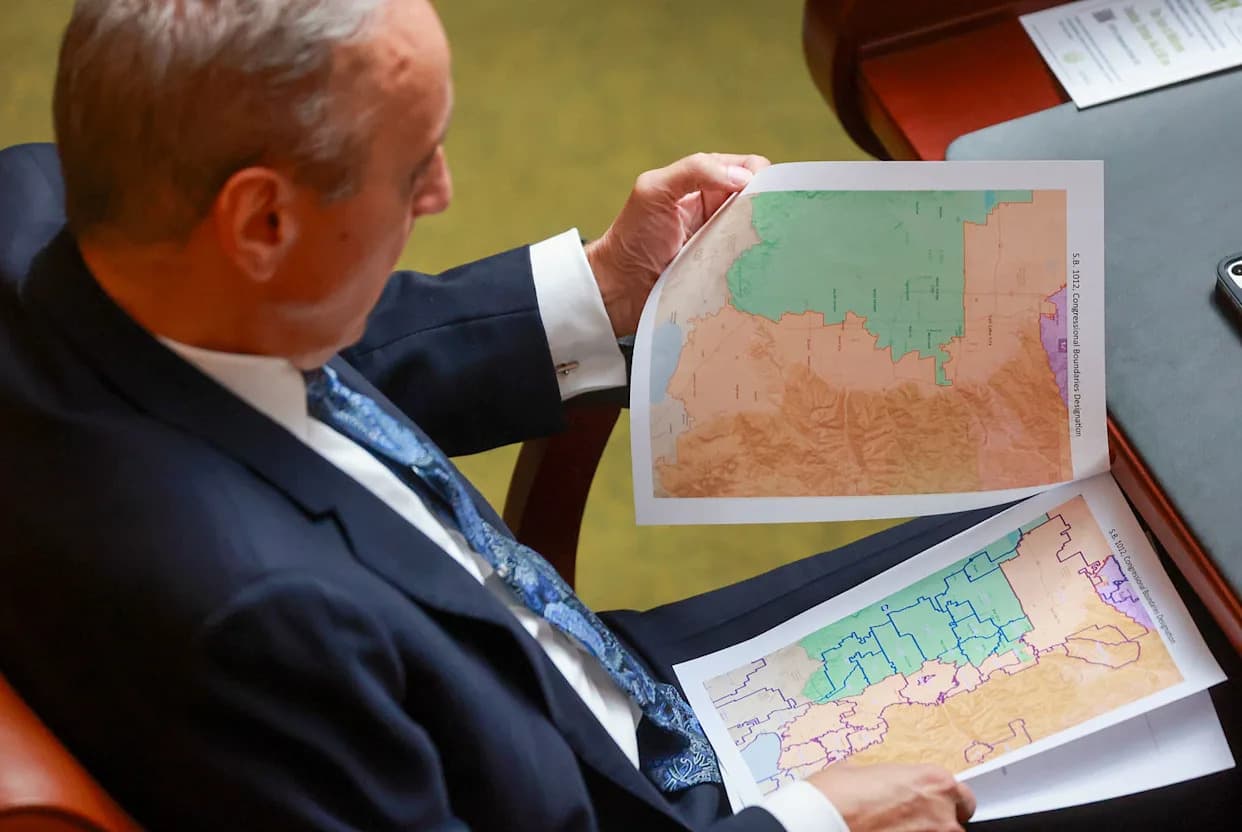
New map: On Nov. 11 a judge imposed revised U.S. House districts that could create an opening for Democrats to win a seat.
Challenges: Republicans are contesting the judicial selection after a court found lawmakers had sidestepped voter‑approved anti‑gerrymandering standards.
Candidate deadline: Jan. 8.
Indiana
Current map: 2 Democrats, 7 Republicans.
Proposed map: Revised districts under consideration in December by the General Assembly could boost Republicans’ chances to capture two additional seats.
Challenges: Some Republican senators remain hesitant to support the proposal.
Candidate deadline: Feb. 6.
Florida
Current map: 8 Democrats, 20 Republicans.
Proposed map: No revised congressional map yet; a special state House committee will hold its first redistricting meeting on Dec. 4.
Challenges: Florida’s constitution bars drawing districts with the intent to favor or disfavor a political party or incumbent, constraining lawmakers’ options.
Candidate deadline: April 24.
Virginia
Current map: 6 Democrats, 5 Republicans.
Proposed map: The Democratic‑led General Assembly endorsed a proposed constitutional amendment in October to permit mid‑decade redistricting; a further vote in the regular session beginning Jan. 14 would be required to refer it to voters.
Challenges: Limited time to secure voter approval before candidate filing deadlines.
Candidate deadline: April 2.
Louisiana
Current map: 2 Democrats, 4 Republicans.
Proposed map: No new map proposed; Gov. Jeff Landry signed legislation delaying the state primary from April 18 to May 16, potentially giving lawmakers more time if the Supreme Court overturns existing lines.
Challenges: The Supreme Court has heard arguments and may not issue a decision until the end of its term.
Candidate deadline: Feb. 13.
Maryland
Current map: 7 Democrats, 1 Republican.
Proposed map: Gov. Wes Moore created a special commission on congressional redistricting, but the state Senate leadership has signaled it will not pursue redistricting for fear of political backlash.
Candidate deadline: Feb. 24.
Illinois
Current map: 14 Democrats, 3 Republicans.
Proposed map: The Democratic Congressional Campaign Committee proposed a map in October that could help Democrats compete for an additional seat, but the General Assembly has not acted amid concerns about impacts on Black representation.
Candidate deadline: Closed Nov. 3.
Kansas
Current map: 1 Democrat, 3 Republicans.
Proposed map: None yet. The Republican‑led Legislature could revisit redistricting when the session begins Jan. 12.
Challenges: GOP lawmakers abandoned a petition drive for a special session in November after failing to secure enough support.
Candidate deadline: June 1.
New York
Current map: 19 Democrats, 7 Republicans.
Proposed map: No revised districts proposed; Democratic lawmakers have floated a constitutional amendment to permit mid‑decade redistricting, but approval in two separate legislative sessions would be required to reach voters.
Candidate deadline: April 2.
Colorado
Current map: 4 Democrats, 4 Republicans.
Proposed map: No formal revisions yet. The state’s attorney general has expressed support for a constitutional amendment to allow mid‑decade redistricting.
Challenges: Any amendment would need to be placed on the statewide ballot before new districts could take effect.
Candidate deadline: March 17.
Nebraska
Current map: 0 Democrats, 3 Republicans.
Proposed map: None yet. Gov. Jim Pillen has voiced support for mid‑decade redistricting to shore up a competitive district, but some lawmakers are reluctant.
Candidate deadline: March 1.
Wisconsin
Current map: 2 Democrats, 6 Republicans.
Proposed map: No revisions adopted. On Nov. 25 the state Supreme Court ordered panels to hear lawsuits arguing the congressional map unconstitutionally favors Republicans.
Challenges: It is unclear whether litigation will be resolved in time to affect the 2026 elections.
Candidate deadline: June 1.
What to watch: Court rulings, referendums and further legislative action in the states above will determine whether these mid‑decade changes stand. Because control of the House can turn on a handful of seats, even small map shifts matter for national politics.
Help us improve.