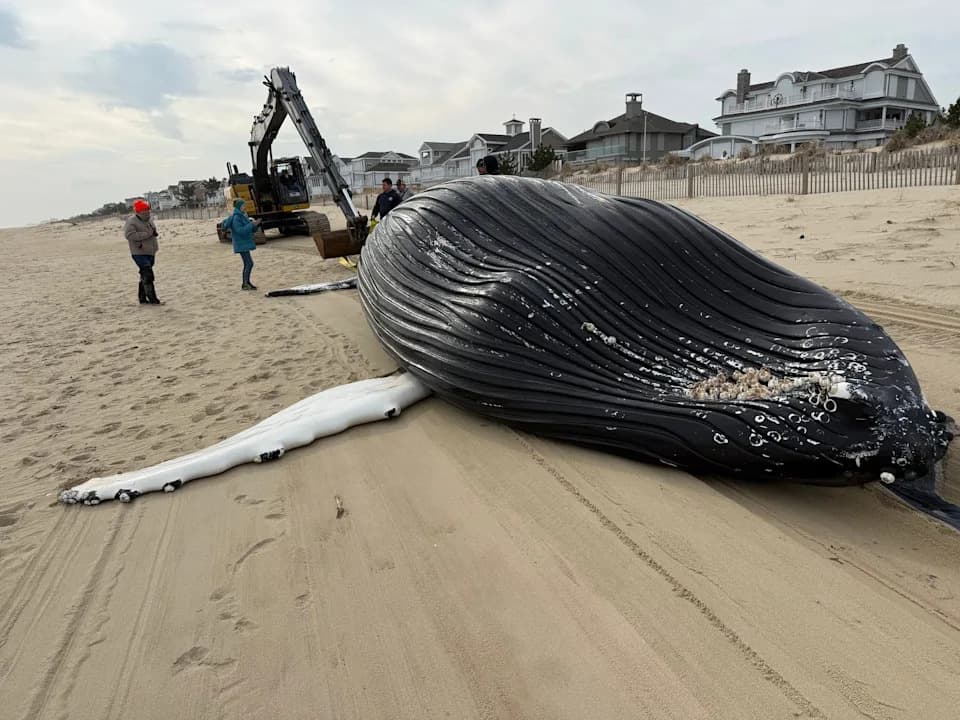
A gray whale carcass found in 2009 on the Clayoquot Slope continues to support a diverse deep-sea community nearly 15 years later. Repeated visits by Ocean Networks Canada and the Ocean Exploration Trust (2012, 2020, 2023) documented gastropods, crustaceans, fish and long-lived tube worms clinging to the 16-foot skeleton about 4,100 feet below the surface. The observations illustrate the three decomposition stages—Mobile Scavenger, Enrichment Opportunist and Sulfophilic—and the role whale falls play in fueling chemosynthetic and benthic communities over years to decades.
Decades-Old Whale Skeleton Still Teeming with Life on the Deep-Sea Floor

A gray whale carcass discovered in 2009 on the Clayoquot Slope off British Columbia continues to support a diverse community of deep-sea organisms nearly 15 years later. Located at the Clayoquot Slope “Bullseye” site about 4,100 feet below the surface, the skeleton was revisited by teams from Ocean Networks Canada (ONC) and the Ocean Exploration Trust (EV Nautilus) in 2012, 2020 and again in 2023. Footage and photogrammetry from the latest expedition show the bones still brimming with life.
What researchers found
Scientists observed a rich benthic assemblage living on and around the whale skeleton. Notable inhabitants include gastropods such as Cocculina craigsmithi and Mitrella (Astyris) permodesta, the isopod Ilyarachna profunda, the crab Paralomis multispina, the rattail fish Coryphaenoides acrolepis, and tube worms identified as Lamellibrachia cf. barhami. Remarkably, some tube worms seen in 2009 appear to still be attached to the whale’s left jaw bone, illustrating the long persistence of these skeleton-associated communities.
"The skeleton supports a rich benthic fauna (organisms that live near the seafloor), including many invertebrates and a few fish species," researchers reported after the expedition.
How a whale fall fuels life
When a large marine mammal sinks to the deep seafloor it creates a "whale fall," a localized, long-lasting source of nutrients in an otherwise food-poor environment. Decomposition typically unfolds in three stages:
- Mobile scavenger stage: Large scavengers remove soft tissues and blubber.
- Enrichment opportunist stage: Smaller animals and burrowers exploit nutrient-rich sediments around the bones.
- Sulfophilic stage: Bacteria break down bone lipids, producing sulfur compounds that support chemosynthetic communities.
Previous observations from other whale falls have shown eelpouts and deep-sea octopuses feeding during the early scavenging phase, while later stages attract burrowing invertebrates and chemosynthetic organisms supported by bacterial activity.
Why repeated visits matter
The 2023 expedition combined video documentation with photogrammetry to create a detailed, time-series dataset. By comparing observations from 2009, 2012, 2020 and 2023, researchers can track how species composition, biomass and spatial coverage change over years to decades—improving our understanding of how whale falls sustain deep-ocean ecosystems.
In the deep sea, as in other ecosystems, death becomes a source of life: the remains of a single large animal can support complex communities for many years, even decades.
Help us improve.