Trained macaque monkeys were able to synchronize hand taps to the beats of recorded songs, including a pop track. Across three tasks they maintained timing after small tempo shifts, synchronized only when a clear beat remained, and tended to match a song's original human tempo even when speeds changed. Researchers propose that beat perception relies on pattern detection, beat prediction, motor timing, and reward-linked integration, and suggest macaques as a model for studying the neural and evolutionary roots of rhythm.
Macaques Tap to the Beat: New Study Challenges Ideas About the Evolution of Rhythm

Humans are well known for their ability to move in time with music, but beat synchronization is rare across animals and was long thought to require advanced vocal mimicry. New research shows that macaque monkeys can, with training, align simple hand taps to the beats of recorded songs — including a pop hit — prompting fresh questions about how rhythmic perception evolved.
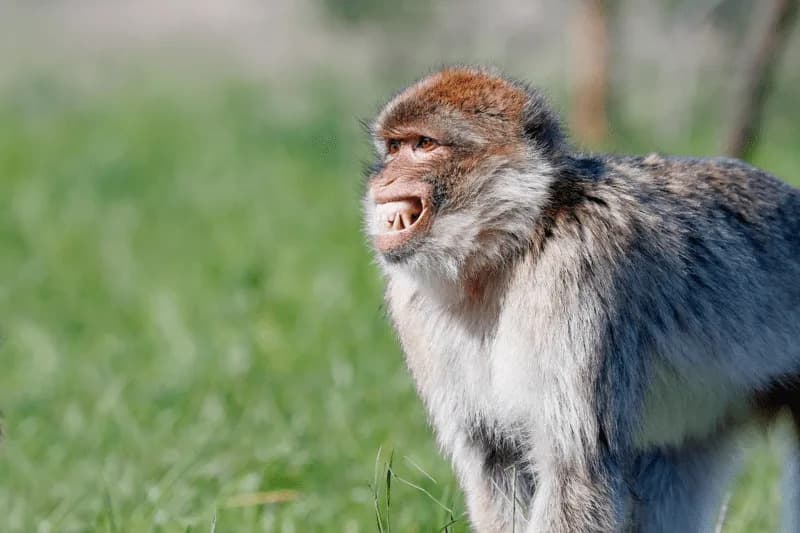
Researchers at the National Autonomous University of Mexico trained two adult male macaques to tap in time for juice rewards. The team selected songs whose beats previous studies found easy for people to follow, and used tempos similar to the metronome rates employed in the animals' prior training. The experiments were designed to test whether the animals truly matched musical rhythm or were responding to other cues.
What the experiments tested
The researchers ran three tasks. In the first, the team played three songs and then shifted the tempo by half a beat; the macaques largely maintained their tapping rhythm. In the second task the songs were deliberately scrambled to remove regular temporal structure; the animals synchronized only when a clear beat remained. In the third task the Backstreet Boys' "Everybody" was played at three different speeds while the macaques were rewarded for keeping a steady cadence; despite tempo shifts, the animals preferred tapping in time with the song's original human tempo.
The observation that a trained monkey naturally gravitates toward synchronizing its taps at the true (human) tempo of new songs is further evidence of a possible spontaneity to the perception of musical rhythm.
The team is careful to emphasize that the macaques' responses were the result of extensive training and remained effortful, so these behaviours are not necessarily the same as humans' spontaneous toe-tapping or swaying to music. Still, the results suggest the building blocks for beat perception may be more widespread than previously believed.
Why this matters
From their results, the authors propose four interacting skills that support the ability to groove: perceiving temporal patterns, predicting upcoming beats, timing motor actions to those predictions, and integrating those elements to obtain goals or rewards. If these components exist to some degree in other species, those animals might display rudimentary beat sensitivity as well. The researchers suggest macaques could serve as a useful model organism for studying the neurobiology and evolution of musical rhythm.
These findings imply that the roots of rhythmic perception may extend deeper into primate evolution than models that tie beat synchronization strictly to vocal learning. However, further work is needed to determine how spontaneous and generalizable these capacities are across individuals and species.
Help us improve.