The article examines eight ancient cultures—the Egyptians, Maya, Babylonians, Chinese, Greeks, Inca, Aboriginal Australians and Polynesians—that developed precise astronomical knowledge without telescopes. It explains how they used the sun, moon and stars for calendars, agriculture, navigation and ritual, citing key examples such as Egypt’s Sirius-linked year, the Maya Dresden Codex, Babylonian clay records, China’s 1054 "guest star," and the Antikythera Mechanism. These traditions show how careful observation and calculation made the sky a practical and spiritual guide.
How Eight Ancient Civilizations Read the Sky — Without Telescopes

Long before telescopes, apps, or printed star charts, people around the world closely watched the heavens and turned those observations into practical systems. Using naked-eye astronomy, careful measurement, and multi-generational knowledge, these cultures built calendars, guided agriculture, navigated oceans, and aligned sacred architecture with celestial events. For them, the sky was a clock, a map and a spiritual guide.
Egypt
The ancient Egyptians tied daily life to celestial cycles. The heliacal rising of Sirius (the first pre-dawn appearance of the star) coincided with the Nile’s annual flood and marked the start of their 365-day calendar year. Temples and many pyramids were laid out with precise orientations; the Great Pyramid of Giza is famously aligned very closely to the four cardinal points.
Maya
The Maya developed one of the most sophisticated observational traditions in the ancient world. They tracked the sun, moon and planets with exceptional precision—Venus was especially important and was charted with remarkable accuracy over centuries. Sources such as the Dresden Codex contain eclipse tables and planetary calculations, and observatory-style buildings like the Caracol at Chichén Itzá were oriented to solstices, equinoxes and other recurring events.
Babylon
Babylonian astronomers applied mathematics to long, systematic records preserved on clay tablets. These logs of lunar and planetary motions, eclipses and unusual phenomena enabled them to detect patterns and produce predictive tables for future positions. Their methods contributed to early forms of the zodiac and heavily influenced Greek astronomy.
China
Chinese astronomical records are among the longest and most continuous in history. Observers carefully noted comets, meteor showers and "guest stars"—including a guest star recorded in 1054 CE that corresponds to the modern Crab Nebula. Chinese scholars compiled star catalogues, developed instruments such as armillary spheres, refined the length of the solar year and used long-term records to predict eclipses.
Greece
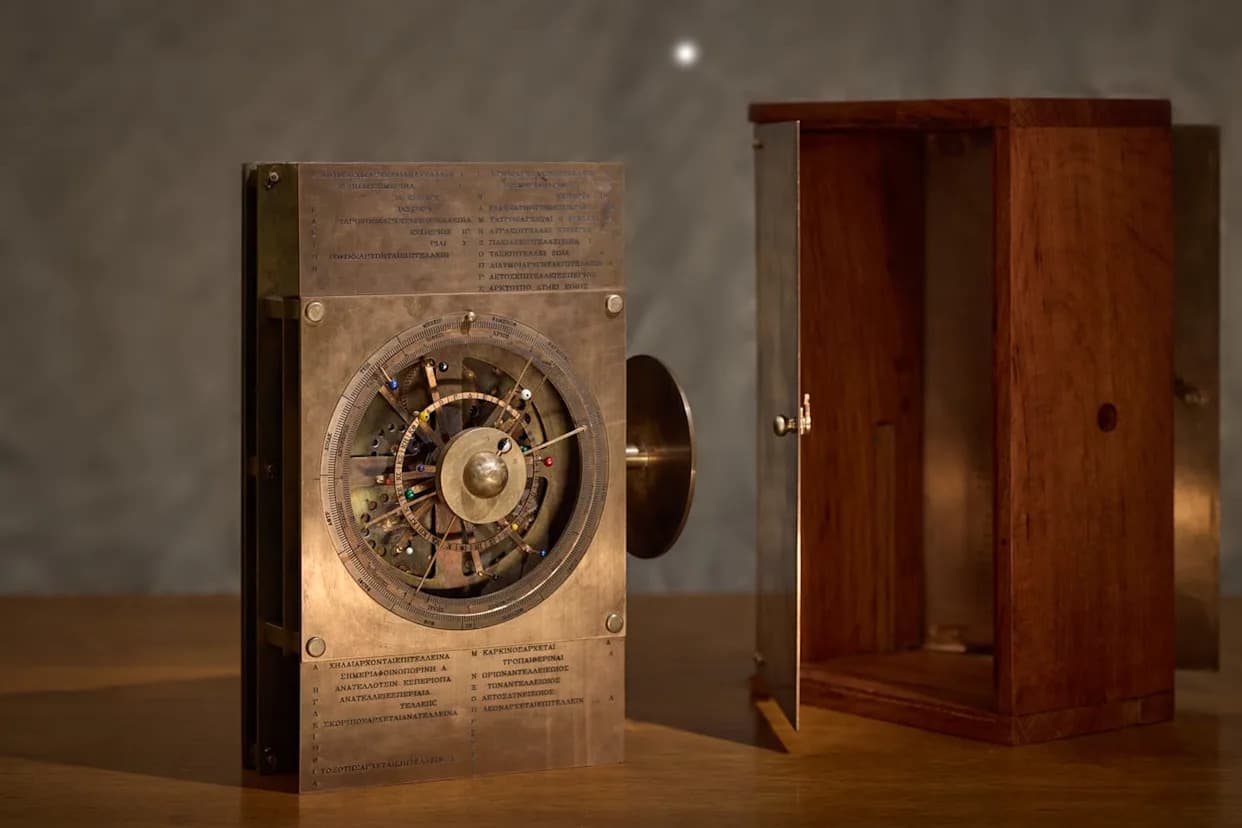
Greek thinkers combined inherited observations with geometry and physical models to explain celestial behavior. Ptolemaic geocentric models—though later replaced—advanced mathematical astronomy for over a millennium. The Antikythera Mechanism, a hand-powered analog device recovered from a shipwreck, could predict positions of the sun, moon and planets and forecast eclipses, revealing unexpectedly advanced mechanical and astronomical skill.
Inca
In the Andes, Inca astronomy was woven into landscape and ritual. Cusco was planned with ceque lines radiating from the Coricancha temple to hundreds of huacas (sacred sites) that aligned with the rising and setting of particular stars. The Inca tracked the sun closely with pillars and carved markers—such as the Intihuatana at Machu Picchu—to mark solstices, equinoxes and agricultural seasons.
Aboriginal Australia
Aboriginal Australian sky knowledge, passed through oral traditions, songlines and art for tens of thousands of years, forms a living system for seasonal timing and navigation. Many groups read dark patches of the Milky Way as "dark cloud constellations"—for example, the Emu in the Sky—whose seasonal positions signaled times for hunting or collecting eggs. Oral lore also encodes eclipses, lunar phases and the variability of stars.
Polynesia
Polynesian navigators achieved extraordinary open-ocean voyages using a mental "star compass" rather than instruments. Expert sailors memorized where stars rise and set on the horizon and steered by keeping alignment with those stellar bearings. They combined stellar knowledge with observations of ocean swells, wind, bird flight and sea color to locate small islands across thousands of miles of ocean.
These eight traditions demonstrate that patient observation, clever mathematics and cultural transmission can decode the rhythms of the heavens without modern instruments. When you next look up at the night sky, consider how it functioned as a calendar, map, clock and source of meaning for ancient observers.
Help us improve.