Incendiamoeba cascadensis, discovered in Lassen Volcanic National Park, grows and divides at temperatures up to 63°C (145°F), setting a new record for eukaryotes. It requires at least ~42°C to grow, shows peak growth near 55–57°C, and was observed dividing at 58°C and 63°C. Genomic analyses point to expanded heat-shock proteins and stress-response pathways, and similar environmental DNA from Yellowstone and New Zealand suggests related organisms may be more widespread.
‘Fire Amoeba’ Sets New Record — Eukaryote Grows and Divides at 63°C

Incendiamoeba cascadensis, a newly identified single-celled organism from Lassen Volcanic National Park, grows and divides at temperatures as high as 63°C (145°F), establishing a new heat-tolerance record for eukaryotes.
Discovery and name
Described in a preprint on bioRxiv, the microbe’s name — Incendiamoeba cascadensis — literally means “fire amoeba from the Cascades.” Researchers led by H. Beryl Rappaport and Angela Oliverio of Syracuse University recovered specimens from hot springs and steaming pools sampled across Lassen between 2023 and 2025.
Temperature tolerance and laboratory tests
The team cultured samples across 17 temperatures from 30°C to 64°C (four replicates per temperature) and fed bacterial prey with wheatberries to sustain the bacterivorous amoeba. Key results:
- The amoeba does not grow below ~42°C, making it an obligate thermophile.
- Optimal growth occurred around 55–57°C.
- Cell division (mitosis) was directly observed at 58°C and again at 63°C — the highest confirmed temperature for eukaryotic division.
- Organisms remained motile at 64°C and began forming protective cysts at 66°C (also observed to form cysts at 25°C).
- Movement ceased at about 70°C but cultures could revive when cooled; failure to recover was observed near 80°C.
How it survives the heat
Genome analysis revealed likely adaptations: expanded families of heat-resistant proteins and heat-shock chaperones, and enhanced signaling and heat-response pathways that probably support cellular integrity and function at high temperature.
Broader distribution and implications
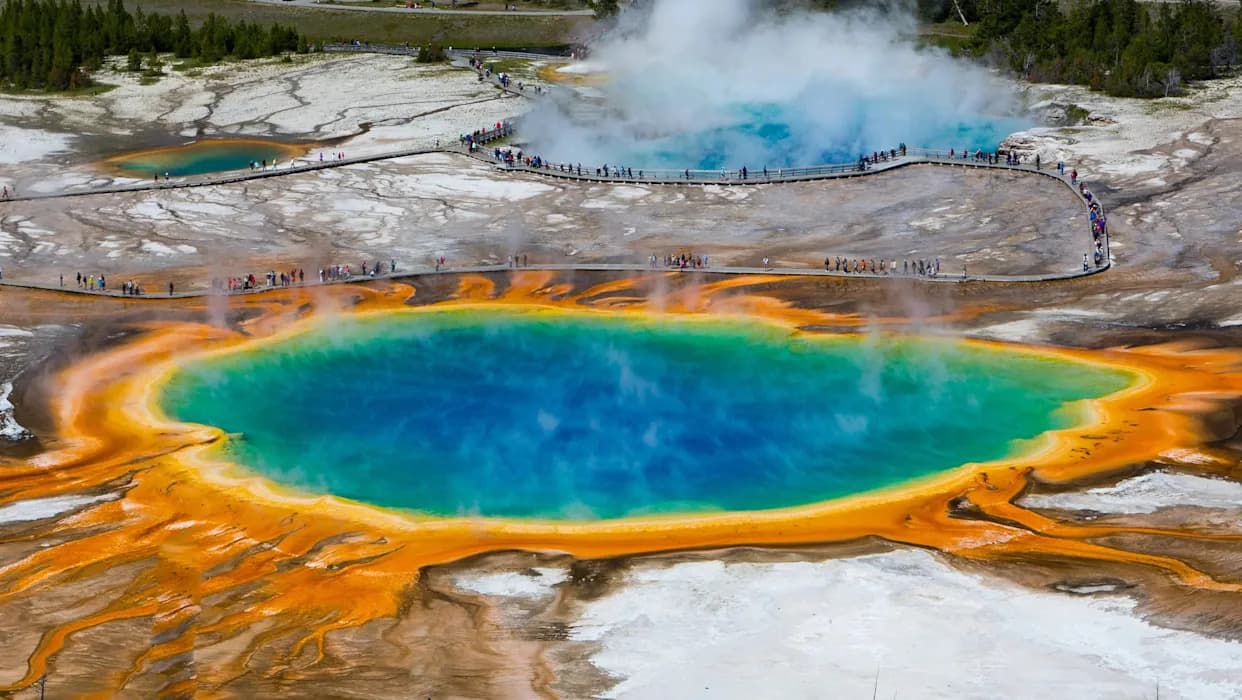
Nearly identical environmental DNA fragments were also detected in samples from Yellowstone National Park and New Zealand’s Taupō Volcanic Zone. While DNA fragments do not confirm living populations at those sites, they suggest closely related organisms may occur in other geothermal systems.
“Our findings challenge the current paradigm of temperature constraints on eukaryotic cells and reshape our understanding of where and how eukaryotic life can persist,” wrote Rappaport and Oliverio.
The discovery expands the known thermal limits of eukaryotic life, informs evolutionary questions about cellular heat tolerance, and has potential implications for assessing habitability on other planets. The team has posted their results as a preprint on bioRxiv.
Help us improve.