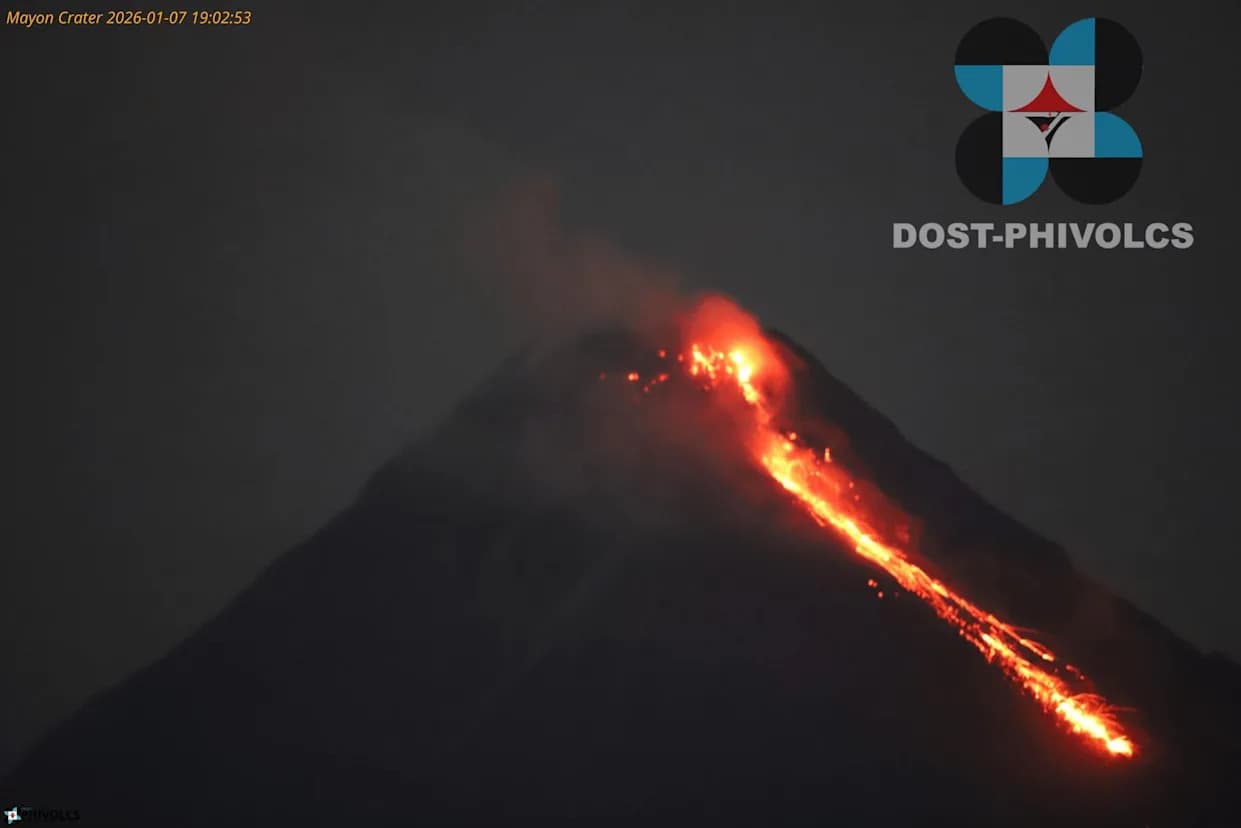
In 2025 the Smithsonian recorded 63 eruptions from 58 volcanoes worldwide. Kīlauea led with 39 episodes, including a Christmas Eve lava fountain that reached about 1,400 feet. Major events included Mount Etna’s powerful fountains, a newly active volcano in Ethiopia’s Afar that ended a ~12,000‑year dormancy with 40,000–50,000‑foot ash plumes, Iceland’s Reykjanes fissure flows, Kamchatka’s Krasheninnikov eruption, and multiple ash‑producing events at Japan’s Shinmoedake. Satellites, drones and aerial imagery were crucial for documenting many of these remote or fast-moving eruptions.
2025 in Fire and Ash: The Year's Most Dramatic Volcanic Eruptions
A year in review: The most dramatic volcanic eruptions in 2025
In 2025 the planet's molten interior staged a global spectacle: scientists recorded dozens of eruptions that produced towering lava fountains, vast ash plumes and dramatic landscape changes. According to the Smithsonian Institution, there were 63 eruptions from 58 different volcanoes worldwide. While many incidents were visually striking, a handful stood out for their scale, novelty or local impact.
Kīlauea — Hawaii
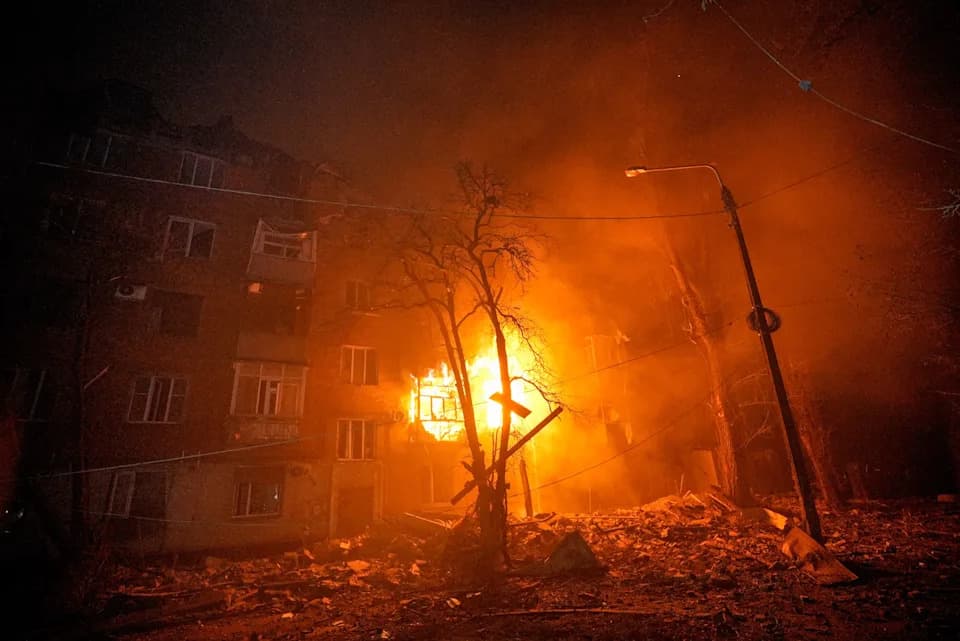
Recognized as one of the world's most active volcanoes, Kīlauea erupted repeatedly in 2025. The volcano registered 39 eruptive episodes over the year, culminating in a dramatic Christmas Eve event when lava fountains reportedly sent molten rock as high as 1,400 feet (about 425 meters) into the air. Those displays produced vivid night-time imagery and reminded observers of both the spectacle and hazards of persistent lava activity.
Mount Etna — Italy
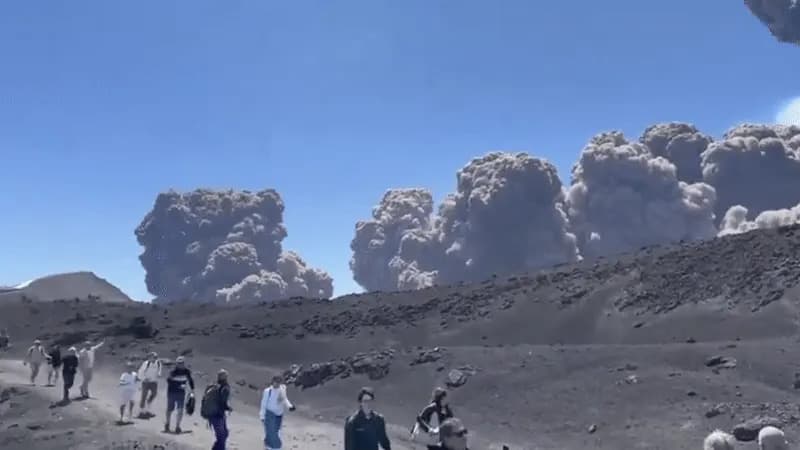
Europe's tallest and one of its most active volcanoes, Mount Etna, produced several high-profile episodes in 2025. In December, powerful lava fountains and dense ash plumes were visible from miles away, with some jets of lava estimated to reach roughly 1,000 feet. Earlier intermittent explosions and ash emission events reshaped parts of Etna's flanks and sent fresh flows across existing terrain.
Afar Region Volcano — Ethiopia
In November a volcano in Ethiopia’s remote Afar region erupted for the first time in recorded history, breaking what scientists describe as a roughly 12,000‑year dormancy. With limited ground instrumentation in the desert setting, satellites provided the primary observations: ash plumes estimated at 40,000–50,000 feet (12–15 km) and large releases of volcanic gases. Local officials reported ash and gas impacts on nearby villages.
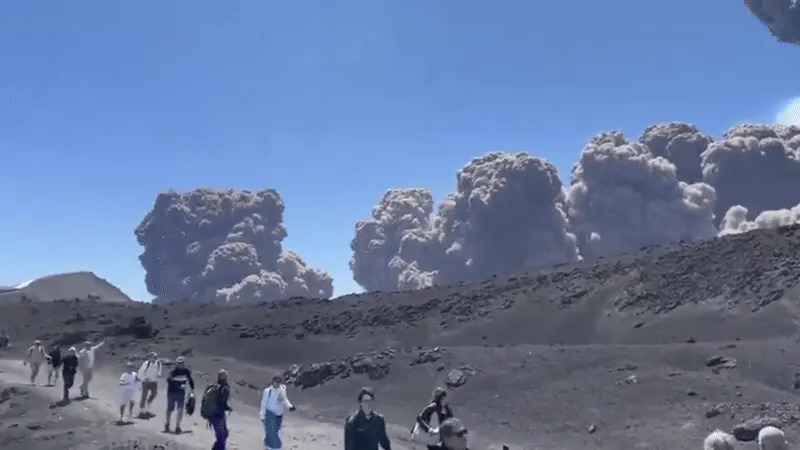
This animated image shows people running for safety after Italy's Mount Etna volcano violently erupted on Monday, June 2, 2025.
Reykjanes Peninsula Fissure — Iceland
Iceland’s Reykjanes Peninsula became one of the world's most active hotspots in 2025. A powerful fissure eruption released rivers of glowing lava and threw spectacular fountains of fire skyward. Thick plumes of steam and volcanic gas drifted across the peninsula while drone footage and satellite imagery documented lava flows reshaping the coastline and surrounding terrain.
Krasheninnikov — Kamchatka Peninsula, Russia
Krasheninnikov, a volcano on Russia’s Kamchatka Peninsula that had been dormant for centuries (noted records suggest the last activity around the mid-1500s), returned to activity in August. Aerial video captured massive ash columns rising from the summit. Days after the eruption, the same region reported a historic magnitude 8.8 earthquake; authorities emphasized that any direct connection between the eruption and the quake would require further scientific analysis.
Shinmoedake — Japan
Japan recorded multiple eruptive events in 2025. Shinmoedake produced its first eruption in more than seven years in June, sending ash plumes over 1,640 feet (about 500 meters). Additional events in July prompted advisories for nearby residents to remain indoors, and a later August episode generated ash plumes that rose above 23,000 feet, producing widespread airborne ash hazards.
Observation Note: Across many of these remote or fast-moving events, satellites, drones and aerial footage were essential for rapid documentation and assessment of ash, lava and gas outputs.
Together, the year's volcanic activity demonstrated both the spectacular power of Earth's interior and the very real hazards—ash that can disrupt communities and aviation, lava that reshapes landscapes, and gas emissions that affect health. Continued monitoring with remote sensing and expanding local instrumentation will be key to understanding and mitigating these hazards.
Help us improve.