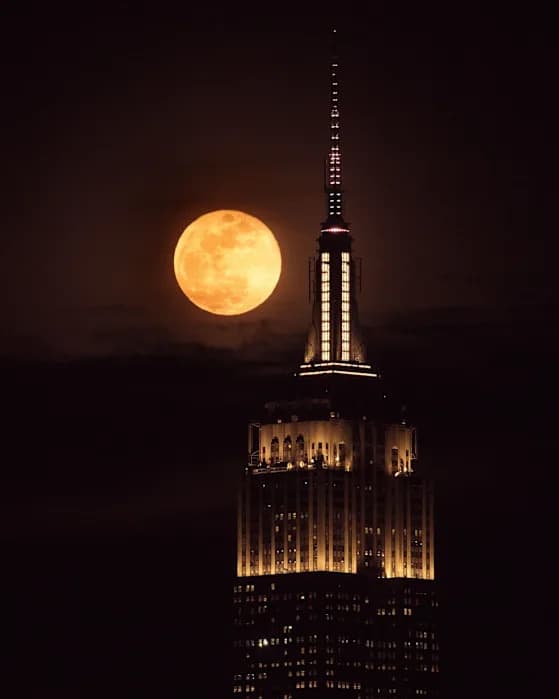
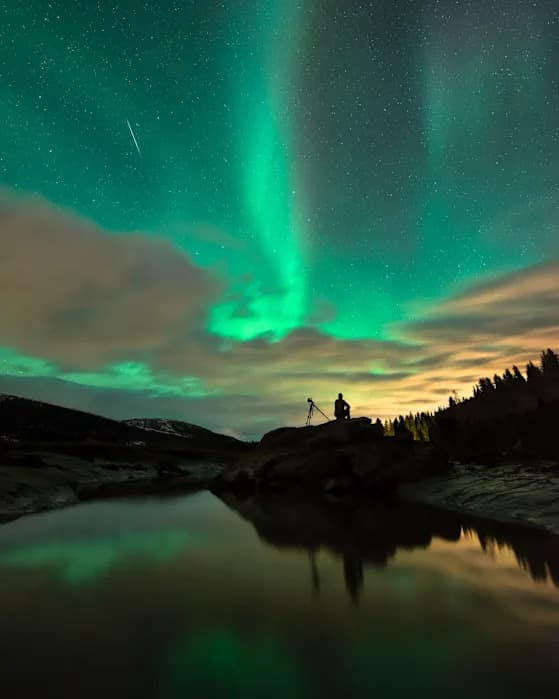
December's full moon — the cold or long night moon — will be a supermoon on Dec. 4, 2025, with peak illumination at 6:14 p.m. ET. The moon will be closer to Earth than usual (about ~222,000–226,000 miles), appearing larger and brighter for several nights. The Geminid meteor shower runs Dec. 4–17 and peaks Dec. 13–14, when observers under dark skies may see up to 120 meteors per hour. The winter solstice arrives on Dec. 21.
December's 'Cold' Supermoon Rises Dec. 4 — Geminids Peak Dec. 13–14

The nights are growing longer as we approach the winter solstice, and December's full moon — commonly called the cold moon or the long night moon — will rise during some of the year's longest evenings. This December full moon will be a bright supermoon, appearing larger because it will be closer to Earth than a typical full moon, and it will coincide with the start of the Geminid meteor shower.
According to the Old Farmer's Almanac, this supermoon will reach perigee at about 221,965 miles from Earth; NASA-style summaries often cite similar distances (roughly ~226,000 miles) when describing supermoons near perigee. This event is the third and final consecutive supermoon closing out 2025.
When to watch
The full moon occurs on Thursday, Dec. 4, 2025, with peak illumination near 6:14 p.m. ET. Because the moon will rise low on the horizon, it can appear especially large and bright for several evenings around the peak date.
What makes a supermoon?
A supermoon happens when a full moon occurs close to the moon's perigee — the nearest point in its orbit to Earth. When this alignment happens the moon looks slightly larger and brighter than average. Supermoons frequently appear in runs of three or four consecutive full moons; this series began in September 2025 and extends into January 2026.
The Geminid meteor shower
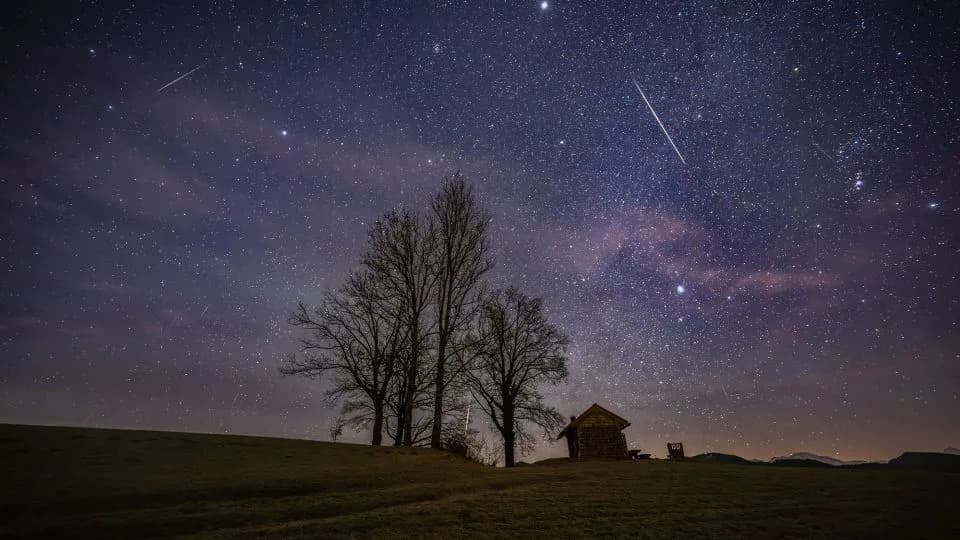
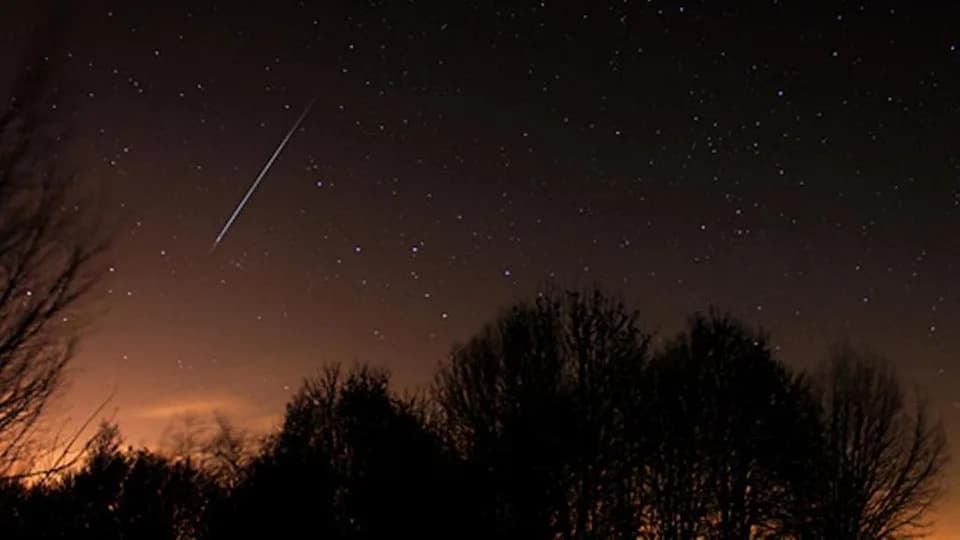
The Geminids are one of the most reliable and spectacular annual meteor showers. In 2025 the Geminid display runs from Dec. 4–17 and peaks the night of Dec. 13–14. Under ideal, dark skies observers can see up to about 120 meteors per hour at maximum activity. The meteors appear to radiate from near the star Castor in the constellation Gemini.
Unlike many meteor showers that originate from comets, the Geminids are associated with the asteroid 3200 Phaethon. Debris from Phaethon crosses Earth's orbit each mid-December, producing the bright, often white meteors the shower is known for.
Best viewing tips
For the Geminids, the best viewing times are late evening into the pre-dawn hours, with activity commonly increasing after midnight and often peaking around 2 a.m. Local conditions matter: find the darkest possible site, dress warmly, and give your eyes about 30 minutes to adapt to the dark. You don't need a telescope — lie back and scan the sky.
Moon phases (December 2025)
Full moon: Dec. 4
Last quarter: Dec. 11
New moon: Dec. 19
First quarter: Dec. 27
Winter solstice
The winter solstice — the shortest day and longest night of the year in the Northern Hemisphere — falls on Sunday, Dec. 21, 2025. Daylight hours vary by location; many northern locations will experience roughly 9 hours, 17 minutes of daylight around that date.
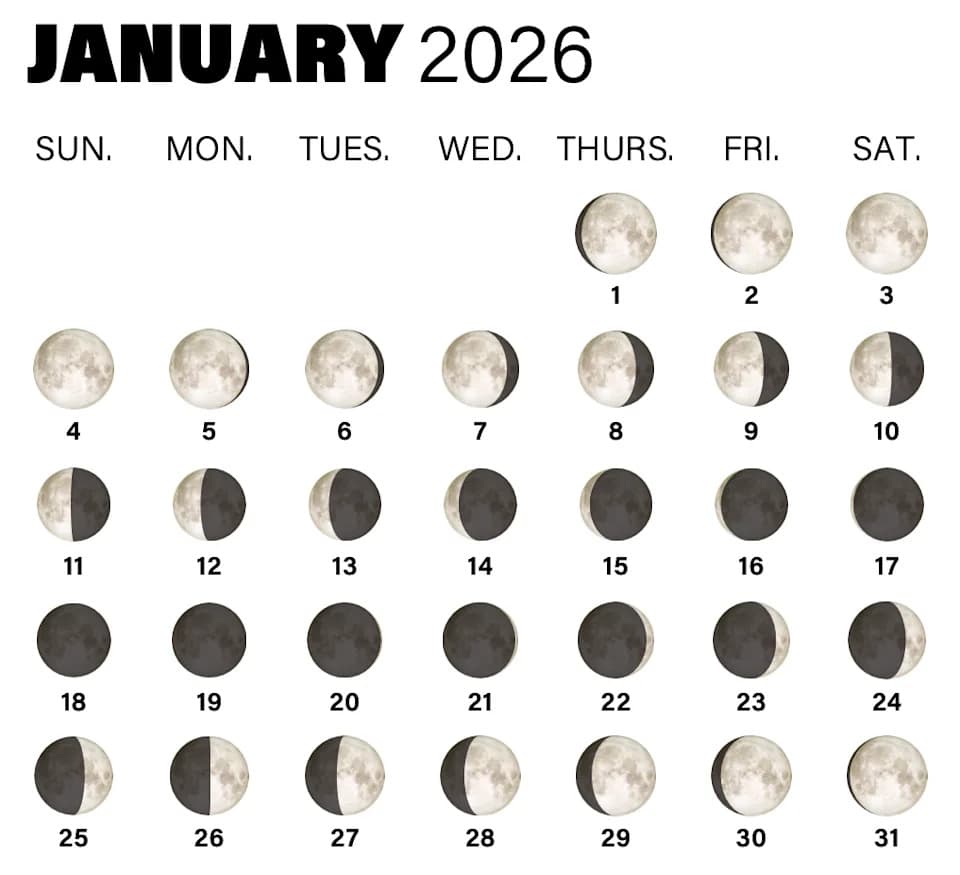
Looking ahead, the first full moon of 2026 will be the January wolf supermoon, rising on Saturday, Jan. 3, 2026.
By Maria Francis. Sources: Old Farmer's Almanac, NASA, EarthSky and astronomy resources.
Help us improve.