Researchers re‑examined the Cleveland Museum of Natural History’s extensive Dunkleosteus collection and published new findings in The Anatomical Record. The 14‑foot Devonian predator had nearly half its skull made of cartilage and used bony blades rather than true teeth. Its jaw mechanics more closely resemble a snapping turtle’s, suited for tearing large chunks from prey. The study emphasizes arthrodires’ anatomical diversity and confirms Dunkleosteus went extinct during the end‑Devonian event roughly 358 million years ago.
Dunkleosteus Reimagined — The 14‑Foot Devonian Predator That Bit Like a Snapping Turtle

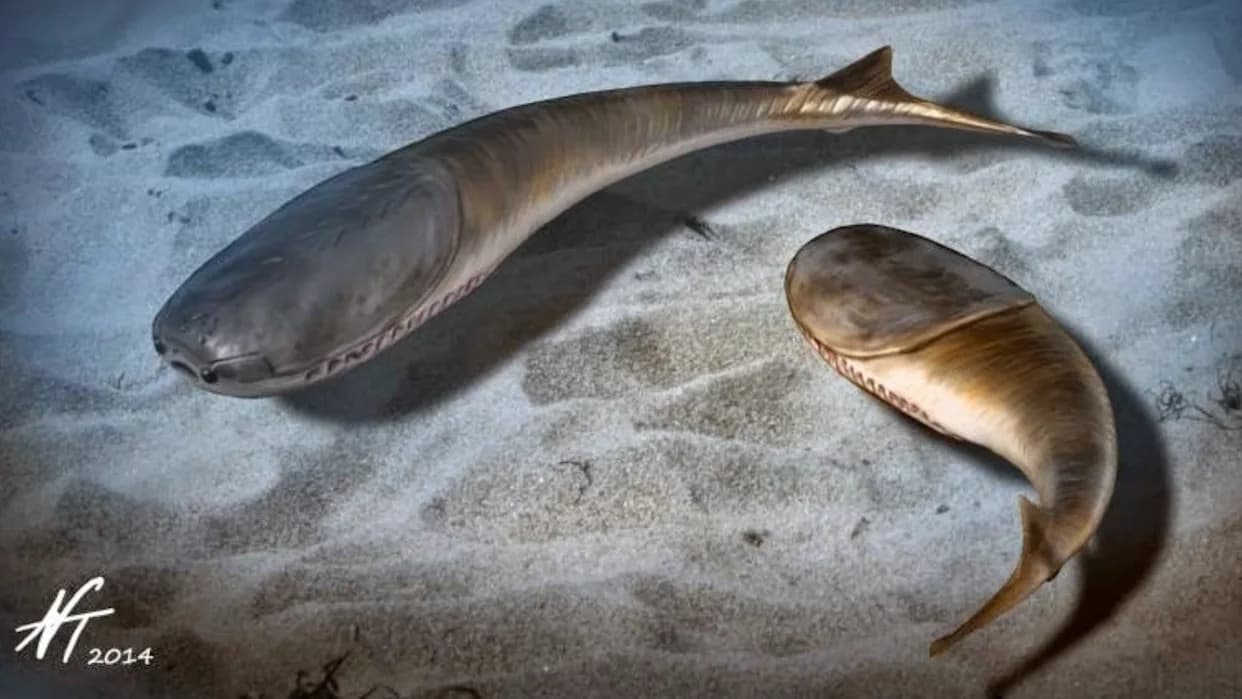
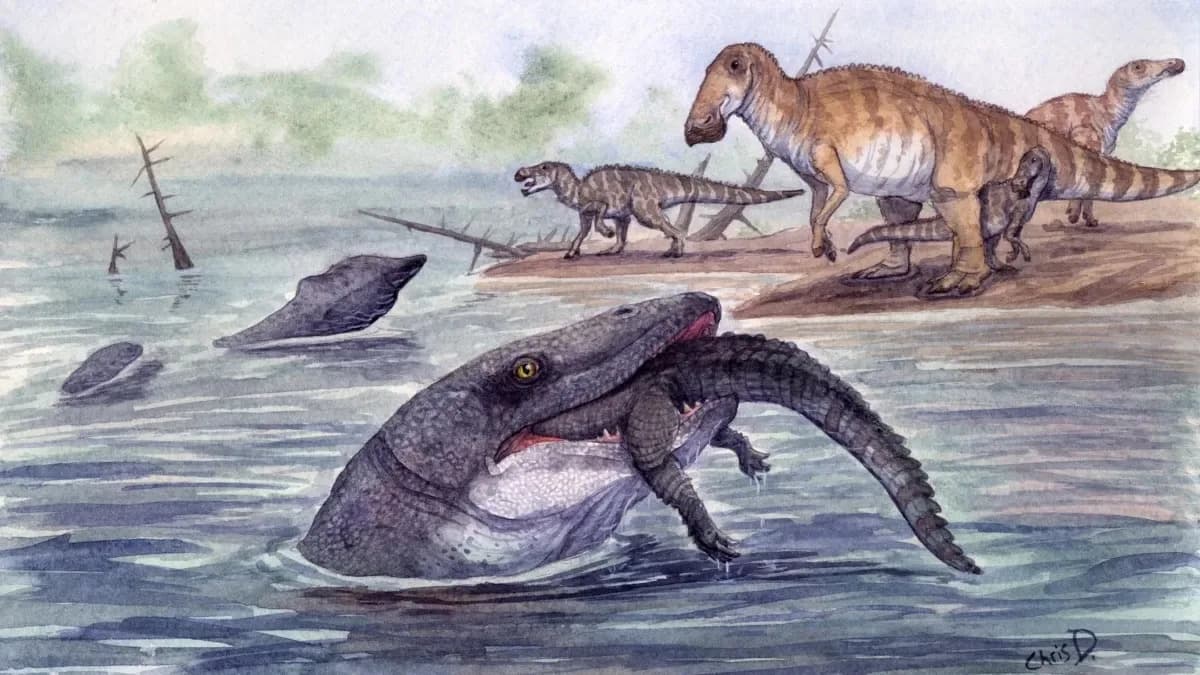
About 360 million years ago, what is now Cleveland was covered by a shallow Devonian sea and dominated by one of the period’s most fearsome predators: the 14‑foot Dunkleosteus terrelli. Armored with heavy plates and armed with razor‑sharp bony blades instead of conventional teeth, this fish has long been imagined as a shark‑like hunter. New research, however, shows that classic reconstructions have seriously underestimated how unusual Dunkleosteus really was.
An international team led by Russell Engelman of Case Western Reserve University re‑examined the world’s largest and best‑preserved collection of Dunkleosteus fossils at the Cleveland Museum of Natural History. Their study, published in The Anatomical Record, used detailed anatomical comparisons to produce a more accurate picture of the animal’s skull and jaw mechanics.
What the fossils reveal
The researchers found that nearly half of Dunkleosteus’s skull was composed of cartilage rather than bone—including most major muscle attachment sites and primary jaw linkages. While many related arthrodires evolved true teeth, Dunkleosteus retained robust bony blades that served as cutting implements.
Far from being a primitive or generic predator, Dunkleosteus appears to have been a functional specialist. Its skull and jaw architecture resemble those of a modern snapping turtle more than a shark: a powerful, fast‑closing bite optimized to grasp and tear off large chunks of flesh rather than to perform repeated small bites.
"These discoveries highlight that arthrodires cannot be thought of as primitive, homogenous animals, but instead a highly diverse group of fishes that flourished and occupied many different ecological roles during their history," said Russell Engelman.
The study reframes Dunkleosteus as an "evolutionary oddball" among arthrodires—one that combined heavy external armor with a largely cartilaginous skull and specialized slicing blades. Although its appearance and hunting style may differ from past depictions, the animal remains an intimidating apex predator of the Devonian seas.
Like many other marine groups, Dunkleosteus did not survive the end‑Devonian mass extinction about 358 million years ago, but revised anatomical understanding gives scientists a clearer view of how diverse and functionally complex these ancient fishes were.
Help us improve.