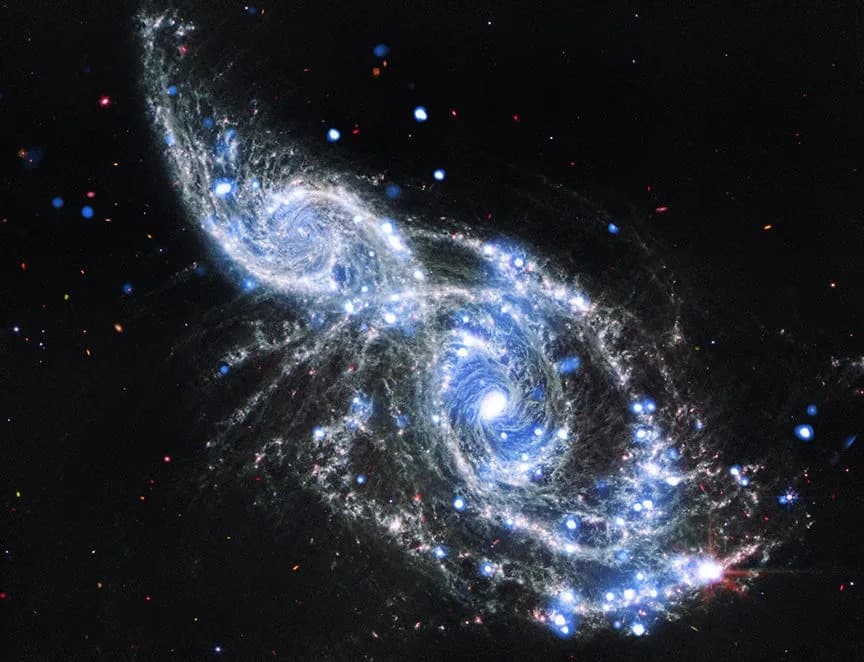
The Gemini South telescope in Chile captured a vivid new image of the Butterfly Nebula, released by the NSF’s NOIRLab. The bipolar nebula lies about 2,500–3,800 light-years away in Scorpius and features wing-like lobes formed from gas expelled by a central white dwarf. Chilean schoolchildren selected the target to mark the International Gemini Observatory’s 25th anniversary. The photograph highlights how dying stars sculpt dramatic cosmic structures and helps astronomers study stellar evolution.
Gemini South Captures Stunning 'Butterfly Nebula' — Dying Star Shapes Glowing Cosmic Wings

By Marcia Dunn
A powerful telescope in Chile has captured a striking new image of a cosmic spectacle known as the Butterfly Nebula. The photograph was released by the National Science Foundation’s NOIRLab.
Taken last month with the Gemini South telescope, the nebula sits roughly 2,500 to 3,800 light-years away in the constellation Scorpius. One light-year is about 6 trillion miles, so these glowing structures span vast distances across space.
At the center of the bipolar nebula is a white dwarf — the dense remnant of a star that has shed its outer layers. Those expelled gases now form the wing-like lobes that give the object its butterfly appearance; radiation and heat from the hot central star cause the gas to glow, outlining dramatic shapes and filaments.
Schoolchildren in Chile selected the target as part of celebrations marking 25 years of operations by the International Gemini Observatory, making the image both scientifically valuable and a community-driven milestone.
Why this image matters
Images like this help astronomers study the late stages of stellar evolution and the processes that shape planetary nebulae. High-resolution observations from instruments such as Gemini South reveal intricate structures and chemical signatures that improve our understanding of how stars die and enrich the surrounding interstellar medium.
Key facts: Butterfly Nebula location — Constellation Scorpius; Distance — ~2,500–3,800 light-years; Central object — white dwarf producing the glowing, wing-like lobes.
Help us improve.