The Roman world (1st century BC–5th century AD) introduced practical innovations in construction, public services and urban planning whose core concepts persist today. From durable concrete, aqueducts and roadways to the codex, military medicine and organized public services, many modern systems trace roots to Roman solutions. These advances were scalable, pragmatic and later refined—but their foundational ideas continue to shape contemporary life.
16 Roman Innovations That Still Shape Modern Life

The Roman world—from the late Republic through the fall of the Western Roman Empire (1st century BC–5th century AD)—left a practical legacy that still underpins many aspects of modern life. Roman engineers, administrators and urban planners developed scalable solutions in construction, sanitation, transport and public services whose core ideas survive in our infrastructure and institutions today.
1. Concrete
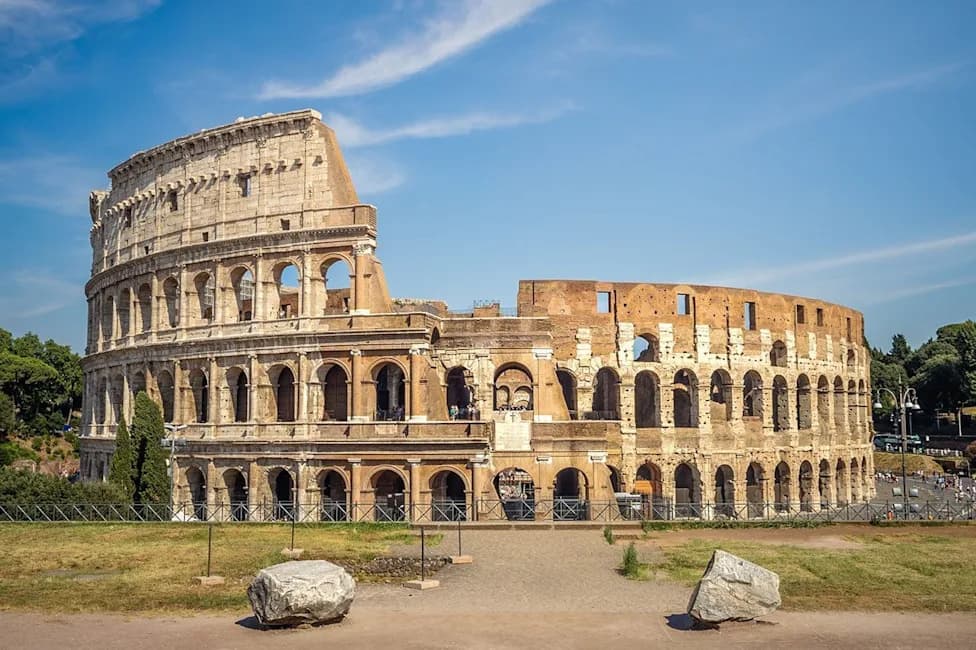
The Romans perfected a durable form of concrete by mixing lime with volcanic ash (pozzolana), producing a hydraulic cement that set under water and resisted cracking. That recipe enabled large-scale construction of durable domes, vaults and harbors. Modern concrete is different chemically and far more refined, but the Roman breakthrough established concrete as a versatile building material.
2. Aqueducts
Roman aqueducts were gravity-fed systems of channels, bridges and tunnels that transported fresh water over long distances with a gentle, continuous slope. They supplied cities with water for drinking, bathing and sanitation. Today’s water-supply networks still rely on the same principle of moving water from source to population centers, now augmented by pumps, pipes and treatment plants.
3. Roads
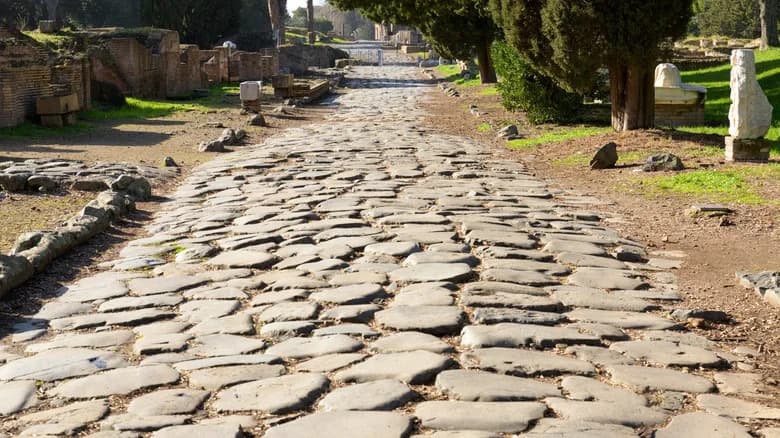
Roman roads—stretching an estimated 50,000 miles across the empire—were engineered with layered foundations, cambered surfaces and drainage to maximize durability and efficiency. Their emphasis on a strong base, direct routes and reliable maintenance set standards echoed by modern highways and transport planning.
4. The Codex (book format)
Romans helped popularize the codex—pages bound together into a book—which replaced scrolls as the dominant medium for longer texts. More portable and easier to index, the codex is the direct ancestor of printed books and the familiar page-based format of e-books.
5. Military Medicine
Roman legions included trained surgeons who performed wound care, fracture treatment and simple amputations using specialized instruments. Their organized approach to battlefield medicine and triage foreshadowed principles used in modern combat casualty care and emergency trauma systems.
6. The Arch and Vault
Romans perfected the use of arches and vaulting to transfer loads to supports, enabling larger spans and more open interior spaces. This architectural innovation transformed public buildings, bridges and aqueducts—and remains fundamental in structural design today.
7. Hypocaust (underfloor heating)
Wealthy Romans warmed homes with hypocaust systems that circulated hot air beneath floors and through wall flues from a furnace. Modern radiant-floor heating systems use the same idea—distributed, gentle heat from below—now powered by hot water or electricity.
8. The Julian Calendar
Julius Caesar’s 45 BC calendar reform introduced a 365-day year with a leap day every four years to better align the civil calendar with the solar year. The Julian framework was later refined into the Gregorian calendar, but Caesar’s structural change remains the foundation of how we reckon annual time.
9. Acta Diurna (public notices)
The Acta Diurna were public records and notices—decrees, legal announcements and notable events—displayed for citizens. As one of the earliest systematic public information services, they represent a distant ancestor of newspapers, bulletins and official gazettes.
10. Grain Dole (state welfare)
Rome operated state-subsidized grain distributions to feed the urban poor, combining social policy with political stability. That practice is an early example of government-provided social assistance and helps explain historical roots of modern welfare programs.
11. Insulae (apartment buildings)
To accommodate dense urban populations, Romans built multi-storey apartment blocks called insulae. These structures anticipated the vertical housing solutions used in modern cities to maximize limited urban space—albeit with vastly different standards of safety and comfort today.
12. Glass Windows
By the 1st century AD Romans were producing crude window glass that admitted light while protecting interiors from the elements. That early glazing concept evolved over centuries into the sophisticated, energy-efficient glass technologies used in modern architecture.
13. Cursus Publicus (state postal system)
The cursus publicus was a state-run relay network of waystations that moved official messages and goods rapidly across the empire. Its organized logistics and scheduled relays prefigure later postal systems and the broader idea of managed national communication networks.
14. Vigiles (organized firefighting)
Emperor Augustus established the Vigiles, a municipal force equipped with pumps, buckets and basic tools to patrol and fight fires in Rome. The concept of a trained, state-supported firefighting service endures in modern municipal fire departments.
15. City Grids
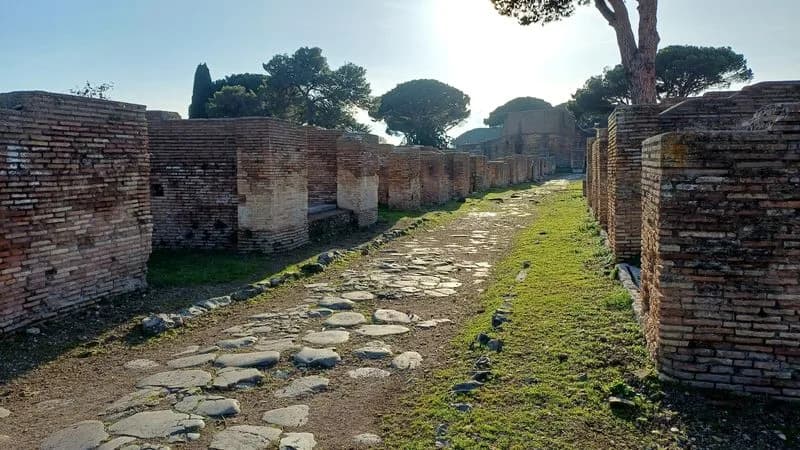
Roman military camps and newly founded towns used orthogonal grid plans—perpendicular streets, central forums and zoned areas—for efficient circulation and land use. Many modern cities, especially those planned in recent centuries, retain grid-based layouts inspired by that practical Roman model.
16. Water-Powered Mills
Romans scaled up watermills to grind grain and power saws, harnessing flowing water to automate labor. Their large-scale mechanical use of water is an early step toward exploiting renewable hydraulic power, a principle that underlies modern hydroelectric generation.
Taken together, these innovations show how Roman engineering and administration provided practical, reusable solutions. Their techniques were adapted and improved over centuries, and many of those core ideas remain embedded in today’s infrastructure, governance and urban life.
Help us improve.