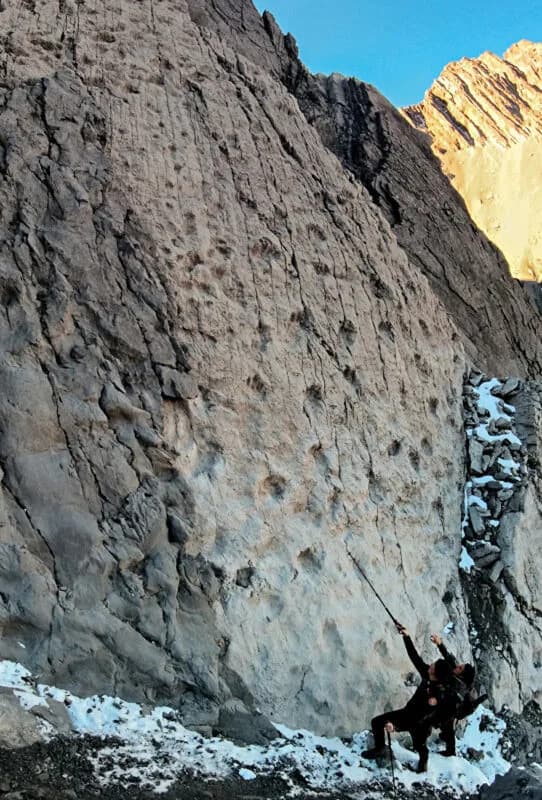
The Gold Hill Dinosaur Tracksite in Colorado contains more than 130 sauropod footprints dating to about 150 million years ago. Using drone imagery and per-step spatial analysis, researchers isolated a fully looped subsection that records an almost complete 360° turn. The trackway shows alternating long and short steps and a persistent left-right difference that could indicate a limp or a lateral preference. The prints are preserved in a roughly 5-metre-thick silicified sandstone known locally as the "Lower Quartzite," and the tract was acquired by the U.S. Forest Service in 2024.
Colorado Sauropod Trackway: 150-Million-Year-Old Footprints Form a Full 360° Loop and Suggest a Limp

A newly analyzed sauropod trackway at the Gold Hill site in Colorado preserves more than 130 massive footprints that date to roughly 150 million years ago. Researchers applied high-resolution drone imagery and a "per-step spatial analysis" to re-examine a long-known exposure of Bluff Sandstone and isolated a fully looped subsection that records an almost complete 360° change of direction.
What the prints reveal
The mapped trackway contains more than 130 impressions attributed to a single very large sauropod. Within the mapped series, researchers identified a continuous, fully looped segment in which the animal began moving northeast, executed a tight turn, and resumed travel facing the same direction. The path shows alternating longer and shorter steps and a persistent left-versus-right difference in step length and lateral spacing.
"This trackway is unique because it is a complete loop," said Anthony Romilio of the University of Queensland. "Whether the left-right difference reflects a limp or simply a preference for one side is difficult to determine from the prints alone."
Methods and preservation
Investigators used unmanned aerial vehicles to capture high-resolution imagery of the track-bearing surface and applied per-step spatial analysis to quantify step length, footprint spacing, and changes through the turn. The impressions are preserved in an orangish-brown, near-horizontal, roughly 5-metre-thick silicified sandstone locally called the "Lower Quartzite," a lithology that helped retain fine details of the prints.
Context and significance
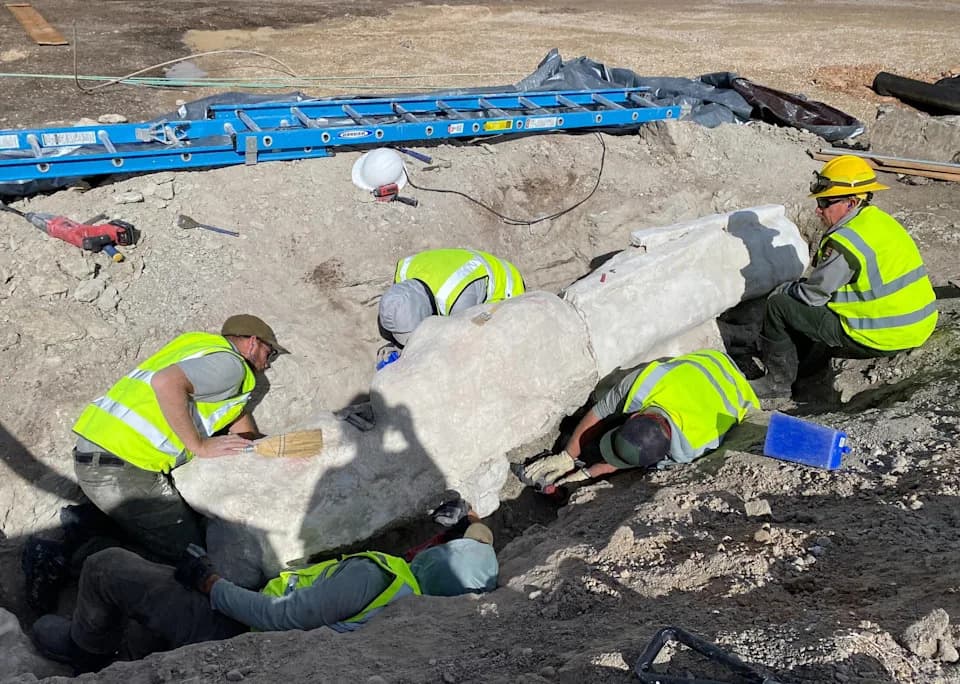
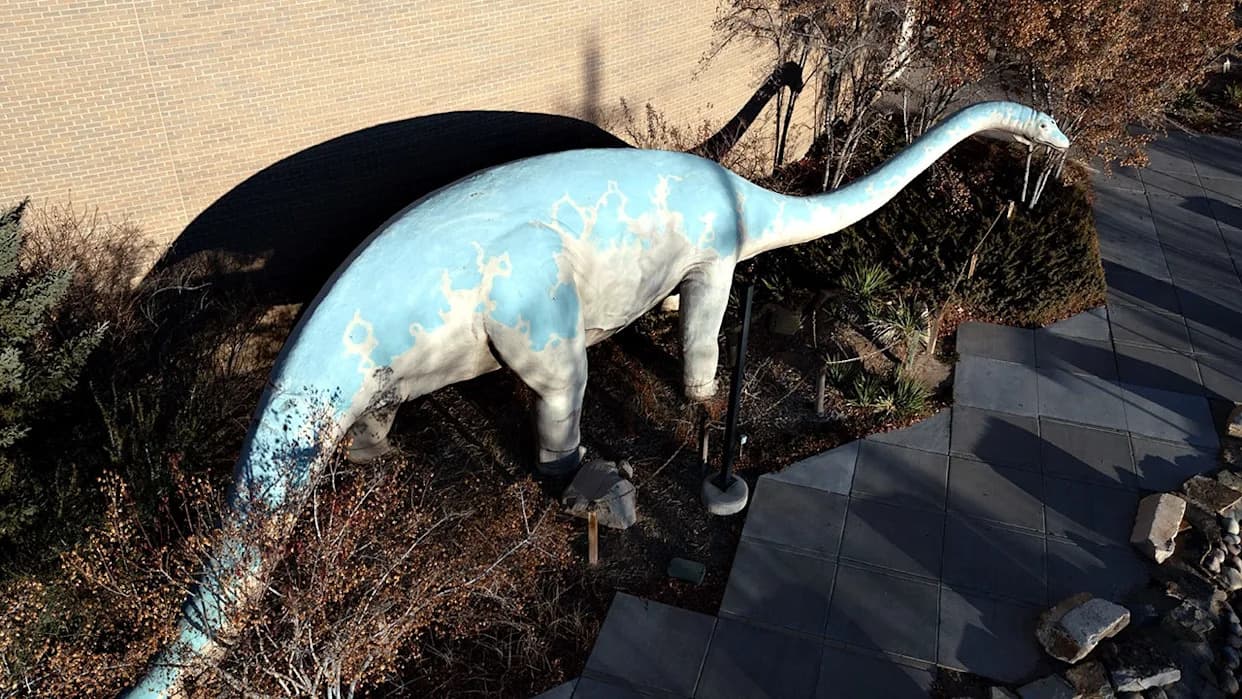
The site, long known to local residents and recently acquired by the U.S. Forest Service in 2024, lies near the town of Ouray, Colorado. The footprints were made during the Late Jurassic, when large, long-necked sauropods such as Diplodocus and Camarasaurus roamed North America. Because complete looping trackways of giant sauropods are exceptionally rare, this find provides an unusually detailed window into how these animals negotiated tight turns and changed direction at slow gait speeds.
Beyond the looping geometry, the study's finest-grain measurements reveal consistent lateralised patterns in step length and track width that could indicate an asymmetry in gait — a behavioral preference or possibly an injury-related limp — offering a rare behavioral snapshot preserved in stone.
Help us improve.